
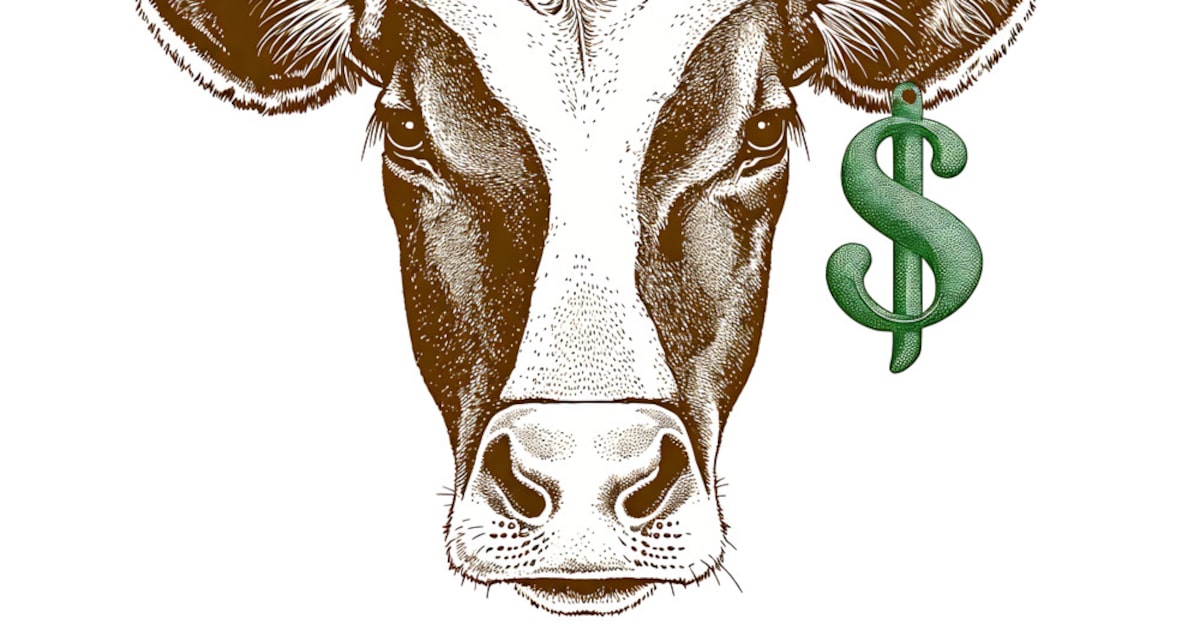

“So, you want to be a cow man?” This was the question posed to me by LC Young, prominent rancher and large stocker operator. At the tender age of 17, I had been nervously sitting in a small chair across from a seasoned loan officer (in a taller chair) requesting money for my first cattle loan. I had experience in procuring and showing individual animals for livestock shows, but this was my first commercial venture.
The loan officer had corralled Young, who was there taking care of banking business, to provide me with some sage advice before I partnered with the bank in the risky world of cattle buying. This was 1973 in my hometown of Graham. My inaugural purchase of 20 steers was meager by Texas standards, but the biggest investment of my early life.
Young’s advice: Ranching isn’t for the faint of heart.
Even in a business known for unpredictability, 1973 was extreme. Due to high prices, a national meat boycott was staged in early April. President Richard Nixon even toyed with price controls. It was not long before the market over-adjusted, prices spun downward and some ranchers went broke. My initial investment lost money, but nothing like that experienced by those with large numbers of cattle.
Beef, unlike other major protein industries (pork, poultry, milk) is still dependent on vast amounts of rangeland, most of it unsuitable for industrial-scale farming. Even cattle finished on grain in feedlots spend 65% to 85% of their lives grazing. Beef is not fully integrated like poultry and pork for one simple reason: Land is too expensive for corporate agriculture to own.
Increasing land costs — along with insurance premiums, property taxes, ever more expensive machinery, feed prices and labor costs – keep margins slim. Labor shortages have never been more acute, and that is largely due to immigration policies.
Opinion
Most beef cattle producers have second jobs that allow them to continue enjoying the life they love, despite consistently low profitability. Of over 800,000 cattle operations in the U.S., about 90% have herds smaller than 100 cows. Less than 0.5% of cow/calf producers own more than 500 cows. Leading ag economists have suggested it takes over 500 cows to support a family most years, even with non-ranch income. In the worst years, affected by drought, wildfires and low markets, there is no profit regardless of herd size.
Since that meeting with LC Young, I have been active in the cattle business for almost 50 years. In 2014 and early 2015, I sold bred heifers at an all-time high, making more money from cattle than I ever had. My profits were soon returned, however, following a crash in the market in late 2015 where I lost as much money as I made the previous year.
There was no discussion of government intervention to increase cattle prices, let me assure you. And there should be no intervention now, especially with reckless statements from our president that immediately have a negative impact on the market.
Average prices of ground beef have spiraled upward to $6.50 per pound, for a plethora of reasons not related to President Donald Trump. While the national herd is at a 75-year low, beef demand is at a 40 year high — a result of ever improving beef quality, with prime cuts the envy of the world. There has also been a renewed demand for protein nutrition, supported by the Health and Human Services Secretary Robert F. Kennedy Jr., who, like me, even prefers beef (tallow) on his french fries. Beef is a protein dense nutrient source, loaded with iron and B-Vitamins.
Ranchers, who voted overwhelmingly for Trump, are currently experiencing record high prices, but they are not capturing the bulk of the profits.
Relative to other farm items such as equipment, land and property taxes, beef has not increased in relative value. In fact, one could make the argument it is too low relative to the rise in input costs. Compare the price of a cup of coffee with the price of ground beef.
According to data from the U.S. Bureau of Labor Statistics, coffee prices have generally risen by double-digit percentages the last few years, in some cases nearly double the rate of beef price increases.
Trump often lauds the people who work the land as the “backbone of America.” Yet, many farmers’ backs are breaking under Trump policies, including his trade war with China. That has caused periodic slumps in soybean and wheat demand. Agricultural machinery maker John Deere said it expects the difficult market conditions that weighed on its earnings in 2025 to continue into next year, reflecting the impact of trade wars and inflation on agricultural economics. Even after the recent truce, China’s agricultural orders have been uneven.
For Texas ranchers, the insult to injury was the administration’s late October decision to quadruple imports of Argentine beef. The response from the Texas and Southwestern Cattle Raisers Association was swift.
“Importing beef from a country where foot and mouth disease is present poses a serious threat to the health of the U.S. cattle herd,” the trade group warned the same day as the announcement, adding that it undermined domestic herd rebuilding. “Rather than turning to risky imports, we urge the administration to support long-term solutions that preserve herd health, incentivize an expansion in domestic beef production and protect the livelihoods of American ranchers.”
Argentina — a new best friend of the U.S. because President Javier Milei shares Trump’s chainsaw politics — had their exports to the U.S. banned 20 years ago because of the incidence of foot-and-mouth disease in the herd, a disease that had been eradicated from the U.S. herd since 1929.
The importation of additional beef from Argentina likely will have insignificant impact on U.S. beef prices. But what does have enormous psychological impact are negative public statements by influential people.
In 1996, Oprah Winfrey’s on-air misinformed comment about the potential risks of mad cow disease caused cattle prices to drop dramatically, with the cattle futures market plunging to the “limit down” price on that day. The immediate 10% drop in cattle futures and months of depressed prices resulted in millions in estimated losses to the industry.
In October 2025, Trump’s statements and policy announcements about high beef prices led to an immediate sharp decline in cattle futures as well.
The capitalistic approach to the high beef market would be to let the market cycle run its course. Heifer retention and herd expansion are the remedies to low supply. But based on Trump’s statements, producers are less likely to make the steps necessary for herd expansion due to the increased volatility and uncertainty in the market.
The president’s statements not only cost beef producers money without lowering retail prices, but they also sent a message of uncertainty and fear of government intervention, ala Nixon in 1973.
A $12 billion bridge payment for farmers from the Trump administration is welcome. It provides a Band-Aid for the large wound created by tariffs. Research conducted by Muddy Boots Ag suggests most farmers expect that subsidy to be passed straight to implement dealers and other farm suppliers.
The cattle raisers’ trade group’s objection to the beef import policy was prefaced by an acknowledgment of Trump’s support of farmers and ranchers. The next anti-beef producer move might not be taken as well.
Anyone who has lived around those who work the land would warn Trump’s political advisers: Farmers and ranchers will not be played for suckers much longer.
Contributing columnist Rob Curran contributed market research for this column.
We welcome your thoughts in a letter to the editor. See the guidelines and submit your letter here.
If you have problems with the form, you can submit via email at letters@dallasnews.com