
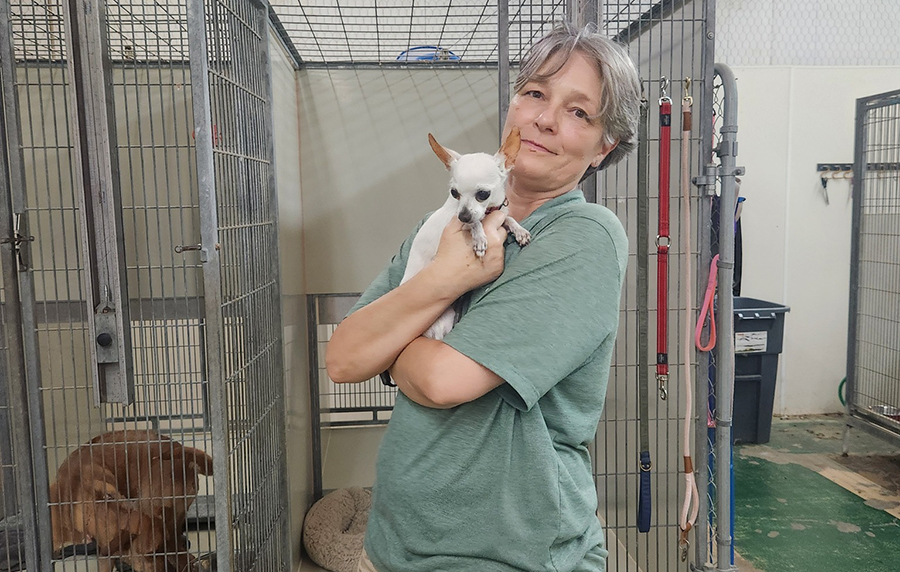
Terri O’Neal, Animal Services Supervisor, led the shelter team for 18 years until her 2025 retirement.
Sachse City Council spent the past year addressing the evolving needs of a maturing city, balancing infrastructure demands, public safety priorities and fiscal responsibility while responding to resident concerns about growth, development and quality of life.
Early in the year, council members revisited policies aimed at improving how residents are notified of zoning changes. In January, council approved a revision reducing the radius for mailed zoning notifications from 1,000 feet to 200 feet, a move supporters said would modernize the process while opponents expressed concern about limiting public awareness. The decision reflected a broader theme throughout the year: refining policies to better align with Sachse’s current scale and development pace.
Election-related matters followed soon after. In February, council approved both a general election to select a mayor and two councilmembers and a special election allowing voters to consider reauthorization of a local sales tax dedicated to street maintenance. The sales tax measure was later approved by voters, reaffirming community support for continued investment in road infrastructure.
Public safety remained a focal point throughout the year. In February, Assistant Police Chief Steven Baxter reported that violent crime in Sachse had dropped 19%, attributing the decline in part to slowing population growth. He also noted that response times for violent crimes averaged just under four minutes, a statistic council members praised as evidence of effective policing.
Citizen engagement was particularly evident in March, when more than 30 residents attended a council meeting to oppose a rezoning request on Ben Davis Road. Concerns about building height, privacy and traffic ultimately led council to deny the request, reinforcing its willingness to weigh neighborhood impacts alongside development proposals.
Infrastructure planning dominated much of the spring agenda. In April, council approved multiple public works expenditures, including roadway repairs, water system upgrades and design services for the aging Woodbridge Parkway. At the same meeting, council received updates on the city’s comprehensive plan, a yearlong effort that would ultimately guide future growth, land use and transportation planning.
Later that month, council voted unanimously to terminate the President George Bush Turnpike Tax Increment Reinvestment Zone ahead of schedule, redirecting future tax revenue growth to the city’s general fund. Additional budget amendments reflected both incoming donations and reimbursements, as well as reductions tied to prior-year carry-forward expenditures across multiple funds.
Fire protection and emergency services were highlighted in May, when Fire Chief Marty Wade reported that the department responded to more than 3,000 calls in 2024 and logged nearly 2,000 volunteer hours. Council also authorized the police department to pursue grant funding for license plate recognition cameras aimed at improving crime-solving capabilities.
Municipal elections concluded in mid-May with the swearing-in of Mayor Jeff Bickerstaff and two new councilmembers. Council also certified the results of the special election reauthorizing the city’s street maintenance sales tax, ensuring continued funding for roadway improvements.
Land use decisions continued into the summer. In June, council approved a zoning change allowing for drone delivery services near the Walmart Supercenter, positioning Sachse to accommodate emerging technologies while maintaining oversight of how and where such services operate.
Budget discussions intensified in July as City Manager Gina Nash outlined plans to maintain the city’s property tax rate while accounting for rising costs and modest growth. Council members were briefed on the city’s multi-year budget development process, emphasizing fiscal discipline and long-term sustainability.
Updates on the city’s 2021 bond program followed in August, with staff reporting progress on major infrastructure projects, including the Bailey-Hooper Road improvements and utility installations. That same month, council accepted a proposed budget that kept the tax rate below the no-new-tax threshold and projected a modest year-end surplus.
Public input remained limited but meaningful during budget hearings in September. Council ultimately adopted the fiscal year 2025-26 budget and ratified a tax rate that remained unchanged from the previous year, approving the measures through a series of recorded votes to ensure transparency.
Ordinances took center stage in the fall. In October, council approved new regulations governing donation bins, addressing issues related to abandonment, maintenance and enforcement. Council also advanced a comprehensive review of animal control ordinances and formalized a partnership with Friends of Rescue Animals to support volunteer services at the city’s animal shelter.
Later in the month, council approved additional funding for the long-running Merritt Road project, acknowledging rising construction costs tied to coordination with the Texas Department of Transportation.
Community recognition punctuated the year as well. In November, Sachse elementary students were honored for artwork created from recycled materials in observance of America Recycles Day, and council received updates on plans for a future civic and service center adjacent to the city’s animal shelter.
The year concluded in early December with council approving an ordinance expanding the city’s ability to recover costs for emergency responses, creating a new revenue stream to offset fire service expenses. Additional board appointments rounded out the final meeting of the year.
For more stories about the Sachse community see the next print or digital edition of The Sachse News. Subscribe today and support local journalism.