
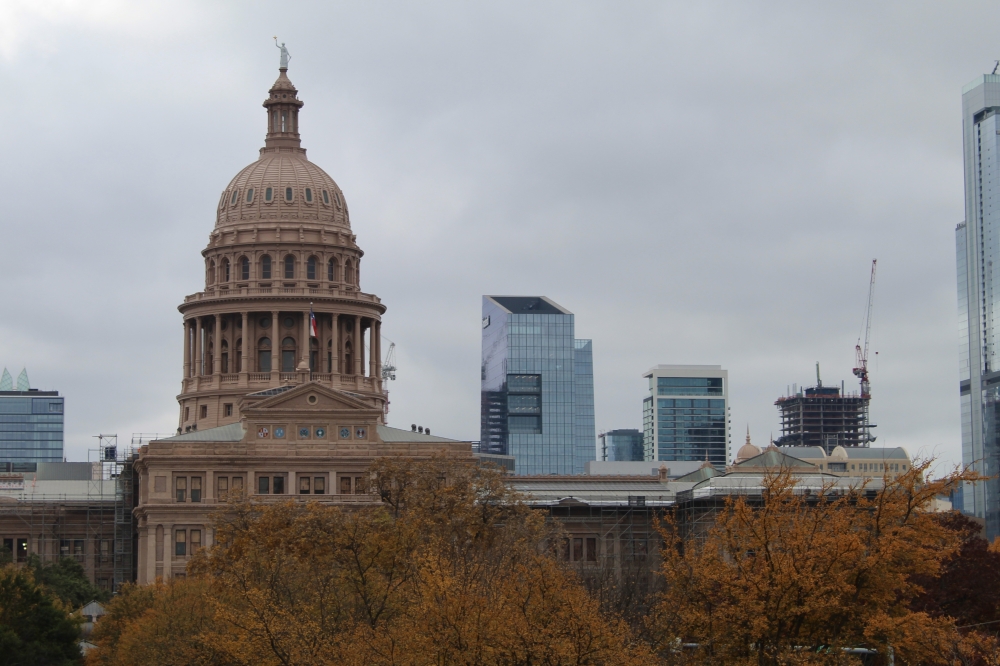
This November, Texas voters approved 17 constitutional amendments, also known as state propositions. The changes to the Texas Constitution include increased property tax exemptions for homeowners and businesses; a $20 billion investment in water infrastructure; new rules for the state judicial oversight commission; and tighter restrictions on when judges can grant bail.
Here’s what’s next for some of those propositions and what they mean for Texans.
The overview
Texas voters authorized the state to spend $1 billion annually on water supply funding, totaling $20 billion over a two-decade period, through Proposition 4. Half of that money will be set aside for new water supply projects, and it can also be used to repair existing water systems, invest in flood infrastructure and desalinate—or remove salt and other minerals from—seawater and groundwater, Community Impact previously reported.
Funding will flow into the Texas Water Fund, a state account created in 2023 to help finance water projects.
However, state law requires that the money does not begin moving into the water fund until September 2027. That year, the biennial Texas Legislature is scheduled to meet Jan. 12-May 31, meaning state lawmakers cannot appropriate the Proposition 4 funds to the Texas Water Development Board until the 2029 legislative session, according to the Texas Water Foundation.
Until then, state agencies, water utilities and local organizations will need to plan for funding, adjust rules and processes to align with recent state laws and update Texas’ water and flood plans, the TWF said.
The current state water plan, published by the TWDB in 2021, estimates that about 51.5 million people will live in Texas by 2070. In that period, demand for water is expected to increase by 9% and existing water supplies are projected to decline by 18%, according to the plan.
During the 2025 legislative session, state lawmakers found that “the projected shortfall could be underestimated” due to substantial population growth and increased droughts since 2021. Texas publishes a new water plan every five years.
State lawmakers also allocated over $2.5 billion for water infrastructure funding under House Bill 500, the state’s supplemental funding bill for the 2026-27 biennium. This money is “the largest one-time appropriation for water infrastructure in Texas history” and is currently available, according to Texas 2036, a nonpartisan think tank.
More details
Texas homeowners were set to see expanded property tax breaks on their 2025 tax bills under Propositions 11 and 13, Community Impact reported.
Under Proposition 13, voters agreed to raise the property tax exemption on a Texas homeowner’s main residence, known as a homestead exemption, from $100,000 to $140,000. Proposition 11 increased the additional homestead exemption for homeowners who are over 65 years old or have a disability from $10,000 to $60,000, giving those groups a total state exemption of $200,000.
The average Texas homeowner will see about $484 in annual savings due to the approved homestead exemption increase, state Sen. Paul Bettencourt, R-Houston, estimated this spring. He said seniors and people with disabilities would save about $950 annually, although neither estimate accounts for potential tax rate increases by local governments.
Four other property tax exemptions approved by voters will take effect Jan. 1, Community Impact reported.
Under Proposition 9, up to $125,000 of businesses’ personal property, such as equipment, furniture and vehicles, will be exempt from taxation by local government entities. Texas business owners previously received an exemption for property valued at $2,500 or less.
State lawmakers estimated that the average small business owner will save about $2,500-$3,500 per year under HB 9, although the nonpartisan Texas Legislative Budget Board said local revenues are expected to fall by $442 million in fiscal year 2026-27 if cities, counties and special taxing districts do not adopt higher tax rates.
Proposition 5 will create a property tax exemption for stores that sell animal feed, while Proposition 7 will establish a property tax exemption for the surviving spouse of a veteran who died from an illness related to their military service. Proposition 17 will exempt increases in a property’s value from taxation if the land is along the Texas-Mexico border and the value rises due to the installation of border security infrastructure.