
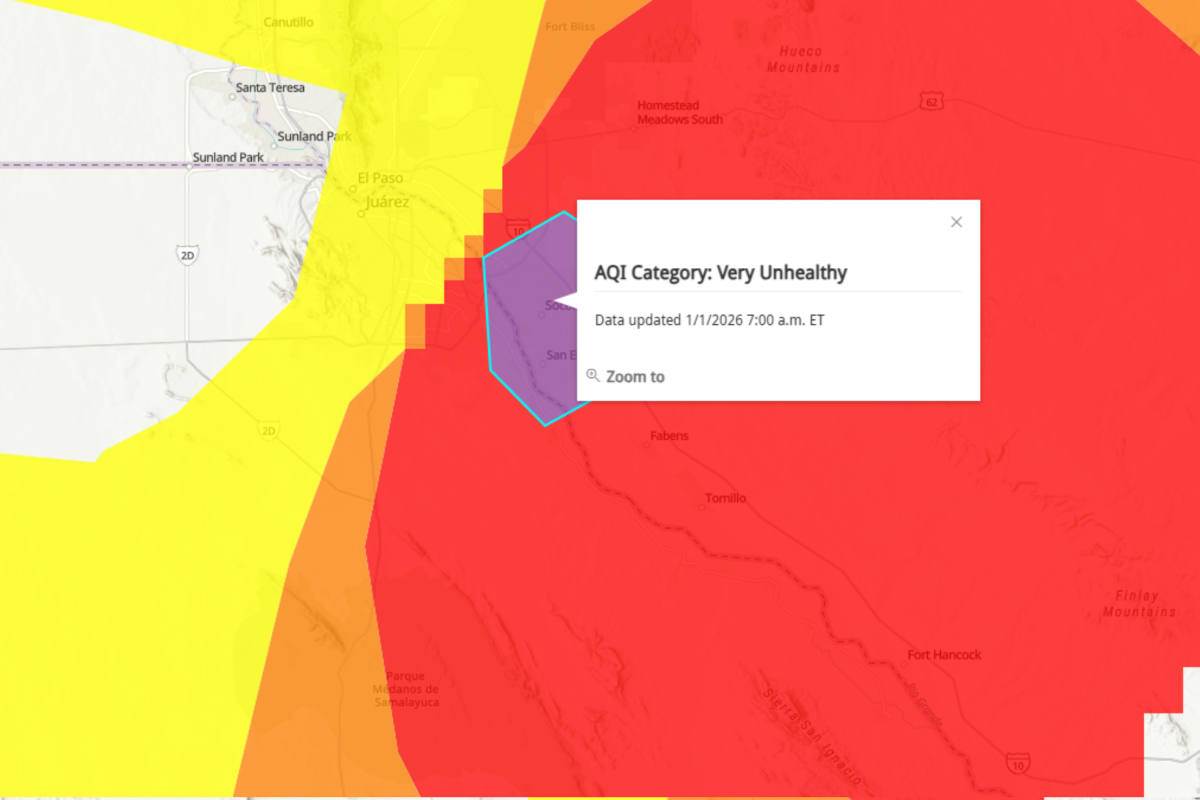
Thousands have been urged to stay indoors in Texas after a pollution warning for “very unhealthy” air was issued.
Why It Matters
Rapid deteriorations in air quality can pose serious health risks, particularly for vulnerable populations. Older adults, young children, and individuals with respiratory conditions are especially susceptible to the harmful effects of airborne particles and ozone.
 What To Know
Elevated pollution levels in Texas have prompted urgent public health advisories, highlighting the need for monitoring and protective measures to prevent respiratory symptoms and related complications.
The risk extends to the general population at higher pollution categories, underlining the broader importance of air quality alerts.
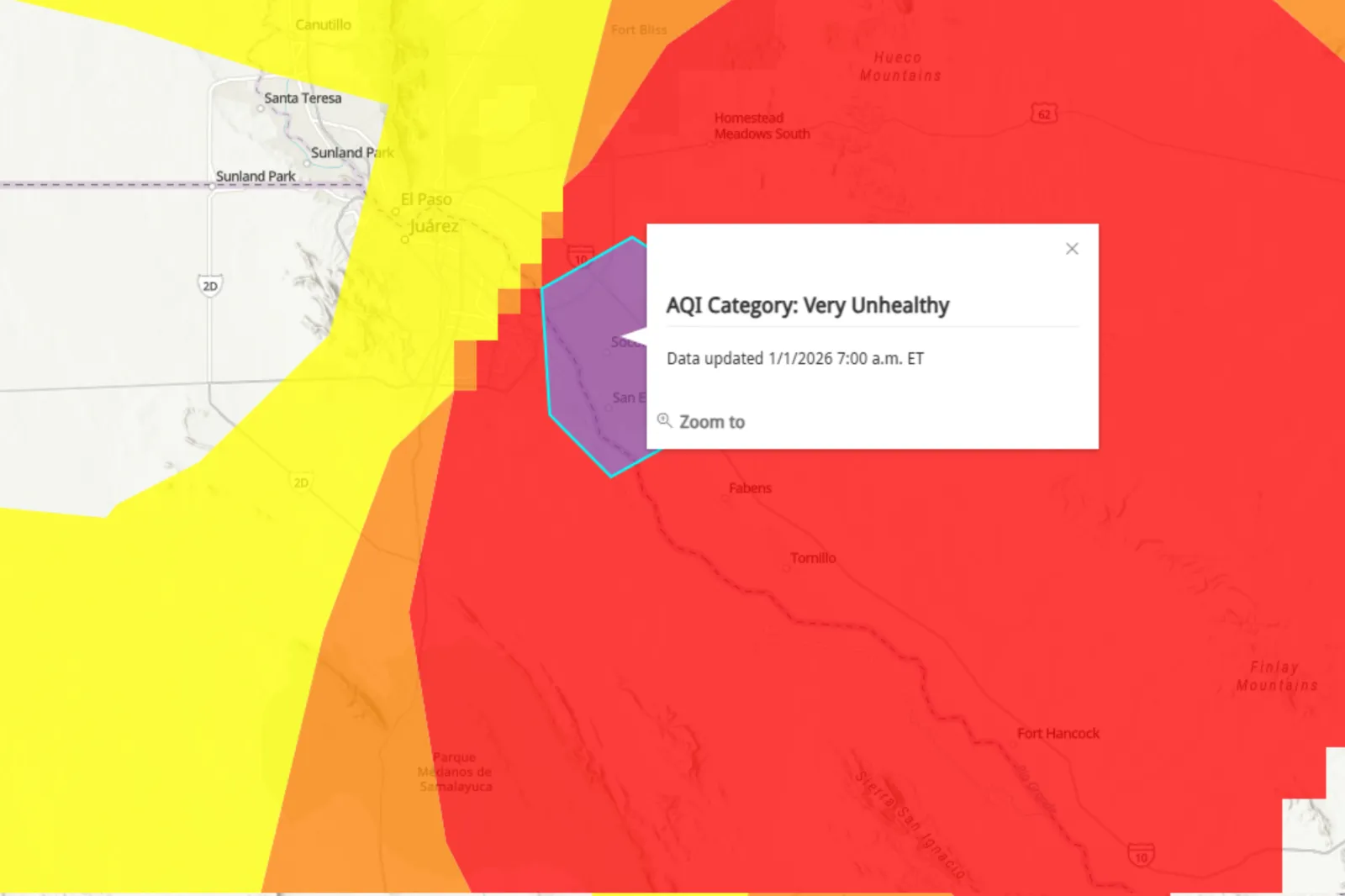
In the early hours of Thursday, areas surrounding Socorro and San Elizario reported fine particle (PM2.5) pollution levels in the “very unhealthy” range, according to AirNow, a resource managed by the Environmental Protection Agency (EPA), National Oceanic and Atmospheric Administration (NOAA), and other agencies.
According to AirNow’s official map, pollution concentrations reached levels where health risks escalate even for the general population, with heightened hazards for sensitive groups.
A wider alert for “unhealthy” air has been issued for communities such as Fabens, Tornillo, Fort Hancock, Alamo Alto, Acala, and McNary.
The EPA’s Air Quality Index (AQI) uses a color-coded scale from 0 to 301 and above: “Red” (151-200) signals unhealthy conditions, while “Purple” (201-300) indicates very unhealthy air quality—when health alerts broaden beyond sensitive groups. The EPA recommends that affected residents limit or avoid outdoor activity, keep windows closed, and use filtration indoors when possible.
The EPA’s AQI rates pollution on a scale of 0 to over 301, with higher values indicating greater risk:
0-50 (Green): Satisfactory air quality.51-100 (Yellow): Acceptable, minor risk for unusually sensitive people.101-150 (Orange): Unhealthy for sensitive groups.151-200 (Red): Unhealthy for all; sensitive groups at higher risk.201-300 (Purple): Very unhealthy, increased risk for everyone.301 and above (Maroon): Hazardous, emergency health warning.What People Are Saying
AirNow says on its website: “Everyone should stay indoors and reduce activity levels. Stay tuned to local news media for advisories.”
The EPA says on its website: “The size of particles is directly linked to their potential for causing health problems. Small particles less than 10 micrometers in diameter pose the greatest problems, because they can get deep into your lungs, and some may even get into your bloodstream.
“Exposure to such particles can affect both your lungs and your heart. Numerous scientific studies have linked particle pollution exposure to a variety of problems, including: premature death in people with heart or lung disease; nonfatal heart attacks; irregular heartbeat; aggravated asthma; decreased lung function; increased respiratory symptoms, such as irritation of the airways, coughing or difficulty breathing.
“People with heart or lung diseases, children, older adults, minority populations, and low socioeconomic status populations are the most likely to be affected by particle pollution exposure, either because they are more sensitive or may have higher exposures.”
What Happens Next
The AirNow live map continues to be refreshed regularly, allowing residents in affected regions to monitor real-time conditions.
Update 1/1/26 4:30 a.m. ET. This article has been updated with more information.