
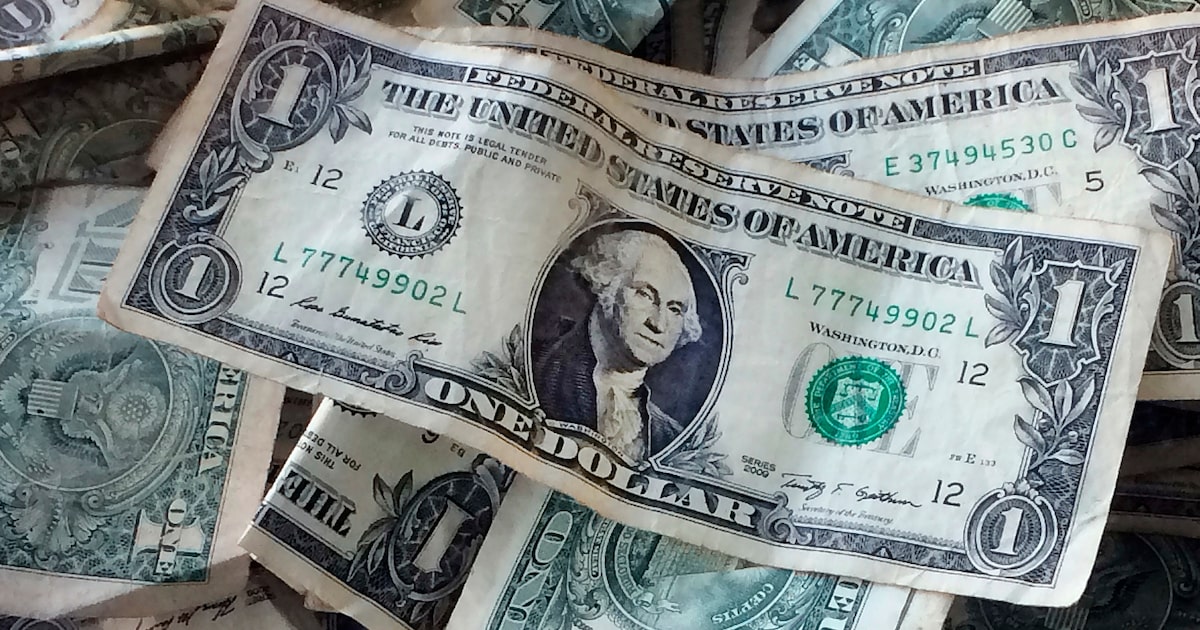
More than 20 states will increase their minimum wage this year, boosting paychecks for millions of workers as rising costs squeeze household budgets.
Both Democratic- and Republican-led states, from California and Washington to Missouri and Nebraska, have hiked their wage floors above the federal minimum of $7.25 an hour.
But not Texas, where the minimum wage has not budged since the federal government set it in 2009. This is the longest period without an increase since the U.S. adopted a minimum hourly wage nearly 90 years ago.
A slew of bills have attempted to increase the state’s minimum wage over the past decade, but they have fallen flat in the GOP-dominated Texas Legislature. Conservatives have largely opposed increases, which they say are bad for business. In 2021, Lt. Gov. Dan Patrick shot down the idea.
Breaking News
“Raising the minimum wage, in my view, will only take jobs away from people, will only hurt business,” the Republican lawmaker told the Texas Business Leadership Council. “So that’s not something I think is going to happen.”
Related
 Why not Texas?
In recent years, a growing number of states have increased the minimum wage to help offset soaring inflation.
For the first time, the number of workers living in a state that guarantees a $15 minimum wage exceeds the number living in a state with $7.25 per hour, according to the Economic Policy Institute, a progressive think tank. The latest round of hikes affects roughly 8.3 million workers, who will gain a combined $5 billion in 2026, the institute says.
In total, 30 states have a minimum wage above $7.25. On Jan. 1, 19 states again raised their floor. Those states are: Arizona, California, Colorado, Connecticut, Hawaii, Maine, Michigan, Minnesota, Missouri, Montana, Nebraska, New Jersey, New York, Ohio, Rhode Island, South Dakota, Vermont, Virginia and Washington. Alaska, Florida and Oregon are set to raise their minimum wages later in the year.
Some were the result of citizen-led petitions that gathered signatures and forced states to send the issue to voters via direct ballot measures. In 2026, Oklahomans will vote on increasing the minimum wage to at least $15 an hour.
Will Texas voters get to weigh in? That’s not likely. About half of the states in the U.S., including Texas, do not allow any form of voter-led ballot measures. In Texas, the state Legislature has sole responsibility for initiating amendments to its constitution. Texas does allow citizen-led initiatives at the local level, but only on issues that do not conflict with state or federal law.
Dozens of cities in the U.S. have also increased minimum wage. Texas blocks cities and counties from setting their own minimum wage, but several municipalities, including Dallas and Fort Worth, pay their own employees above the federal floor.
Who makes minimum wage?
Some 82,000 workers earned $7.25 per hour in 2024, and 760,000 workers received wages below the federal minimum, according to the U.S. Bureau of Labor Statistics. That is because some workers earn less than the federal minimum. For example, tipped employees can be paid as little as $2.13 per hour under federal law.
Roughly two-thirds of minimum wage workers are women, and nearly half are between the ages of 16 and 25.
A living wage
Every Texan, a nonprofit that advocates for expanded economic opportunity, says stagnant wages have allowed business interests to secure cheap labor and maintain power.
“Too many Texans are held back from adequately supporting themselves and their families because of low hourly wages,” the organization says on its website.
To make a living wage in Texas, a single adult would need to earn $21.82 an hour, according to the Massachusetts Institute of Technology Living Wage Calculator. That is the minimum required to cover food, housing, transportation and basic necessities.
Critics of increasing the wage floor say it leads to higher prices and job cuts. The Texas Public Policy Foundation, which promotes free enterprise, warns that increasing the minimum wage would actually hurt workers.
“Wage increases should ideally be guided by the free market,” the think tank wrote on its website. “Higher demand for good people forces wages to rise naturally, not artificially.”