
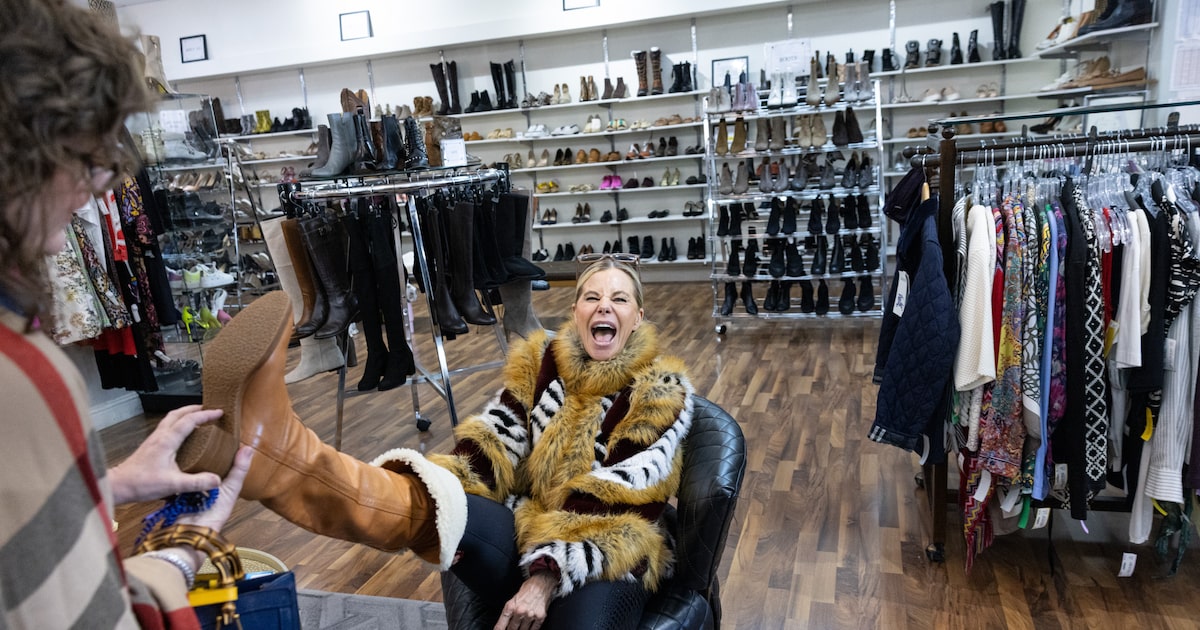
If everything old is new again, then everything thrifted is cool again.
In Dallas, the cultural shift has given rise to a booming resale market that has quickly become one of the city’s most dynamic retail segments — and that rise is expected to continue.
With nearly 70 secondhand stores in the city — from themed resale stores in Bishop Arts to the luxury consignment boutiques in Knox-Henderson and even larger chains like Second Street, Goodwill and Thrift Giant — the city has become a thriving secondhand hub for big and small retailers.
Related
The D-FW resale scene is no longer an obscure subculture of the retail world, it’s now front and center. The city’s rapid growth and steady steam of new residents and company headquarters has catapulted the area into a major force in the retail landscape.
“Dallas really is a retail hub, not just for Texas, you know, it not just for America, for the world,” said Dr. Chris Penney, the program director of entrepreneurship at the University of North Texas.
D-FW Retail News
According to the Boston Consulting Group, the secondhand fashion and luxury market is growing three times faster than the firsthand market. And this momentum is only expected to grow in the years to come.
A 2025 report from ThreadUp, a web-based apparel marketplace, expects the secondhand apparel market to reach $74 billion by 2029.
However, secondhand shopping didn’t always have such positive connotations, as it was sometimes associated with thrift store-buying that can be a lifeline for the economically disadvantaged.
“There was almost like a negative stigma to some extent,” said Penney, an associate professor of management at UNT.
Today, however, that perception has flipped. Jennifer Mayrath, the general manager at Clotheshorse Anonymous, a luxury consignment store, sees this change firsthand.
“It was [once] taboo to be selling your clothes or buying secondhand and now it’s so common,” she said.
This cultural shift stems from several factors. Catlin Brax, owner of AAVintage, more commonly known as the “denim whisperer,” explained that “the education about sustainability and social media’s obsession with thrifting and seeing influencers in a vintage piece has propelled people to want to shop vintage.”
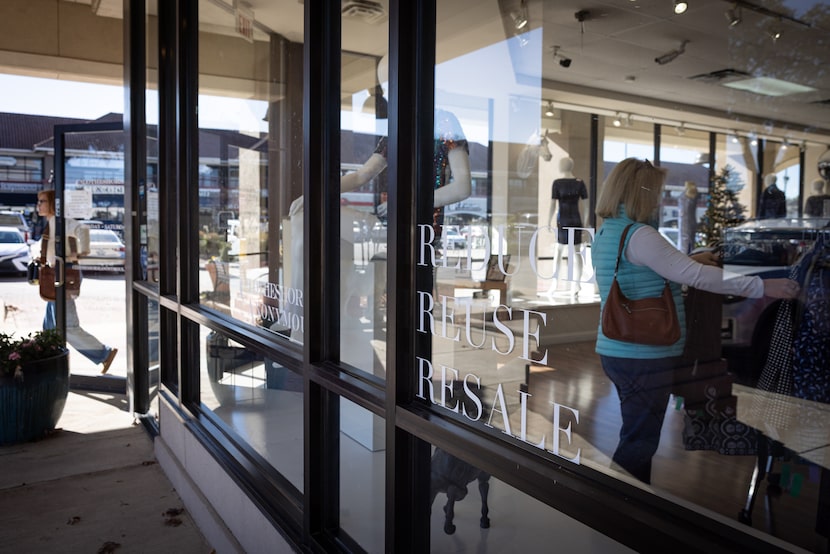
A customer departs Clotheshorse Anonymous while another continues to shop on Tuesday, Dec. 30, 2025, in Dallas.
Angela Piazza / Staff Photographer
‘The thrill of the hunt’
Price is also a key driver of thrifting popularity. According to a 2025 market analysis conducted by OfferUp, a mobile marketplace app, 69% of shoppers turn to secondhand when the economy gets shaky. That has certainly been the case for some consumers, battered by inflation and high borrowing costs that have sparked an affordability crisis.
Still, the appeal goes beyond economic anxiety; shoppers are increasingly motivated by the value they can find.
“It’s considered a status symbol when you can find something really cool for a pretty low price,” said Blythe Ingram, a professor of marketing at Southern Methodist University.
And beyond price, simply finding something unique keeps shoppers coming back.
Adele Meyers, the executive director of the National Association of Resale and Thrift Shops, explains: “People love the thrill of the hunt, and they like unique items. It isn’t like walking into a big box store and seeing racks of the same items in different colors and different sizes.”
Although people are increasingly consuming secondhand goods, the realities for small, independently owned businesses are nuanced.
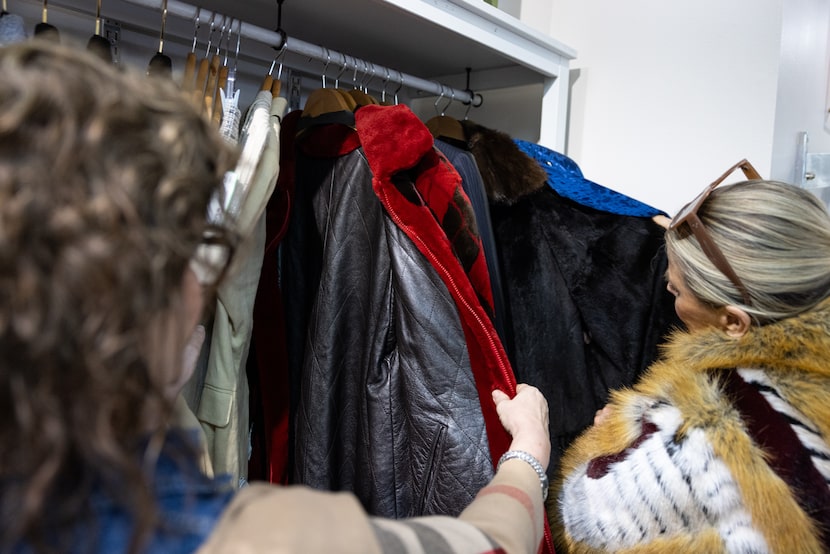
Alison Volk, a publicist for Clotheshorse Anonymous, and Jennifer Mayrath, the director of operations, flip through vintage reversible designer coats on Tuesday, Dec. 30, 2025, in Dallas.
Angela Piazza / Staff Photographer
The city of Dallas alone has dozens of secondhand stores spanning consignment and furniture, and the industry’s rapid industry has brought new opportunities, and often more foot traffic.
But it has also heightened competition, especially from online platforms.
Donald Shelly, a professor of finance at SMU, explains that “so much in traditional retail has gone online. So that’s hurt some businesses, it’s helped businesses, if you can go online, but the smaller you are, the harder it is to do.”
Yet Shelly notes that brick and mortar isn’t going anywhere. “Everything’s not gonna go online,” Shelly said. “People still want to go in, they want to try it on, they want to look at it.”
For Clotheshorse Anonymous in the Preston Forest Village shopping center in North Dallas, this means adapting in real time. The popularity of online resale sites, like TheRealReal or Fashionphile, has compelled brick-and-mortar shops to rethink their pricing.
Mayrath notes that “the online competition has affected our pricing strategy.” Her team at Clotheshorse Anonymous now monitors online pricing and aims to match or be below to stay competitive.
Carving a niche
As the resale market accelerates, the strongest opportunity for physical stores lies in what online platforms can’t replicate: community ties, curated inventory and a memorable in-store experience. SMU’s Ingram emphasizes that this is a powerful advantage for brick-and-mortar retailers.
“They can own the customer experience in a way that these online places like TheRealReal and others really can’t,” Ingram explained. “And so they can listen to their customers, they can understand what they’re looking for.”
Meyers, of the National Association of Resale and Thrift Shops, echoes that sentiment, stressing that in an increasingly competitive landscape, “the biggest thing is customer service [and] really emphasizing the in-store experience.”
For small stores, differentiation is critical. Rather than trying to beat online platforms and large chains on price alone, secondhand stores must lean into what makes them special, according to some market participants.
“You’ve got to figure out something where it’s kind of unique,” Shelly said. “Where you’re not just competing on price.”
For many brick-and-mortar stores, that could mean owning a niche in the market, and making sure people recognize it. Seasoned thrifters may know exactly where to go for a designer piece, last-minute costume find or quality denim, but some new shoppers often don’t know what each store specializes in.
When avid thrifter Ariana Ybarra moved to Dallas four years ago, she admitted, “I didn’t get the hang of knowing where to go until I personally tried out each store.”
That gap in awareness is what Ingram believes stores need to bridge to stay competitive. “If they did a better job of owning that position and marketing that position, then they could very easily drive some serious traffic,” she said.
Most independently owned shops don’t have the time or resources for an extensive marketing campaign. But even without a hefty marketing budget, stores can leverage their own expertise to drive traffic.
Because most store owners know which items are top sellers, Ingram suggests consistent small tactics like an “email newsletter once a week, that’s baby steps to potentially drive traffic into the store. And now you’re building the business and building brand affinity, because you’re highlighting items that you know your customers like,” she said.
But behind that growth are the independently owned stores that anchor neighborhoods by creating jobs, helping residents clear out closets, and contribute to local initiatives.
“Our members are very supportive of their communities, of the nonprofits and the missions in their community,” Meyers said. “They really do give back.”
 Sprinkles Cupcakes closes all locations on New Year’s Eve, including those in D-FW
There were two brick-and-mortar stores and several ATM-style cupcake machines in North Texas.
 Saks Global sells its Neiman Marcus Beverly Hills site
The store will remain open under a long-term lease with the new land owner.