
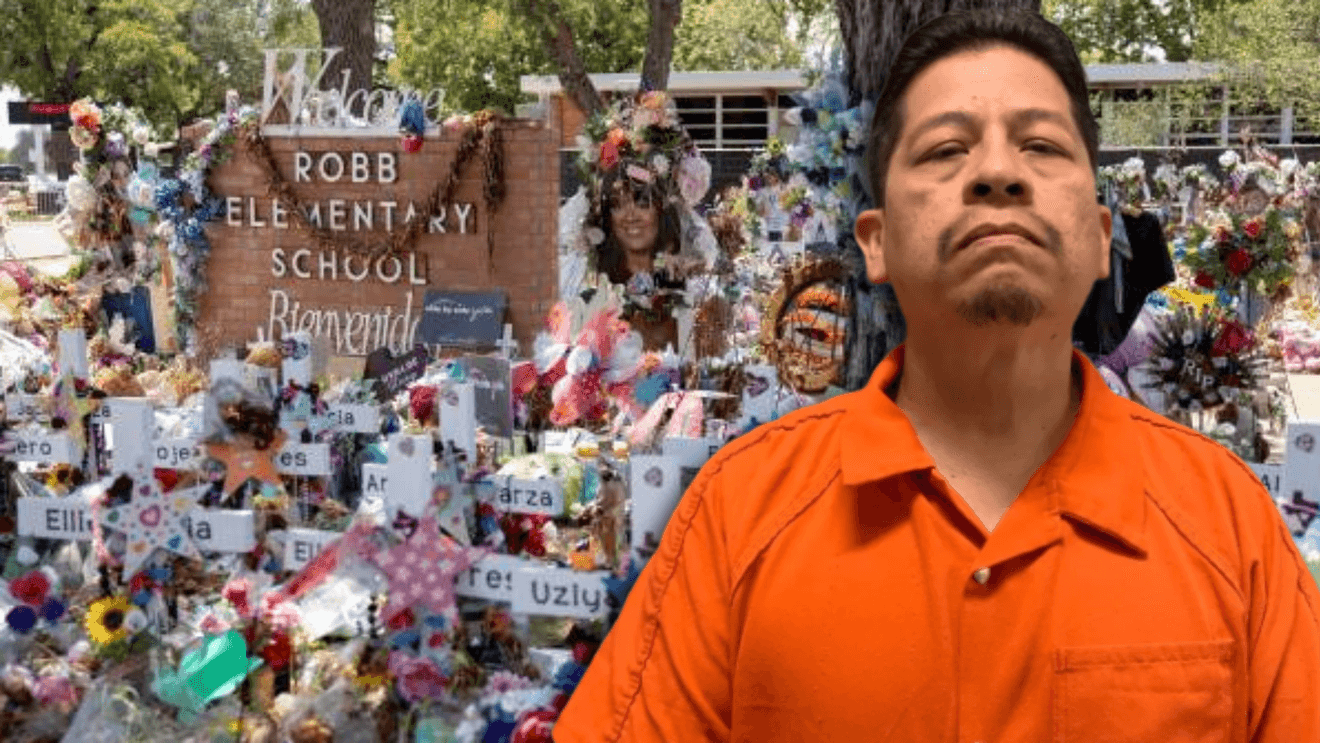
CORPUS CHRISTI, Texas – Jury selection started today in the trial of former Uvalde Consolidated Independent School District police officer Adrian Gonzales, one of only two officers charged in connection with the Robb Elementary School shooting that killed 19 children and two teachers and injured 17 others on May 24, 2022.
Reporter Yami Virgin is at the courthouse and will provide live updates throughout the day as they become available.
About 450 potential jurors were called in for jury selection, with roughly 50 requesting to be excused. Reasons cited included age, caregiving responsibilities, and school-related conflicts. Jurors over 75 may qualify for exemptions.
Inside the courtroom, Gonzales sat stoic alongside his attorneys, including former Bexar County District Attorney Nico LaHood, as the selection process continued.
The case is being overseen by Judge Sid Harle of Bexar County, who made it clear from the start this is a very important case, and one most people have likely heard about.
Judge Harle reminded the panel that an indictment does not mean the defendant is guilty. He asked anyone who had already made up their mind to raise their paddle. Three jurors did. Another 10 were excused for various reasons.
The judge acknowledged the heavy media attention surrounding the case, saying hearing about it does not automatically disqualify someone from serving. What matters is whether a juror can set aside what they’ve heard and be fair and impartial. If they can’t, they shouldn’t be on the jury.
Jurors were also told that if they believe they cannot be impartial, they should not be here.
So far, 100 jurors have been released. Every juror said they knew about the Uvalde shooting when asked. Emotions ran high during selection, with many jurors saying they could not remain unbiased.
One man said they were only protecting themselves more than the children, another juror said all the officers our there that day should be sitting with Gonzales.
Juror 57 said his wife is a school teacher, so he could not be fair. Another juror said they served as a health care worker during the COVID-19 pandemic despite their fears because “we had a duty and we did it.”
Gonzales faces 29 counts of child abandonment and endangerment. Prosecutors allege he failed to follow active shooter training during the attack. He is represented by LaHood and Norton.
San Antonio criminal defense attorney Jonathan Chavez said the jury pool is roughly three times larger than what is typically called for most felony cases. Prospective jurors completed detailed questionnaires addressing potential bias, including prior knowledge of the shooting, social media activity, opinions of law enforcement’s response, and connections to Uvalde or law enforcement.
Uvalde County District Attorney Christina Busbee is prosecuting the case and has appointed former Brazos County District Attorney Bill Turner as a special prosecutor, a well respected veteran with numerous capital murder trial convictions.
RELATED: Trial for former Uvalde CISD officer Adrian Gonzales moved to Corpus Christi
The trial was moved from Uvalde to Corpus Christi, about 205 miles away, in an effort to seat an impartial jury in a case that drew international attention.
It has been a long and painful road for Robb Elementary families, and now the question of whether officers charged for their alleged inaction will be held accountable comes down to what a jury decides.
RELATED: Former Uvalde district officer arrested on 29 charges
Criminal defense attorney Jonathan Chavez said the central purpose of jury selection is to find jurors who can focus on the evidence and apply the law.
“So, the main process, and I mean the goal of jury selection is really to find jurors that are completely fair,” Chavez said. “What I mean by that is that they can listen to the facts of the case and apply those facts to the law that the judge gives them at the end of the case.”
Chavez said the challenge is identifying jurors who can set aside what they have heard about the case.
“The trick, especially in this case, is finding somebody who hasn’t heard anything about it or even knows anybody that’s heard about it,” Chavez said. “I mean, this was international news and it continues to be how realistic is it to find someone that has never heard of this case? It’s going to be hard.”
As the trial approaches, Chavez said both sides have worked hard and focused on witnesses and logistics, as any lawyer would do.
“Yeah, so right now they’re prepping exactly like you say and what I mean by that is they’re getting all their witnesses together,” Chavez said. “They’re probably talking to their witness pretty much every day.”
Chavez also described how attorneys can remove jurors after questioning.
“So in a felony case, there are two different types of strikes,” he said. “There are strikes for cause and then for entry strikes. Both sides get 10 strikes, preemptory strikes.”
Chavez explains that if the answers to their questions show that they cannot be fair or follow the law they can be struck. The peremptory strikes mean that attorneys can remove jurors without stating a reason, as long as the decision is not based on race or gender.
Courtroom seating is expected to be limited. Families of those killed and injured were asked to provide a head count so the court can accommodate as many relatives as possible. Media access is also restricted, with reporters told only 10 seats will be available in the courtroom for this phase of the trial.
Gonzales is one of two officers charged. Former Uvalde CISD Police Chief Pete Arredondo also faces similar charges, but his trial has not been scheduled.
Gonzales has chosen to have the judge not the jury decide sentencing if there is a conviction.