
We independently select these products—if you buy from one of our links, we may earn a commission. All prices were accurate at the time of publishing.
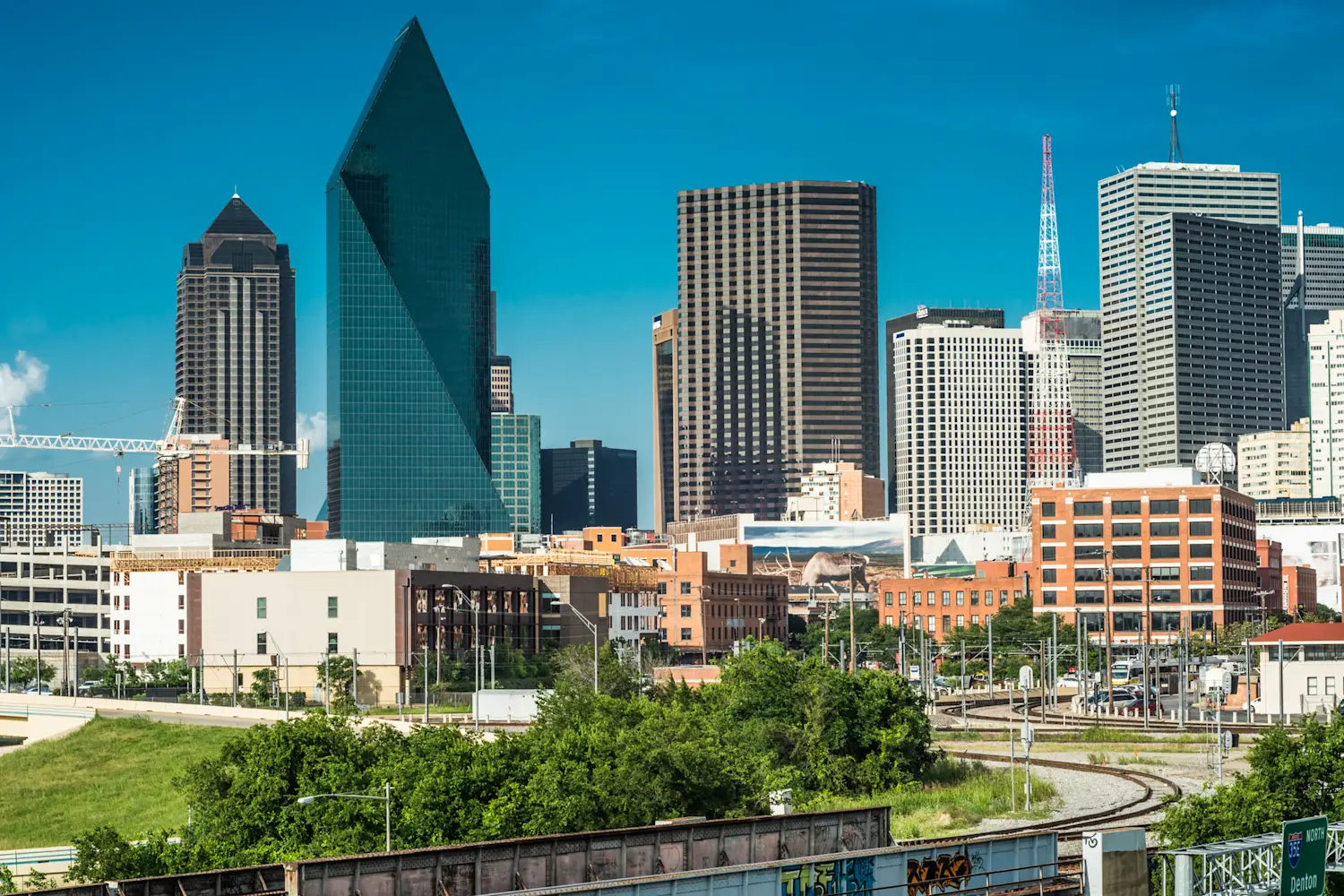
I’ve called Dallas-Fort Worth (DFW) my home my whole life, but the version I grew up with is harder to find than ever. Over the last five to seven years, the Metroplex has boomed. It’s brought jobs, people, money, and opportunity — alongside higher costs, longer commutes, and the quiet disappearance of the places and rhythms that made it feel like home. For me, it raises an important question: Is bigger always better, even in Texas?
When I first moved out of my parents’ house at 25, living here felt manageable — almost easy, even on less than $25,000 a year. At the time, I rented a three-bedroom, one-bath, 1,200-square-foot house with two friends for $1,200 a month in Irving. Water and lawn care were included, thanks to a generous landlord, so the utilities we had to pay for were gas and electricity. When rent eventually rose to $1,400 a month as property taxes increased, it still felt like a good deal. I lived in that house for three-and-a-half years before moving into my 350-square-foot micro apartment, where I paid roughly the same amount in rent for a third of the space.
That version of DFW feels so far away. Redfin’s migration data tracks where people want to move, while the U-Haul Growth Index tracks where people actually move. By both measures, Texas — and Dallas-Fort Worth, in particular — continue to rank among the top destinations for one-way moves. That tells something important: People aren’t just passing through. They’re here to stay.
But staying changes the math. Fewer homes turn over. Prices climb. Even when apartments are technically available, factors like commute times, safety, grocery access, and proximity to work determine which units are actually livable. Add worsening traffic into the mix, and affordability becomes about more than rent. It’s about space.
What It’s Really Like Living in DFW Today
Today, I’m in a different financial place; I’m renting what’s technically considered a “luxury” apartment in Grand Prairie. In reality, there are far more expensive, high-end buildings within a few miles. I work as a full-time writer, and my husband is in the manufacturing industry. We pay just under $2,000 a month for an 890-square-foot, two-bedroom apartment (before utilities), about $300 to $500 more than neighbors in the same complex with the same number of bedrooms, which tells me cheaper units exist, if we’d sign a lease at the perfect time.
Our home is above average — the average apartment in the Metroplex runs around $1,335 for 725 square feet, based on data from SoFi and MIT’s Living Wage Calculator. Compared to other major cities, that number sounds reasonable.
Meanwhile, the Metroplex remains one of the most competitive rental markets in the country, based on availability, lease-to-listing ratios, and renewal activity. And according to the Dallas Rental Housing Needs Assessment from Child Poverty Action Lab, the city is short 39,919 rental units affordable to households earning 50% of the area’s median income or less — a gap that’s expected to grow in the coming decade.
For renters, that means fewer real choices. Even when rents cool, many people stay put or stretch their budgets because there’s nowhere else to go. The same report shows that 93% of extremely low-income renters, 69% of senior renters, and 79% of single-parent households with children are cost-burdened. Not long ago, I was in this exact same boat — and once children enter the picture, who’s to say we’ll be able to afford the space we need.
Sometimes it feels like, in a state where everything’s bigger and better, this growth actually means … less. Less room on the roads. Less space in my neighborhood. Less breathing room in our bank accounts.
Population growth isn’t the only force shaping prices. The average DFW driver spends 69 hours in 2024 sitting in traffic — a 4% increase from the year before. With more traffic comes more accidents and higher insurance premiums, yet another increase to our cost of living. Luckily I work from home, so I don’t have to deal with this traffic crush every day, but it’s still annoying.
But even with our electricity bills, the hours spent in traffic, and the challenges of Texas, this is still home. My family’s here. My community’s here. The version of Dallas-Fort Worth I grew up with is changing, but it hasn’t disappeared — at least not yet. And I try to stay realistic. I know that healthy cities evolve, and staying here is about nostalgia and possibility.
My family has joked for a few years now about buying land out in the middle of nowhere. While we won’t become full-on homesteaders, some version of this still feels within reach. There’s still room to make some big investments if you buy strategically. And I believe in building something that lasts. I believe North Texas can grow without losing what made it feel like home in the first place; and I plan to be part of that change.