
The Meadows Foundation, a private philanthropic organization based in Dallas, has committed $2.75 million to establish an institute in Alpine.
The donation will launch the Meadows Research Institute for West Texas Water at Sul Ross State University, located in one of the driest regions of the state, as water resources become a major focus of statewide policy.
The institute was created to advance collaborative water solutions in Far West Texas though research, education and technical expertise. The objective is to help ensure broaden natural resource resiliency and preservation, according to a news release.
Billy Tarrant has been tapped as interim director of the institute. Tarrant has served as the associate director of stewardship services at at Borderlands Research Institute at Sul Ross State, and was previously a wildlife biologist with the Texas Parks and Wildlife for more than 20 years.
Business Briefing
The financial commitment, “…one of the largest philanthropic investments in the university’s history — provides the foundation to build a world-class research institute that connects science, education, and community needs, ensuring that water solutions are grounded in the people and landscapes of Far West Texas,” Sul Ross State University president Carlos Hernandez said in a statement.
The money includes a long-term endowment of $500,000 annually for five years for faculty leadership, research and academic programming, and $250,000 in matching funds over five years — broken up as $50,000 annually — to support early operational needs.
Related

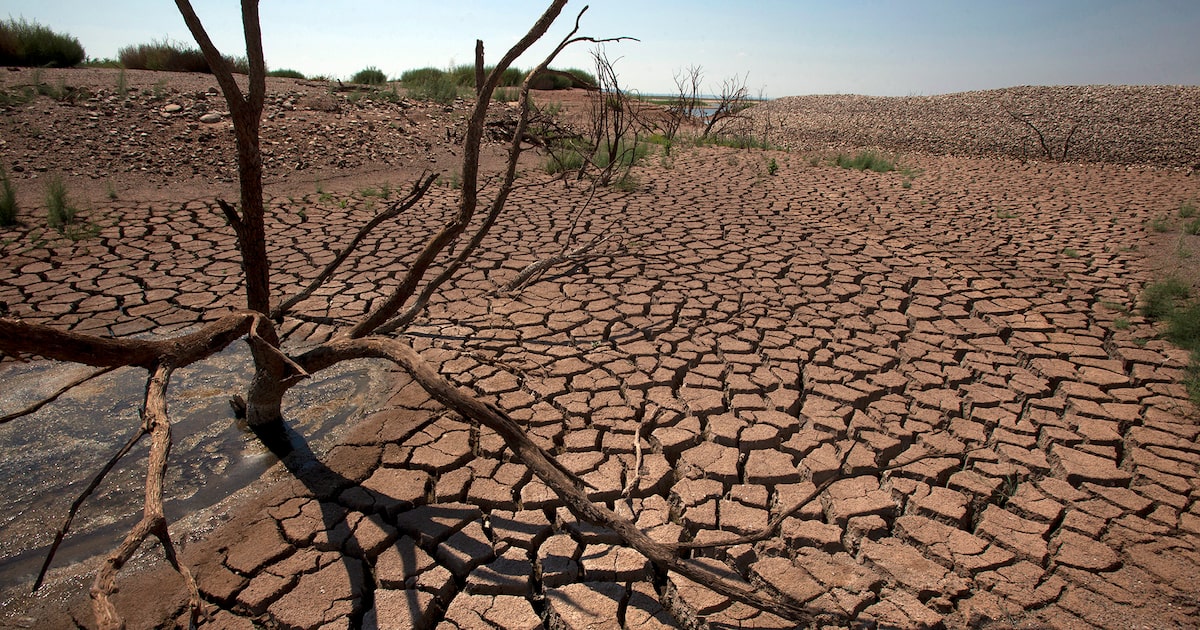
Water is an especially vital resource in Far West Texas, where it’s increasingly scarce as the population booms. Limited aquifer recharge, stressed spring systems, aging infrastructure and growing demands are straining the region’s water supplies.
While rooted in the Trans-Pecos, the organization’s work will inform water stewardship across other arid landscapes facing similar challenges.
The institute was created with the goal to strengthen understanding of desert water systems and expand the tools, workforce and partnerships to steward the resource wisely, according to the release.
“Water has always shaped the people, places, and opportunities of Far West Texas,” Eric R. Meadows, president and CEO of The Meadows Foundation, said in the release.
“Our commitment to the Institute and Sul Ross State University reflects our belief that careful, science-based stewardship is essential to sustaining both this vital resource and the communities who depend on it. This gift is an investment in the region to strengthen the knowledge and leadership needed for generations to come.”
Related
The institute’s work will center on three core areas: applied research, education and workforce development, and technical assistance and community support. Initial efforts will focus on groundwater recharge and flow paths, groundwater-surface water interactions, desert spring systems such as San Solomon Springs and Independence Creek, watershed dynamics, and the impacts of land management and climate variability.
Louis Harveson, Sul Ross State’s associate provost for research and development, helped guide the effort from conception to launch. He said the Meadows Foundation has consistently “provided the spark” for meaningful, science-based efforts, including investments that strengthen people and landscapes.
“Their leadership has helped advance water research and stewardship across Texas — including the Meadows Center for Water and the Environment in San Marcos — and now extends to Far West Texas through this new Institute,“ according to Harveson.
“That kind of vision allows universities to address regional water challenges while contributing knowledge that resonates far beyond a single place.”
 Water shortage threatens shutdown in Texas’ Big Bend National Park
Park officials are asking visitors to conserve water after a major pump failed.
Texas lawmakers, voters approved historic water investments in 2025. What happens now?
The passage of Proposition 4 dedicated up to $20 billion to the Texas Water Fund.
This reporting is part of the Future of North Texas, a community-funded journalism initiative supported by the Commit Partnership, Communities Foundation of Texas, The Dallas Foundation, the Dallas Mavericks, the Dallas Regional Chamber, Deedie Rose, Lisa and Charles Siegel, the McCune-Losinger Family Fund, The Meadows Foundation, the Perot Foundation, the United Way of Metropolitan Dallas and the University of Texas at Dallas. The News retains full editorial control of this coverage.