
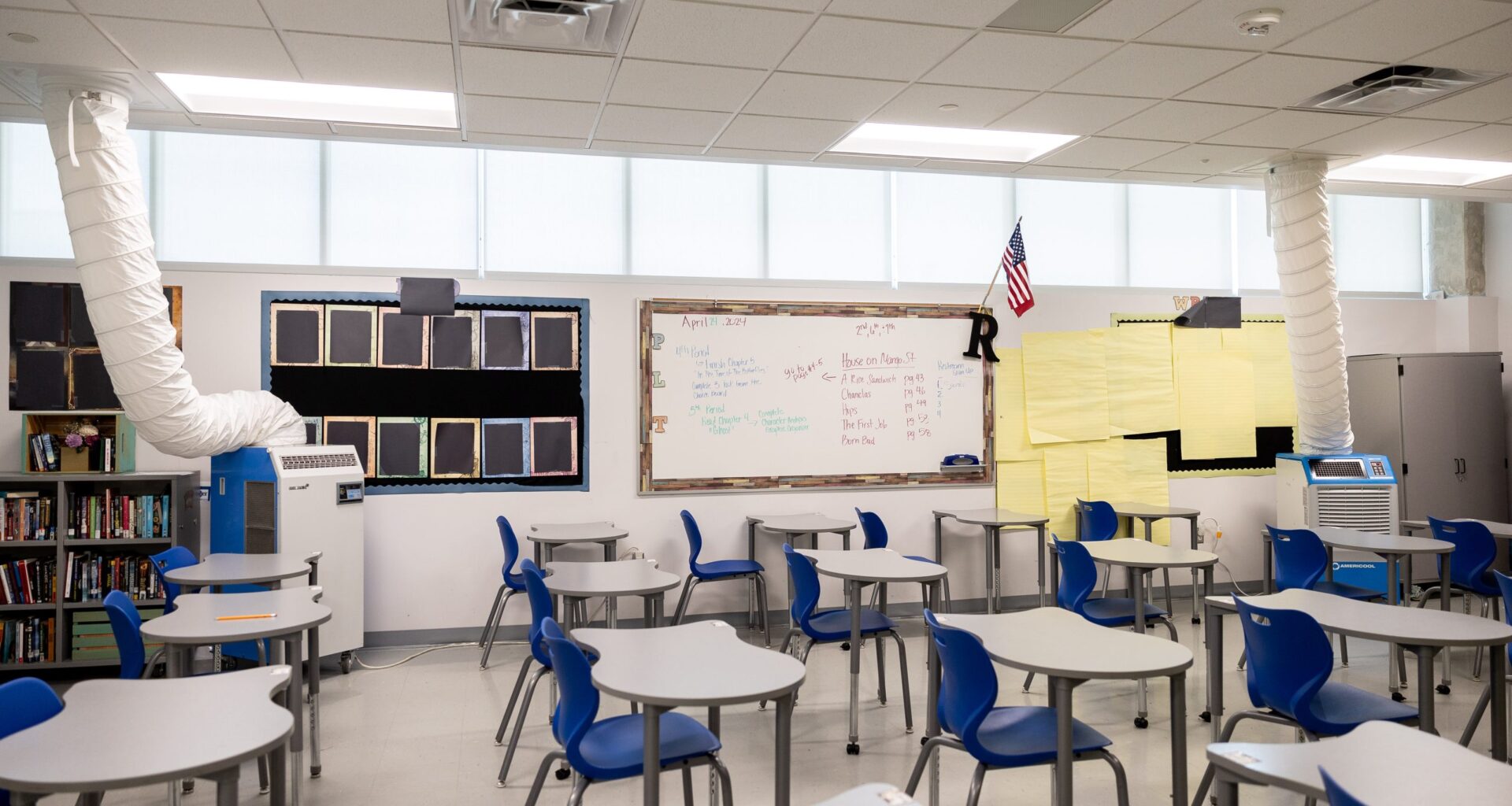
It’s been two years since San Antonio Independent School District was caught off guard by widespread heating failures during a cold snap, and one year since the district canceled classes while most school districts remained open during similar weather.
SAISD says it’s more prepared for the cold this time around.
“We are in much better shape than we were,” said Jenny Arredondo, chief operations officer for SAISD.
In January of 2024, SAISD was plagued by widespread heating failures in the early hours of the school day. Some parents picked their kids up early, others took space heaters to their kids’ classroom, children huddled close to keep warm as outside temperatures lingered between 20 and 30 degrees.
District officials were caught by surprise and largely unaware of the issue at first, eventually leading to the district closing for the remainder of the week.
Arredondo, then-executive director of SAISD’s child nutrition program, stepped into the chief operations officer role after top district leaders resigned on the third day of the closure.
In the following days Superintendent Jaime Aquino sent a letter to families apologizing for the heating mishandling. Months later, SAISD released an after-action report detailing everything that went wrong.
District leaders took responsibility for the failures in the report and promised extensive change to prevent a similar event from occurring again.
The following year — January of 2025 — at least one SAISD school encountered heating issues the morning students returned to classes after winter break, when temperatures were between 30 and 40 degrees. The district canceled classes the following day while most school districts in the area remained open.
At that point, SAISD had spent more than $75 million using bond funds to upgrade HVAC systems at its campuses over the past year, replacing several boilers and chillers.
Taking preventive action
Weather forecasts for the next two weeks this year are significantly warmer compared to years prior, with lows between 40 and 50 degrees, but Arredondo says SAISD is more equipped to face climate curveballs.
SAISD has so far spent $95 million from its 2020 bond on HVAC upgrades. Since the 2024 heating crisis, the district also implemented a preventive maintenance program for all HVAC equipment.
“It’s simple things like cleaning coils, greasing, moving, changing filters — things of that nature, and we have really seen some benefits and more efficiencies doing so,” Arredondo said.
As of the Report’s interview with Arredondo on Wednesday, she said all boilers have been inspected and are working.
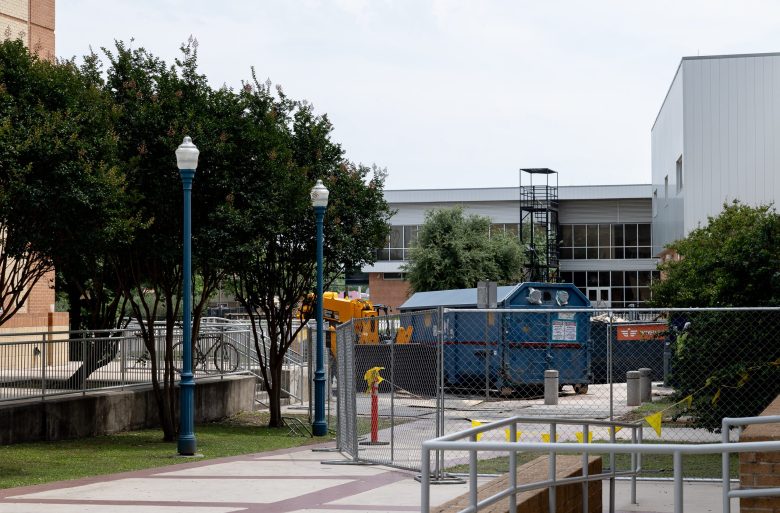 Construction work is pictured as part of the bond program for Sidney Lanier High School which included repairs to the HVAC system seen in May of 2024. Credit: Bria Woods / San Antonio Report
And SAISD tries to be several steps ahead of extreme weather events, Arredondo added. The operations team is already inspecting chillers, hoping to hit them all by spring break in March. After that, the team goes back to inspecting boilers, hoping to get to each one by mid-October.
SAISD operates more than 80 buildings across 79 square miles. Overall, the district has about 180 boilers, more than 200 chillers and an HVAC technician team of 20.
“We do struggle with vacancies from time to time,” but HVAC staffing shortages are not unique to SAISD, Arredondo said. “We leverage both our own staff, who we really rely and depend on, and oftentimes offset some of that with contracted services.”
Century-old buildings
The biggest facility-related challenge, however, is the district’s old age.
SAISD was established in 1899, and has several buildings that are more than 100 years old. Even if the district were to replace every part of HVAC equipment for every campus, the buildings themselves might not be able to support the new technology.
“That is our challenge,” Arredondo said. “I think that’s the biggest challenge that we face.”
Aging facilities, along with declining enrollment and budget constraints, have also played a role in SAISD’s “rightsizing” process, leading to the closure of several schools in 2024 and a potential closure of another school this year.
A “consequence” of the district’s more than century-long legacy is that it’s “harder and costs more maintaining and keeping the buildings and their infrastructure” updated, reads the after-action report released months after the heating issues in 2024.
Improving office culture
Part of the heating issues were also attributed to a disorganized work order system that buckled and went down after being flooded by hundreds of calls two years ago, forcing campus administrators to use workarounds — calling central office staff to nudge the system.
Team-building and open communication has been a big priority since then, Arredondo said. The district created “standard operating procedures” for the Operation Services Division, which largely deals with facility maintenance, and schedules more training and professional staff development.
SAISD also implemented a new ticketing system this school year, centralizing all work and repair orders across the district.
“The benefit of this new platform is it provides the district and the department with a lot of data, so we’re able to manage and keep track of the actual work orders,” Arredondo said.
Arredondo wants families to know the HVAC system at SAISD is still a “work in progress.”
While SAISD has “moved so far away” from the heating meltdown it faced two years ago, Arredondo warns it would be unrealistic to think nothing would ever go wrong, especially when a district has buildings as old as SAISD does.
The last thing the district wants, Arredondo said, is to close schools again and cut student instruction short.
“We will always have to experience extreme temperatures both ways,” she said. “But I’m confident with the processes, the procedures and the work that we have done, we are better equipped to handle those extreme temperatures.”