
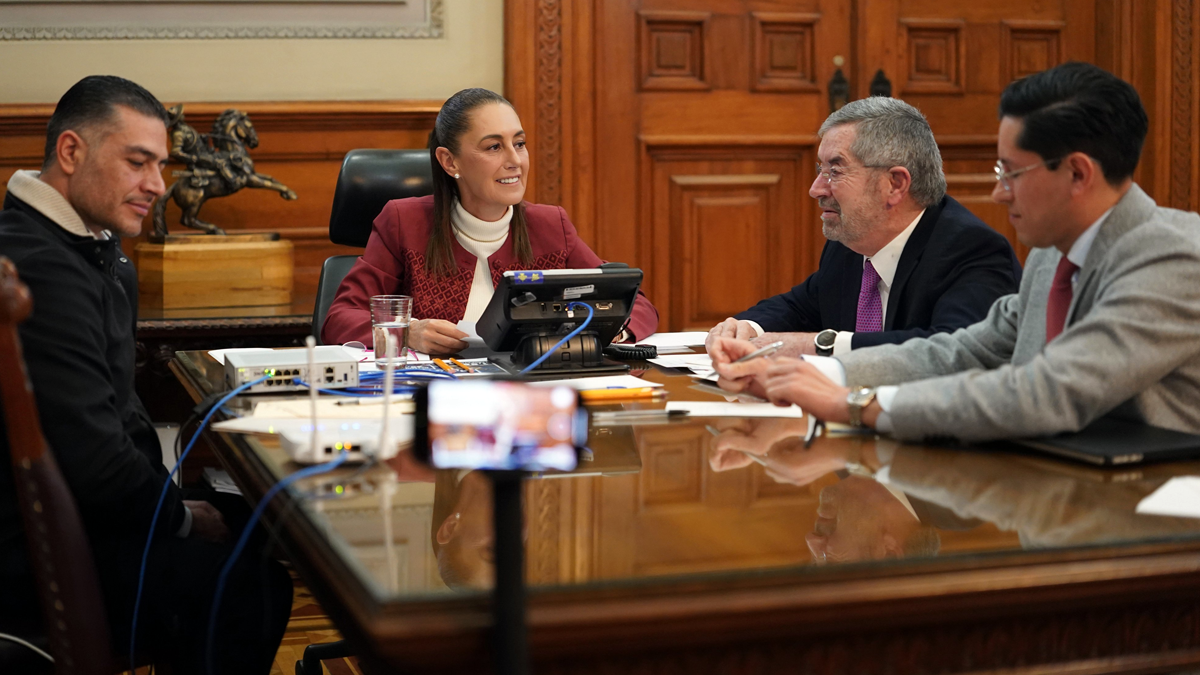
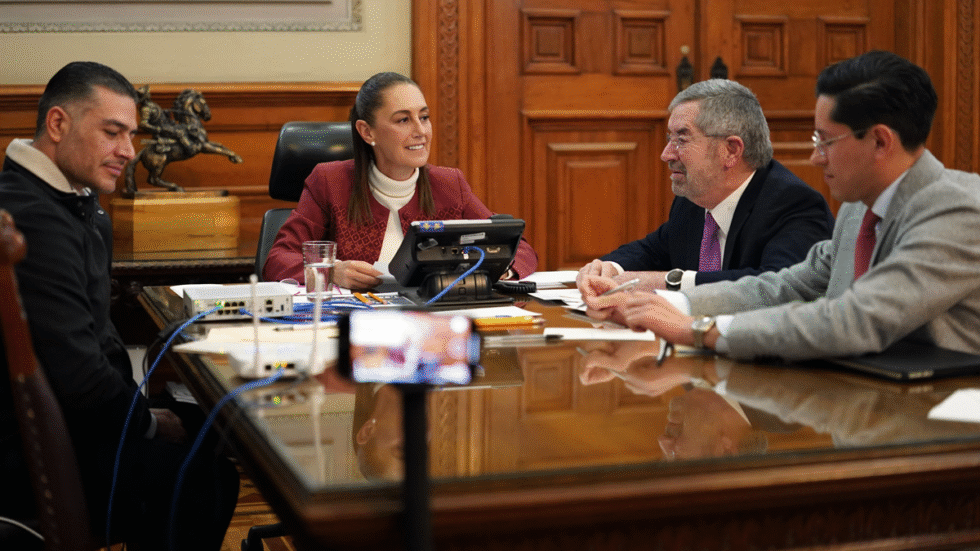
MEXICO CITY, January 13, 2026: In a fifteen-minute telephone call yesterday morning between Mexican President Claudia Sheinbaum with Donald Trump, Sheinbaum reasserted México’s sovereignty. Sheinbaum said after the telephone call that the conversation was “cordial” between the two heads of state.

According to a statement issued online by Sheinbaum, the telephone call was led by “security with respect for our national sovereignties.” The telephone call also included lowering drug trafficking and cross border trade and investments, and continued collaboration and cooperation between both countries under a framework “of mutual respect,” that “always lead to results,” she posted.
During his first term in office, Trump tasked then-U.S. Defense Secretary, Mark T. Esper, about the possibility to launching missiles into México. Trump has recently threatened military action against México in two recent appearances on Fox News.
Trump’s continued belligerence towards the Mexican state led 72 House Democrats to deliver a letter to Secretary of State Marco Rubio warning that any unilateral against México “would destroy trust, eviscerate cooperation with Mexican authorities, and make it harder to keep drugs out” out of the country.
The Trump administration’s recent success in removing Nicolás Maduro from Venezuela has seemingly encouraged Trump to believe that U.S. military power can force the changes he wishes to impose on other countries without waiting for diplomacy to work.
After the Venezuelan law enforcement/military action on January 3, the Trump administration has fixated on threatening the sovereignties of Greenland and México. However, the Trump administration faces a crucial problem with using the U.S. military to target Mexican drug cartels without coordinating with the Mexican government. México is now America’s number one trading partner for imports and exports. Any disruption of trade between both countries would be economically devastating to both economies.
During her daily morning press conference after the telephone call with Trump, Sheinbaum was asked by Venezuela’s Telesur journalist what motivated Sheinbaum to schedule a call between her and Trump. Sheinbaum responded, humorously, that on three recent occasions Trump has said that he “wanted to have more participation in México’s security.”
“Under these conditions, it is always better to look for a conversation,” she responded. According to Sheinbaum, Trump “always insists in the participation of U.S. military forces,” to which she responds that “it is not necessary,” adding that México is clear about defending Mexican territory. She added that she reminded Trump that U.S.-México collaboration “is working,” making U.S. military participation “unnecessary.”
Sheinbaum said that she felt that U.S. military action in México had been “ruled out” after yesterday’s telephone call.
After the Sheinbaum-Trump telephone call, Principal Deputy Spokesperson Tommy Pigott released a statement about a conversation between Rubio and Mexican Foreign Minister Juan Ramón de la Fuente. According to the statement, “Secretary Rubio reaffirmed the United States’s commitment to stopping narcoterrorism and stressed the need for tangible results to protect our homeland and hemisphere.”
When asked about the statement, Sheinbaum responded that she disagreed with the term “narcoterrorism,” explaining that the Mexican Constitution addresses terrorism under a different legal framework. According to Sheinbaum, Mexican terrorism laws do not defined terrorism as part of organized crime. Instead, the Mexican legal system defines terrorism as direct action against the government to remove it from power.
Sheinbaum added that the Mexican government “disagreed” with the American implication that labeling organized crime as terrorism “implies an American intervention of México.” Sheinbaum added that her government is clear about foreign intervention by underlining a recent addition to the Mexican Constitution that declared “the Mexican state rejects any form of foreign intervention.”
The Mexican president explained that although her government does not agree on many aspects of the Trump administration’s current policies, including mass immigration deportations, that as “neighbors” and “commercial partners,” she seeks to keep an open dialog between both governments helping to keep cooperation ongoing between both countries.
As for the possible use of U.S. military force in México, Sheinbaum reiterated that she believes that has been “ruled out” for now.
Like Us and Follow Us On Our Social Media!
Photo credit: Mexican President Claudia Sheinbaum at the National Palace holding a telephone call with Donald Trump, January 12, 2026. Also present, Secretary of Security Omar Hamid García Harfuch, Foreign Minister Juan Ramón de la Fuente and Undersecretary for North America, Roberto Velasco Alvarez. Mexican Government photograph.
This article is published in partnership with Fronterizo News.
Author’s note: all Sheinbaum’s comments were translated from Spanish to English by the author.
Visited 12 times, 12 visit(s) today