
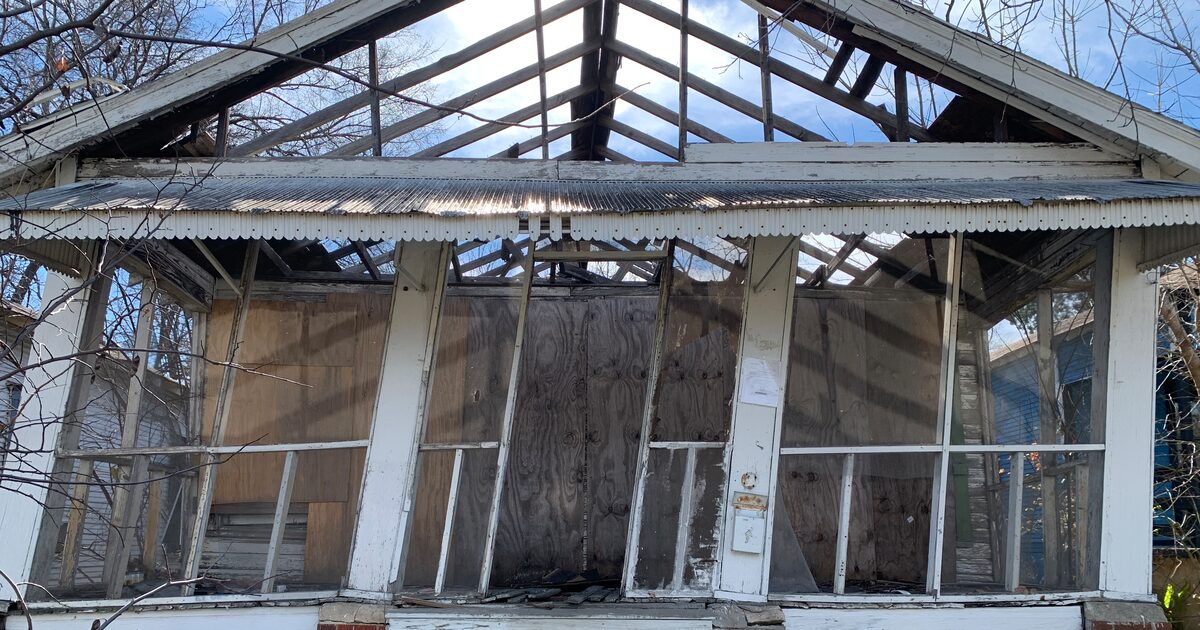

I spent Monday morning walking the Tenth Street Historic District — what remains of it, anyway, thanks to the speculators, developers and decay spread across the former freedman’s town at the doorstep of the under-construction deck park above Interstate 35E. Along some streets, at least, the faded plywood boarding up doors and broken windows seems to be all that’s holding up some of the homes; that and city-issued citations and court orders stapled to the vestigial remnants of residences still standing by the grace of God.
This neighborhood, settled by freed slaves following the Civil War, was officially proclaimed historic by city ordinance in 1993, then, in 2019, deemed among the nation’s most endangered historic places by the National Trust for Historic Preservation. Back then, I wrote often about the interest in — and possibility of — stemming the tide of the demolitions leaving open wounds throughout the neighborhood. Seven years later, the sores still fester.
Just last week, an investor with property on Betterton Circle was at City Hall, where his lawyer asked the Landmark Commission for the OK to demolish a 101-year-old Craftsman. There used to be 260 homes and buildings considered part of the historic district; the last time anyone did a count, years ago, about 80 had been demolished. This was D Realty Investment Inc.’s second attempt to raze the historic home in the seven years since its purchase.
Grand Prairie attorney Kim Thorne said his client, Juan Carranza, had hired inspectors who “fell through the floor” and determined the house was “in danger of collapse.” Which, after having walked around the house, I believe is probably true. Except, as several commissioners pointed out, Google Streetview shows 1023 Betterton was inhabited as recently as February 2019 — and looked almost brand-new seven years before that.
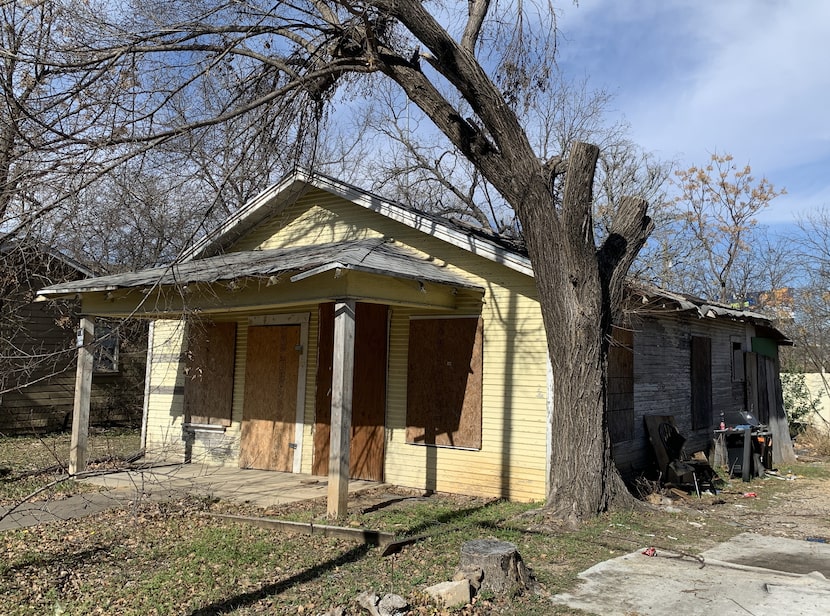
An attorney representing the owner of this century-old house at 1023 Betterton Circle was at Landmark Commission last week, trying — again — to get it demolished.
Robert Wilonsky
“We have a law against something called demolition by neglect, where people purposefully let their building fall apart,” Landmark chair Evelyn Montgomery told Thorne. “You certainly would not want to be guilty of that.” She didn’t mention that the city attorney’s office has been investigating the property for code violations since September, though I am not sure what’s to investigate at this point — the thing’s more hole than house.
Opinion
Landmark denied the demo permit, as it should have. But we’ll see what the next strong storm has to say about that. Thorne and Carranza didn’t return my calls about what they’ll do now. If history is any judge, nothing.
But 1023 Betterton Circle is hardly unique. Houses all along the street, especially those closest to the highway, are boarded up, nearly all considered contributing structures to the historic fabric of the neighborhood slowly being erased from the city’s history.
The screened-in porch at 1018 Betterton, a Craftsman built in 1925, is covered in plywood; so, too, the windows and doors at 1024 Betterton, where the porch is in pieces, barely holding up the columns close to collapse. Its owner lives in Waxahachie.
A few doors down, 1104 Betterton is a century-old home so hollowed out that it just has rafters but no roof, and leans in different angles depending upon from which direction you approach it. Its Houston owner was sued by city attorneys last summer and is due in municipal court in March.
Such is the story all throughout Tenth Street, even on the alley-narrow Noah Street behind the historic-markered Greater El Bethel Baptist Church, which opened in 1926 and was designed by Booker T. Washington’s son-in-law, William Sidney Pittman.
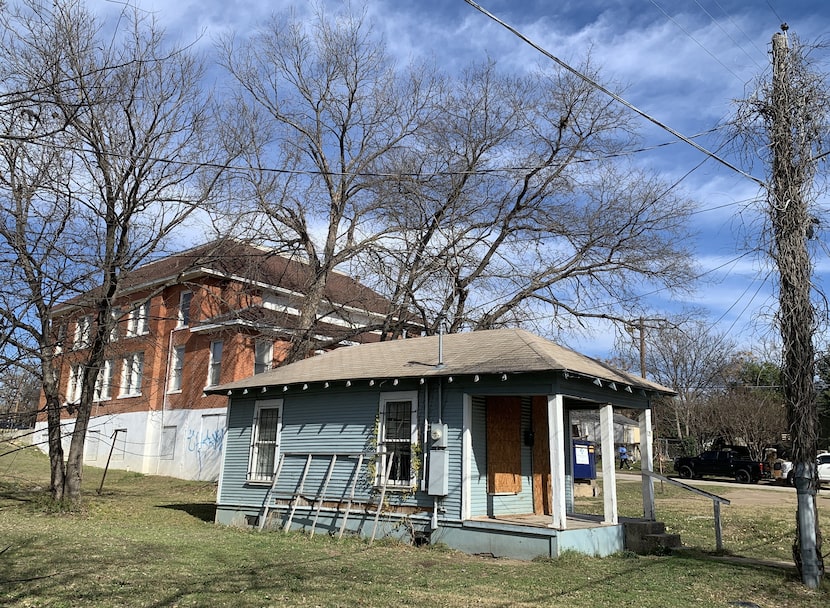
A shotgun shell of a house sits boarded up on the narrow Noah Street just behind the historic-markered Greater El Bethel Baptist Church, which opened in 1926 and was designed by Booker T. Washington’s son-in-law, William Sidney Pittman.
Robert Wilonsky
A 106-year-old shotgun house sits in the church’s shadow. A few years ago, when the church owned it, the house was occupied. Today it’s owned by a Houston property management company with a Richardson office, just another lousy shotgun shell surrounded by properties with owners in Lancaster, Red Oak, Sunnyvale — you get the point.
There are a few nice new houses, like the $355,000 Craftsman-wannabe at the corner of South Cliff and East 11th streets, which has been on the market for some four months and, per Zillow, whose builder is “motivated.” But nobody’s confusing Tenth Street with the nearby Bottom, whole stretches of which have been remade in the time it’s taken Tenth Street to further fall apart.
Six years ago, the Tenth Street Residential Association took the city to federal court to slow down the demolitions. But in August 2020, when the world was otherwise occupied, the U.S. Court of Appeals tossed the case, insisting that “Tenth Street homes fall into a state of disrepair oftentimes due to absentee homeowners’ neglect.” Making it harder to demolish houses, the court said, “would do nothing to help save additional homes from decrepitude or restore current decrepit conditions.”
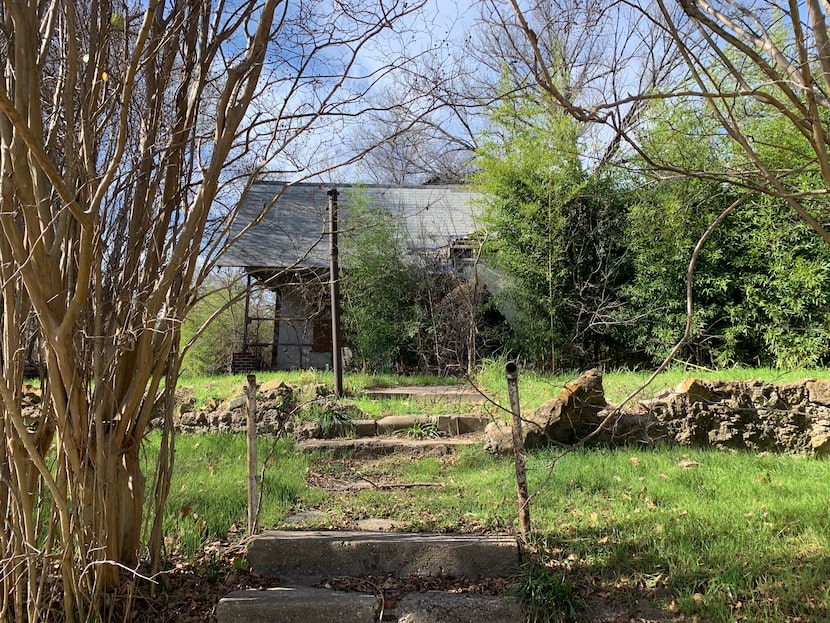
The abandoned 95-year-old two-story residence at 223 S. Cliff isn’t considered contributing to the Tenth Street Historic District, though it lies within its boundaries. On the front porch, the city has stapled multiple code citations in recent months — for a whopping $386. Total.
Robert Wilonsky
Former council member Carolyn King Arnold tried to stop the demolitions in 2019, but to no avail. Then-Assistant City Manager Majed Al-Ghafry told the council via memo in February 2024 that since the city had made it easier to demolish homes smaller than 3,000 feet in 2010, 35 homes had been razed in the district. “The default for these homes became demolition,” he wrote, “rather than consideration for rehabilitation.”
As a result, Tenth Street resident Larry Johnson told the Oak Cliff Advocate, “At this point, there’s really not a lot of Tenth Street left to tear down.”
I called Katherine Seale, formerly the executive director of Preservation Dallas and ex-Landmark chair, to ask how we got here. In 2006 she inventoried what remained of the contributing homes; 12 years later she warned that the houses would continue to crumble while the land beneath them grew only more valuable.
“You continue to have decay with no plan, no vision,” she told me Monday. “The city used to have a plan for helping neighbors help themselves, but there’s no real desire to do anything in Tenth Street. What are we actually doing? It’s fine to say yes to this and no to that. That’s an important part of preservation. But it’s impotent without some kind of a vision.”
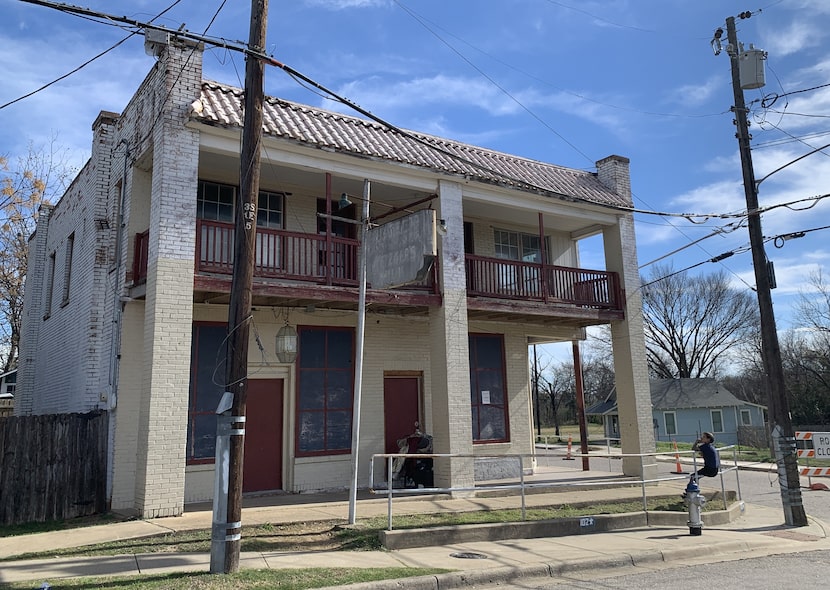
Linda Medina was sitting Monday in front of the old grocery and bar at the corner of 10th and Cliff streets, where you can still make out “Metzger’s Milk” on the faded sign.
Robert Wilonsky
I finished my walk Monday at the old bar and grocery at the corner of 10th and Cliff streets, where you can still make out “Metzger’s Milk” on the faded sign in front of the two-story building. A few years back, it was inhabited by a mechanic trying to bring the building back to life. Now it has a new owner — James McGee, president of Southern Dallas Progress CDC — and is again boarded up, sitting alongside two century-old homes McGee has restored and painted gray.
“They took all the history out of ’em,” said a young homeless woman with stars tattooed around her eyes. Linda Medina told me she’d lived in the area for the last three years, and that “it can be hectic with, ya know, hood stuff – drugs, prostitution.”
She said she cleans yards for money and will sometimes do odd jobs for the church. She knows all about the district’s history, the good and the awful of it. I said the houses look nice — at least they’re standing, habitable. More than you can say about much of the district.
“Yeah,” she said. “Nice houses. But this is a historic district. And now you don’t know nothin’ about ’em.”
I went to talk to someone else across the street, and by the time I returned, Medina had left. Shame. I was going to ask if she was interested in becoming a Landmark commissioner.