
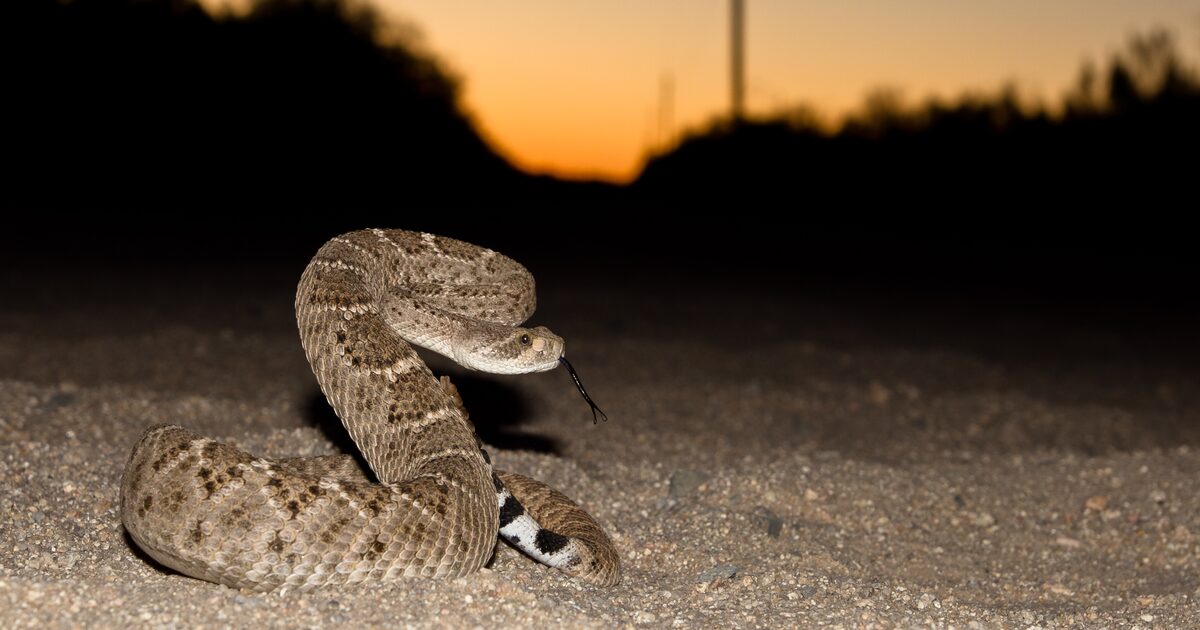
Texas is home to more than 100 snake species, including the western diamondback rattlesnake, which was recently documented for the first time in Denton County after being found in a suburban garage.
The discovery raised eyebrows, not because the snake slithered in from elsewhere, but because it may point to a population that’s been there all along, said Greg Pandelis, collections manager at the University of Texas at Arlington’s Amphibian and Reptile Diversity Research Center.
“Diamondbacks in the D-FW area are already only in certain pockets,” such as in Dallas and Tarrant counties, said Pandelis, whose research center ended up with the Denton County snake. “They actually need a little bit more habitat to persist. You can’t just be in an entirely urban area and have a diamondback.”
Still, it’s important to know about it and other venomous snakes slinking around in North Texas. Here’s how to recognize them and what to do if you encounter one.
News Roundups
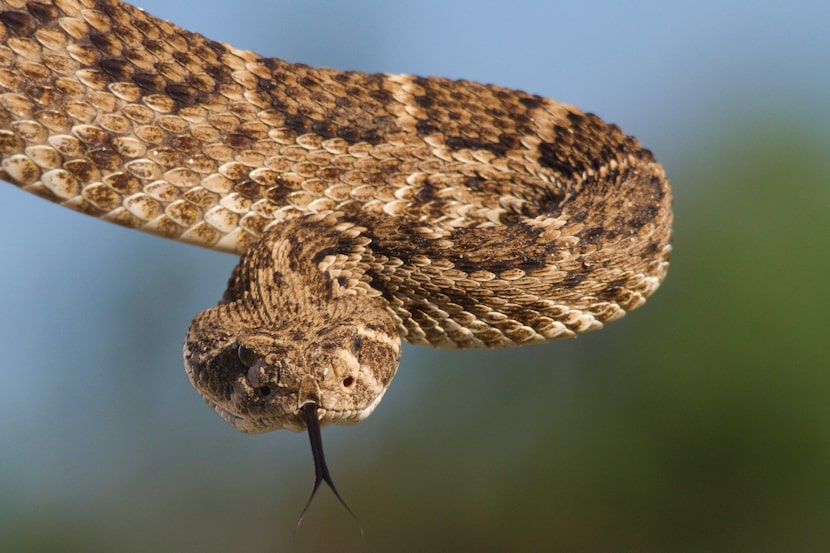
A western diamondback rattlesnake found in North Texas was later confirmed to be the first officially documented sighting of the species in that part of the state.
Irene Amiet / Getty Images/500px
Venomous snakes in Texas
Texas has two broad groups of venomous snakes: pit vipers — which include copperheads, cottonmouths and rattlesnakes — and coral snakes, known for their bright bands.
Copperheads — marked by chestnut, reddish-brown crossbands on a lighter body — are common in North Texas, especially by streams and rivers. Cottonmouths, another species in the region, usually stick to swamps and other still waters, though they occasionally turn up on dry land.
Rattlesnakes are known for their spade-shaped head and signature rattle. Those like the western diamondbacks are usually found in desert and plains habitats, Pandelis said, and are in the outer edge of their range in the D-FW area. Other rattlesnakes found as far north as Denton County include the timber rattlesnake, pygmy rattlesnake and massasauga rattlesnake, Pandelis said.
Coral snakes are often found in suburban neighborhoods, including in North Texas, and have shown up in backyards.
Like all snakes, venomous snakes are cold-blooded, relying on the environment’s heat to regulate their body temperature. Garages can be especially attractive for rattlesnakes such as the western diamondback, Pandelis said, because they offer a good spot to hide out and, in colder months, hibernate.
Venomous snakes may be seen as enemies, but they play an important ecological role by keeping in check pest and disease-carrying animals such as rodents. In another example, copperheads feed heavily on cicadas; without them to blunt cicadas’ boom-and-bust cycles, the insects’ numbers would surge and trigger ripple effects throughout the ecosystem, Pandelis said.
What to do if you see a venomous snake
If you see a venomous snake on your property, it’s best to call a trained professional such as a local animal control worker or a licensed snake relocator to remove it, Pandelis said. Don’t approach it yourself, he added.
“There’s a very pervasive myth amongst Texans that cottonmouths, also known as water moccasins, will attack people and will swim towards you in order to chase you and attack you,” Pandelis said. “That is just simply not true. Snakes defend themselves if you happen to come into their space.
Something like a rattlesnake is going to stand its ground if you approach it,” he said, adding that “a lot of bites happen from people messing with snakes deliberately.”
How to treat snake bites
About 70,000 people in the United States are bitten by venomous snakes each year, and about 1 in 500 — or 0.2% — die, according to Texas Parks and Wildlife. In Texas, an average of one to two people die annually from snakebites. Roughly half of bites from venomous snakes are dry, meaning they don’t inject venom.
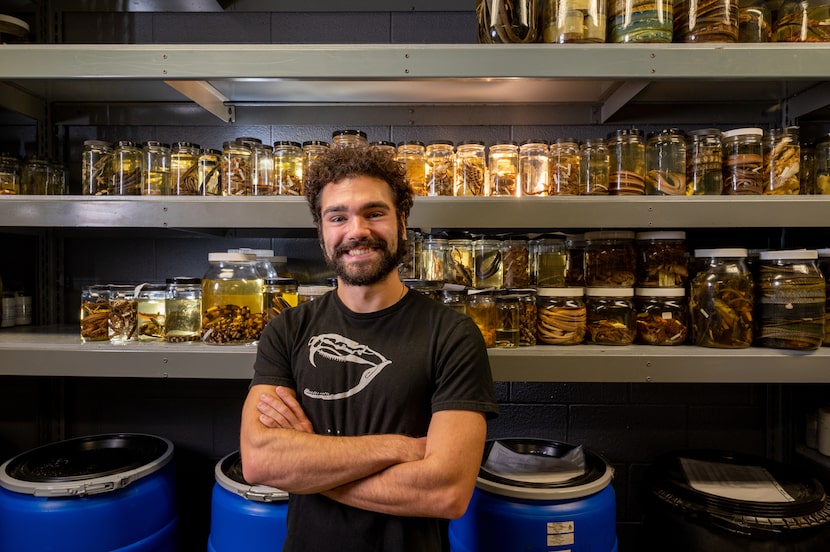
In an undated picture, Greg Pandelis, curator of the University of Texas at Arlington’s Amphibian and Reptile Diversity Research Center, poses for a photo at the Center.
University of Texas at Arlington
Most U.S. snakebites come from pit vipers, and about 56% of those are from rattlesnakes and 29% from copperheads. Most venomous snakes deliver their venom through hollow fangs that typically inject it into the tissue just under the skin. The venom rarely enters a vein, but when it does, it can spread rapidly through the body and trigger sudden, severe and potentially fatal symptoms.
The main treatment is antivenom (also called antivenin), an antibody-based medicine that binds to the venom’s toxins and neutralizes them. Given soon after a bite, it can reduce severe injury and may save a person’s life or limb.
What to do if you’ve been bitten
If you are bitten, seek immediate medical attention. Severe or life-threatening symptoms may occur within minutes or a couple hours. These include:
Pain and swelling at the location of the biteExcessive bleedingNauseaSwelling of the mouth and throat, making it difficult to breatheLightheadednessCollapse and shock (in the rarest cases)
The Centers for Disease Control and Prevention advises against trying any remedies to restrict or remove potential venom. This includes applying a tourniquet and cutting, sucking or icing the wound.
To avoid bites in areas where venomous snakes may be living, the Cleveland Clinic recommends the following:
Don’t put your hands and feet in spaces or unknown areas where a snake could be hiding.Wear high-top boots and long pants, especially in areas with high vegetation.Be aware of your surroundings. Don’t lie down in grassy areas where there might be snakes. Avoid approaching, touching or handling a snake if you encounter one.
Miriam Fauzia is a science reporting fellow at The Dallas Morning News. Her fellowship is supported by the University of Texas at Dallas. The News makes all editorial decisions.