
No one wants to live near an industrial site that belches pollutants into the environment, but there are parts of Dallas where residents have done just that for generations. Bringing them relief is difficult and drawn-out work. It’s also necessary.
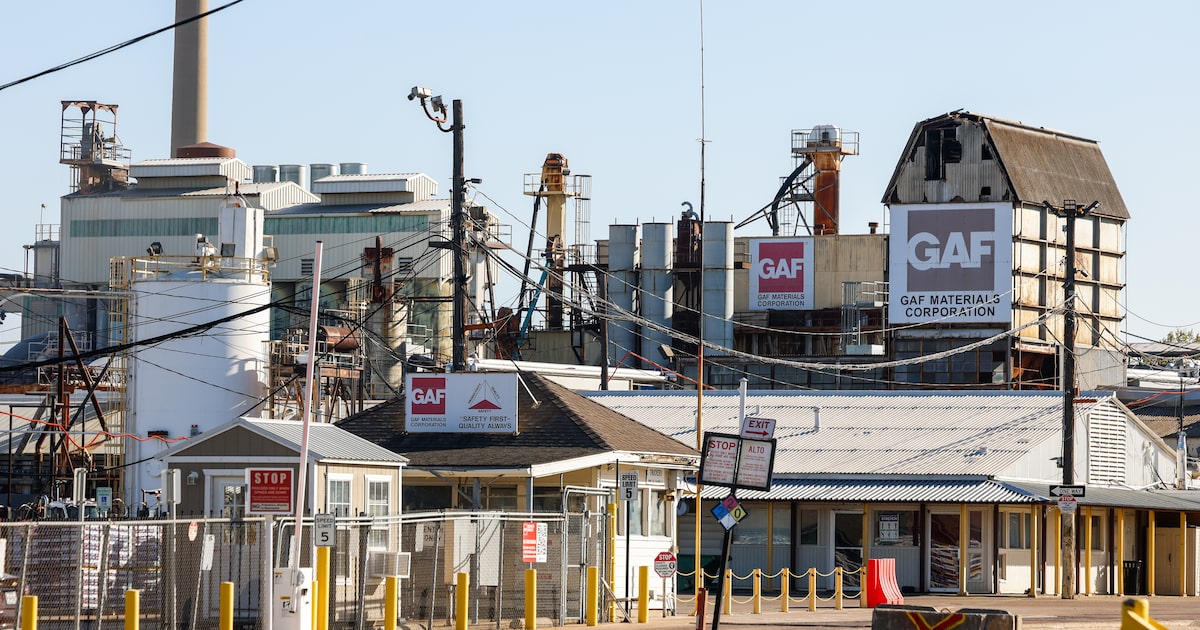
Over the years, efforts have centered on everything from a lead smelter in West Dallas to an electro-plating business in a southern Dallas neighborhood. Today, the spotlight is on a pair of shingle factories — GAF in West Dallas and TAMKO in Joppa.
For years, activists and residents have been asking the city to use a process known as amortization to force the plants to shutter. That’s a tool the city can use to force the slow closure of businesses that operate under old and now nonconforming zoning.
Traditionally, amortization has allowed cities to set a future closure date that gives businesses time to recoup the cost of being forced out. But under a 2023 state law, property owners or lessees can choose direct compensation for their losses from the city instead.
Opinion
The goal of the law was to favor business interests by putting cities on the hook for millions of dollars in up-front costs.
In November, Dallas City Council members Adam Bazaldua and Laura Cadena submitted a memo requesting a review of what it would cost Dallas to send TAMKO and GAF packing. The two council members submitted a second, similar memo in December.
Neither Bazaldua nor Cadena responded when we reached out for more information.
At any rate, Dallas’ consideration of amortizing GAF and TAMKO creates an opportunity to examine the two situations in detail. What makes sense in one case might not in another.
The situation on Singleton
GAF’s West Dallas plant is wedged between Singleton Boulevard and the railroad tracks. The company has operated it for almost 80 years, our newspaper reported last month. The plant became nonconforming in 1952, according to Bazaldua and Cadena’s memo.
Stretching out to the plant’s south, there’s an expanse of commercial and industrial properties: concrete companies, meat sellers and construction businesses. But the story is different with many of GAF’s other neighbors. The plant is surrounded by residential homes, a church, a junior high school and a community center.
No reasonable person would pretend GAF’s plant suits the neighborhood. The company doesn’t either and has agreed to shut down of its own accord.
“GAF remains fully committed to the timeline previously outlined for West Dallas, with operations ceasing in July 2029,” a company spokesperson said last week. “Since announcing plans to close the West Dallas facility, we have been supportive of repurposing the land in the future in a way that supports the city’s vision for West Dallas and will continue to work with West Dallas officials on those efforts.”
There is no reason for Dallas to spend taxpayer dollars forcing out a business that is already planning to leave. Even if it did, there’s no guarantee amortization would get rid of GAF any faster. The process can drag on for years.
The only reason we can think of for preferring a forced closure is that it would come with all the appearances of “winning.” Amortization would bring a heavy-handed, punitive feeling to GAF’s departure.
But that has nothing to do with what’s actually best for the community. What’s best is for the GAF plant to close so that the West Dallas neighborhood in its shadow can breathe cleaner air. In GAF’s case, the best way to accomplish that is to let the company leave on its own terms. Amortization is the wrong approach.
How things are different between TAMKO and Joppa
TAMKO’s plant is situated at Linfield Road and South Central Expressway — near the Great Trinity Forest and right across the railroad tracks from residences in Joppa. It has operated there for nearly 40 years, this newspaper reported.
Like those in West Dallas and other parts of the city, Joppa has shared its air with industrial polluters for generations. The former freedman’s town has also been the subject of long neglect from local leadership.
A TAMKO spokesperson said the plant is not a meaningful source of pollution in Joppa. The company pointed to investments in environmental controls and process improvements, and stated that the wind blows away from Joppa about 90% of the time, “making it physically implausible for TAMKO to impact air quality.”
“TAMKO values its long-standing relationship with the Joppa community and remains committed to continued investment in South Dallas,” the statement reads.
In deciding whether to pursue amortization, the city will have to independently and fairly evaluate TAMKO’s environmental impact.
But the use at TAMKO’s location became nonconforming in 1955, according to Bazaldua and Cadena’s memo. And residents have a right to want a better future for their neighborhood, and frankly, we can’t blame them. Who would want to share space with a shingle factory, even under the best circumstances?
Whatever the outcome, Dallas should pursue negotiations with TAMKO and other industrial operators to plan eventual exits. Setting aside pollution, industrial uses are no longer where these neighborhoods are, and it isn’t their future.
Where negotiation proves unfruitful, amortization should be an option.
The road forward
Amortization is complicated, expensive, heavy-handed and generally as unpopular as eminent domain in a state that champions business and private property rights. But it’s also an important, last-resort tool cities need for getting problematic businesses out of areas that are trying to grow and change.
It’s possible that state law has rendered amortization so cost prohibitive that it’s functionally useless. If that turns out to be the case, we would urge lawmakers to revisit this issue when they reconvene next year and look for a better balance.
In the meantime, it’s worth it for Dallas to study the cost of closing these two factories. Even though it won’t make sense in GAF’s case, it could make sense in TAMKO’s. And at any rate, the exercise could help Dallas get a sense of how state law will affect this tool going forward.