
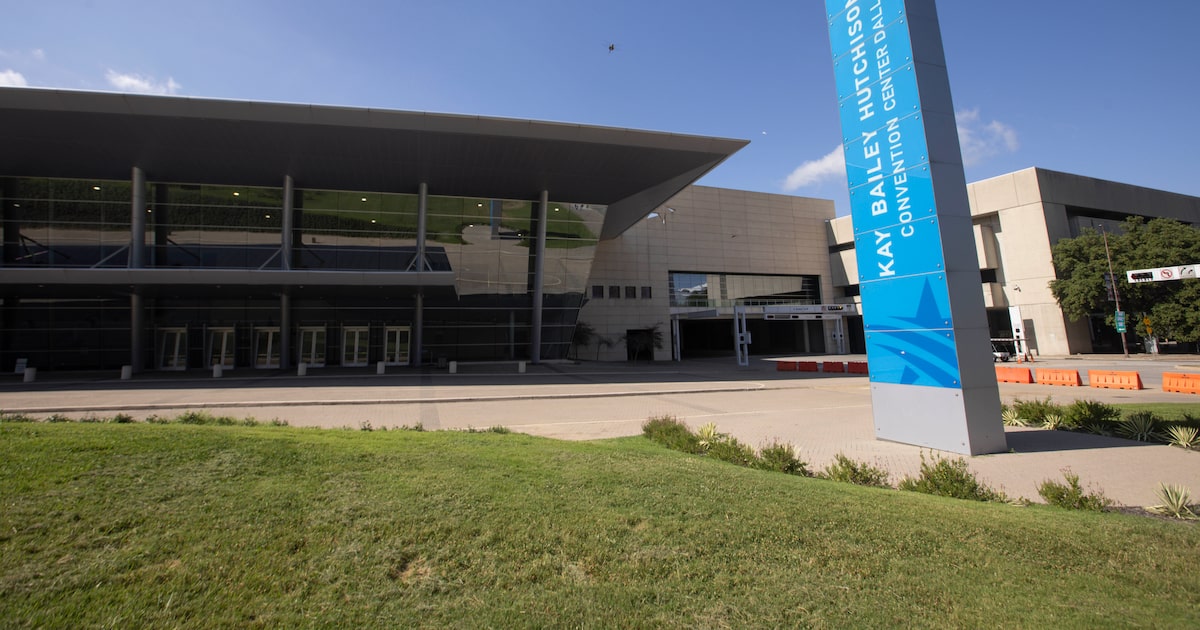
Dallas officials provided new updates Thursday on design and financing for the planned expansion of the Kay Bailey Hutchison Convention Center.
City officials say the changes add meeting rooms and retail space and may cost slightly less than earlier estimates. They plan to seek City Council approval for state loan applications in the coming weeks.
The presentation comes ahead of a City Council briefing Jan. 21 as Dallas readies itself for this summer’s FIFA World Cup.
The City Council approved $15 million in upgrades in December 2024 to prepare the convention center as the global broadcast hub for the FIFA Men’s World Cup.
Political Points
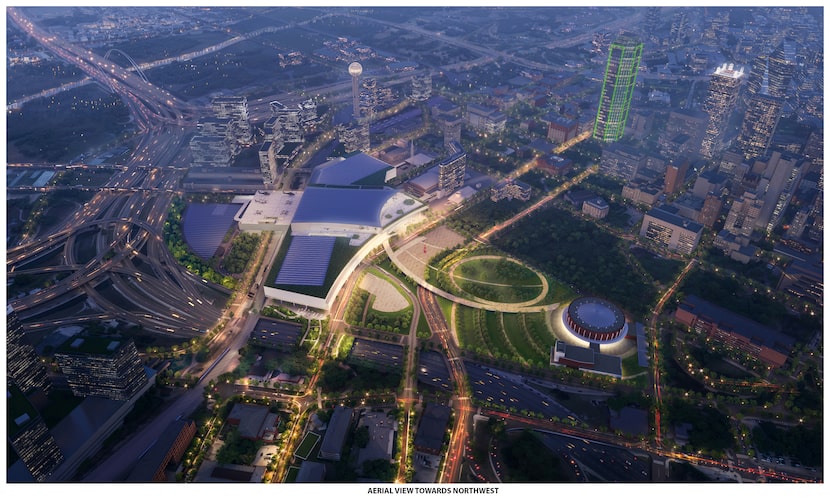
An aerial rendering from 2025 of the proposed new downtown Dallas convention center.
Amplify Dallas / Inspire Dallas
The City Council presentation says the completed work includes roof repairs, upgrades to heating and air-conditioning systems, enhanced power supply and improvements to cargo lifts and lightning protection.
It also says designers added 20,000-square feet for future retail space, consolidated ball rooms and added six new meeting rooms.
City officials report the convention center has 70 conventions booked for 2029 and beyond, with projected impacts of $1.19 billion in direct spending and $1.87 billion in total economic activity.
Related
Project officials told The Dallas Morning News last month that a “handful” of conventions scheduled for 2029 have asked to relocate, citing uncertainty as the new center is expected to open late that year. Inspire Dallas, which is managing the more than $3 billion rebuild, called the requests “standard procedure” during major construction.
The News requested records last month on conventions booked from 2025 through 2030. The city instead appealed to the Texas attorney general, citing “the privacy interests of third parties.”