
Plenty of money is sloshing around the Texas Senate race.
It’s being tallied on Polymarket, where political fortunes are measured in dollars instead of sound bites and TV ads. The odds are flickering as traders give a real-time read on candidate momentum — a month before early voting starts.
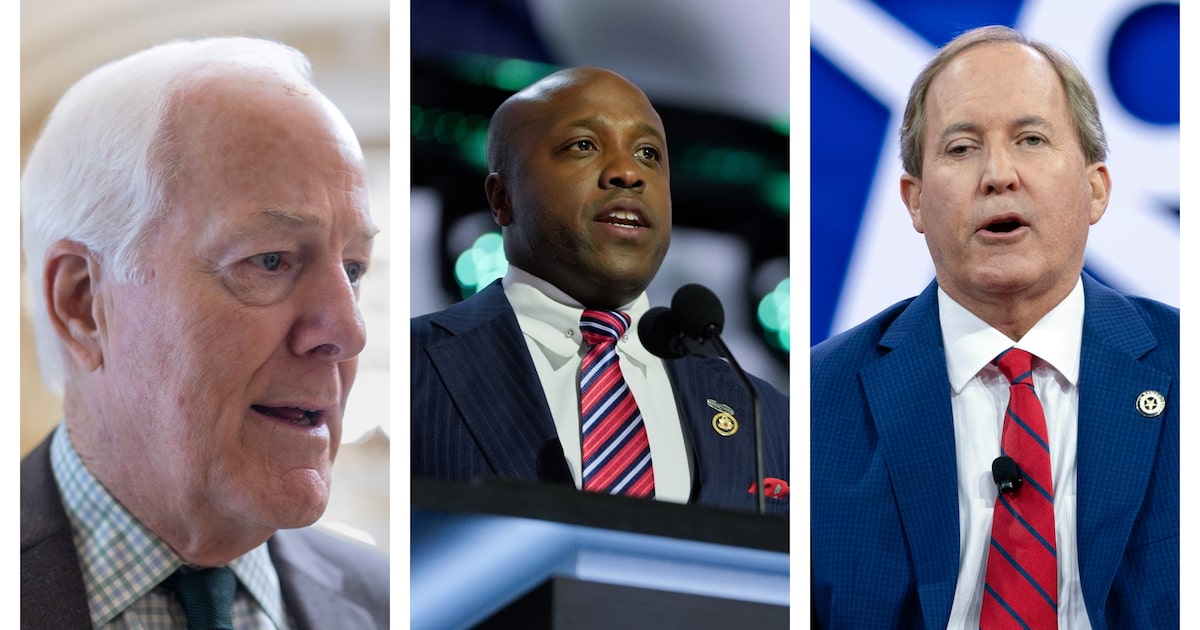
On the Republican side, the market has established a pecking order. Attorney General Ken Paxton is out front and incumbent Sen. John Cornyn and U.S. Rep. Wesley Hunt of Houston are trailing, with plenty of room for movement.
The Democratic matchup is similarly tilted. Here, traders are lining up behind state Rep. James Talarico of Austin over U.S. Rep. Jasmine Crockett of Dallas, a preference that looks real but not fixed.
Political Points
That’s because, in both parties, all of this comes with flashing caution lights.
Prediction markets are fickle by nature. They jump on headlines, wobble on fundraising reports and spike on viral moments, sometimes reversing course quickly.
The numbers for the Lone Star Five – three major Republicans and two Democrats in the March 3 primary – capture how the Senate contest looks in this moment.
On Polymarket, traders are not answering polls or filling out brackets. They are buying and selling shares tied to specific outcomes, such as their picks in geopolitical conflicts, sports games, pop culture trends and elections.
Polymarket is one of the world’s largest prediction markets, letting users buy shares, or “event contracts,” with cryptocurrency or traditional payment methods.
Each share trades between zero and one dollar, and the price functions like a probability.
If an outcome happens, each share pays out $1. If it does not, it pays nothing. So, a candidate trading at 60 cents is effectively being priced as having a 60 percent chance to win that race.
It’s all speculative, but some experts say there’s value in monitoring the platforms as a rough gauge of the public’s mood.
That constant churn also is what gives the markets their appeal, said Grant Ferguson, a political science instructor at TCU who studies campaigns and elections.
“These markets can actually give you a great perspective on what’s happening,” Ferguson said. “They often do reflect real movement in how experts view an election.”
As Texas races go, though, this one is still young. And the market, like the voters, has plenty of time to change its mind.
Big bet, big questions
Prediction markets have drawn fresh scrutiny after a single trade tied to Venezuela’s president delivered a massive payout and raised alarms about how the platforms work.
A lucrative trade: A Polymarket trader netted roughly $400,000 by correctly betting on Venezuelan President Nicolás Maduro being ousted from power.Timing questions: The trade of about $30,000 stood out for being placed just ahead of public announcements about the U.S. military capturing Maduro and taking him to New York to face criminal charges. System integrity: The wager focused attention on the bettor’s possible access to insider information and integrity risks in online futures-style markets. Polymarket has not commented on the Maduro-related bets.U.S. status: Polymarket was barred from operating domestically after a 2022 settlement with federal regulators. Under the Trump administration, the company said it had received clearance to return.
From wire reports
Greg Abbott’s campaign reports more than $100M in the bankLetters to the Editor — DART, Denmark, PE classes, minimum wage, immigrants