
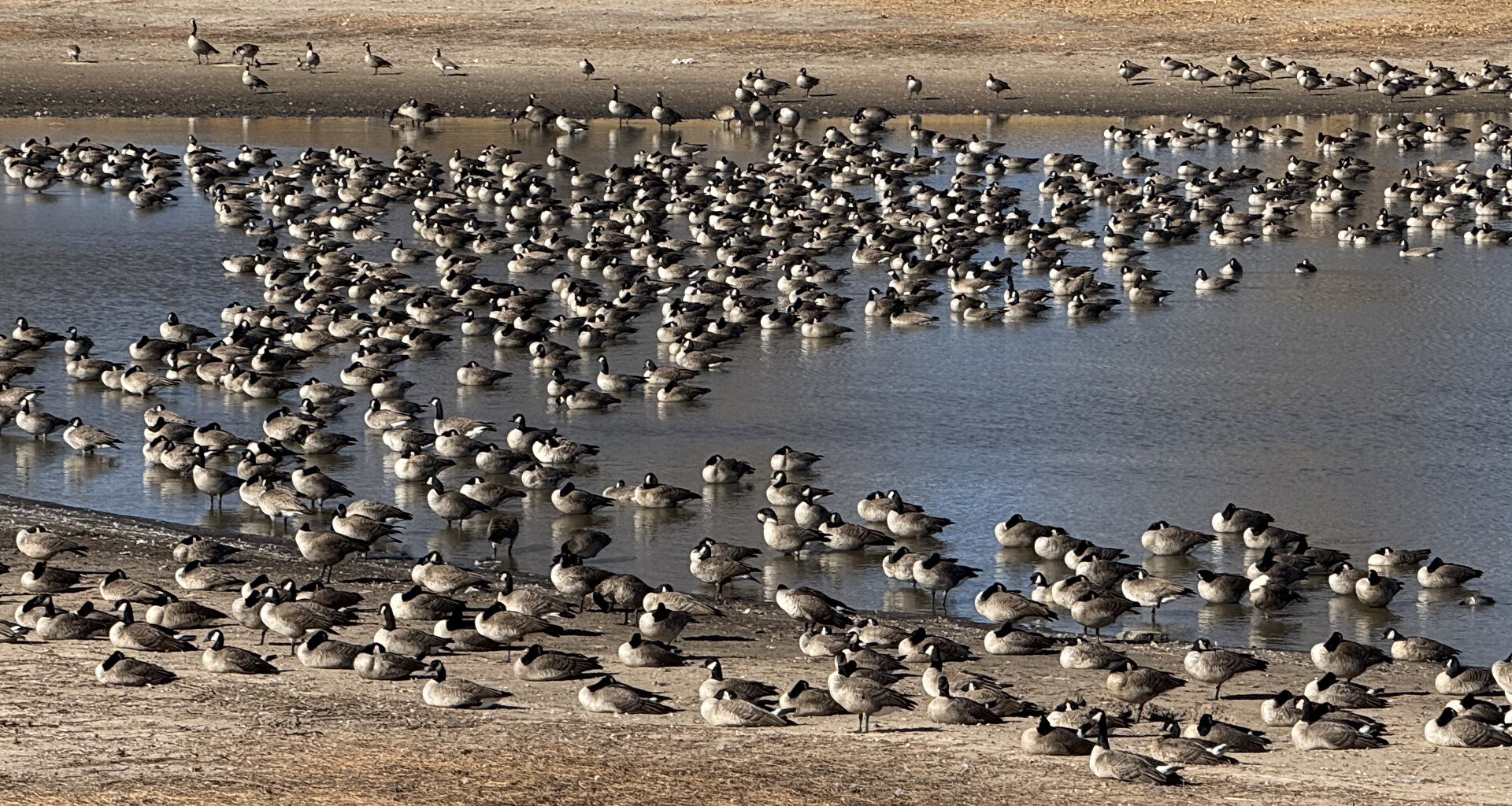
It might feel like there’s more geese in Lubbock this winter – with Canada geese wing-to-wing in many of the city’s playa lakes – but there are fewer.
“They’re more concentrated because there’s less water on the landscape. So, it looks like – it feels like there’s more,” said Heather Johnson, a migratory game bird biologist with Texas Parks and Wildlife (TPWD) based in the Lubbock area.
This winter has been warmer and drier. In Lubbock, the average high temperature for the first 14 days of January was 68 degrees. The normal is 54. The U.S. Drought Monitor weekly report, released on Thursday, showed the greater Lubbock area between moderate and severe drought.
“They’re still sitting in Montana, Colorado, Nebraska. So, we actually still have a lot of birds still sitting up north. So, there’s actually less birds here than normal,” Johnson said.
A current waterfowl survey for this winter has not been published yet, so LubbockLights.com does not have official numbers. But Johnson said, for example, about half the migratory birds on the Platte River in Nebraska have so far stayed up north and not come down to Texas.
Playa lakes inside Lubbock stay wet longer than those out in the country.
Anne Bartuszevige, the conservation science director with Colorado-based Playa Lakes Joint Venture, said, “Urban playa lakes do behave differently than the rural ones. … They’ve been sort of dug out and engineered so that they hold stormwater from runoff from streets.”
What are playa lakes?
Playas – also called mud holes, buffalo wallows, and lagoons – are round, shallow depressions found at the lowest point of a watershed. Their basins, which are lined with clay soil, collect and hold water from rainfall and runoff, creating temporary wetlands.
Source: Playa Lakes Joint Venture
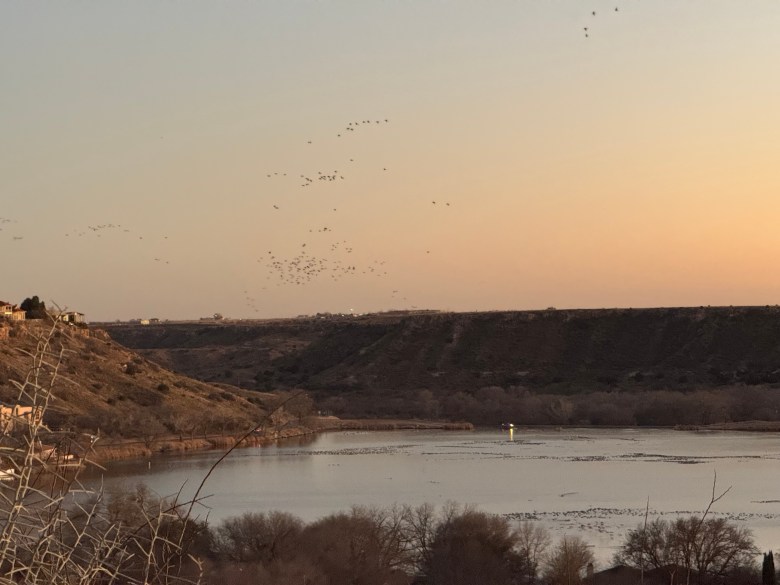
Geese on Lake Ransom. Credit: Staff photo.
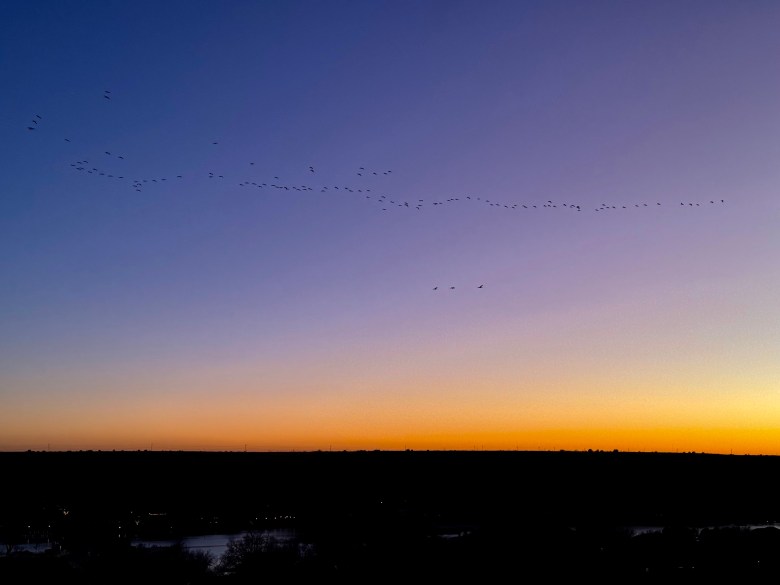
Geese over Lake Ransom at sunset. Credit: Staff photo.
The concentration of geese comes with problems like scarce food and more chances for disease. That can also turn into trouble for people.
The City of Lubbock dispatched a warning about avian flu on Tuesday, saying it was found recently in wild birds in Lubbock and surrounding areas. The Centers for Disease Control said there have been 71 human bird flu (H5N1) cases in the U.S. leading to two deaths since 2024.
The city statement said, “Close contact with infected birds, including handling them, can lead to transmission of the virus to humans.”
Johnson said she heard a troubling report Wednesday.
“Somebody had picked up a goose and was hugging on it, kissing on it. Don’t do that,” Johnson said.
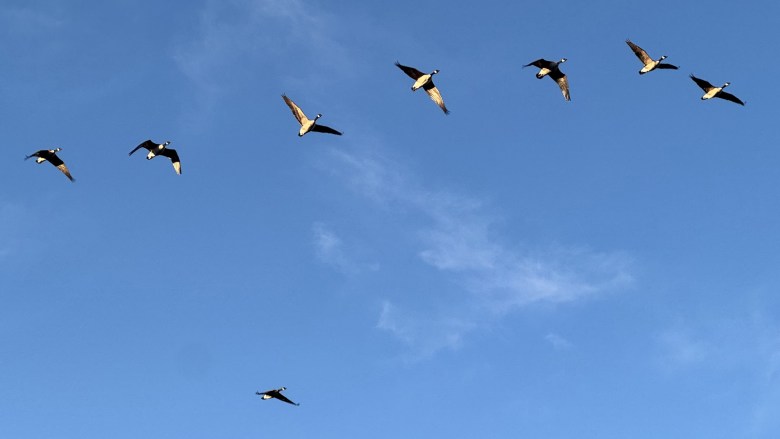 Geese over Ransom Canyon. Credit: Staff photo.
“Don’t take them to wildlife rehab areas because they’re not going to get better. Let the animal control and local authorities deal with it, and don’t touch the birds. We don’t want people getting sick,” Johnson added.
Steven Greene, director of Lubbock’s animal services, said he had not heard of anyone hugging or kissing a sick goose.
“However, we have had some persons interact with dead or deceased geese,” Greene said.
“Avoid interactions,” he said.
Johnson said Salmonella and Cholera are also risks of touching the birds.
Playas – lakes of life
“Critical” is how important playas are for migrating birds, according to Bartuszevige.
“They’re biodiversity hotspots. … They’re some of the only surface water available for critters to drink,” Bartuszevige said.
They also sustain plants, which in turn produce seeds.
“Then the water also causes all these invertebrate eggs, macroinvertebrate things like fairy shrimp and stuff like that to hatch,” Bartuszevige said.
Fewer wet playa lakes mean more trouble for migrating birds like Canada geese.
“Competition for food – the more animals you get in one area trying to eat the food – it depletes that area,” Bartuszevige said.
But they’re complicated.
“It’s equally important to be wet as it is to be dry,” Bartuszevige said.
Ironically, the playas need to be dry to recharge aquifers.
“They need to be dry long enough that the clay layer that is at the bottom of them dries out and that clay layer will start to crack,” Bartuszevige said.
When it does rain, the water can get into the aquifers through those cracks.
“They’re sort of an under-loved and under-appreciated ecosystem,” Bartuszevige said.
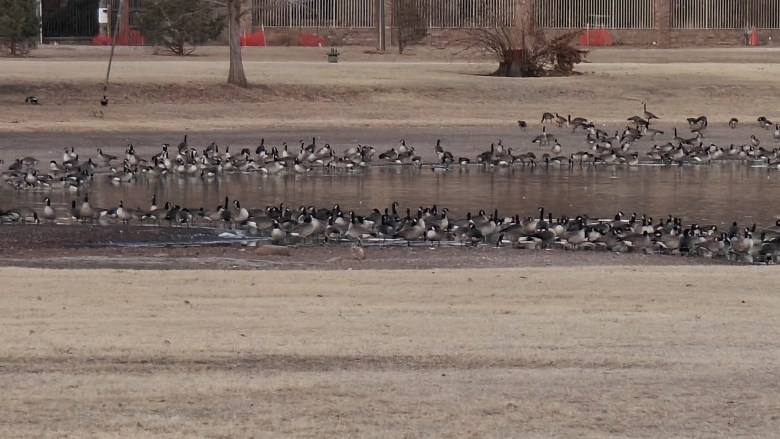 Geese at Frank Higinbotham Park. Credit: Staff photo.
Smart geese find the water
Migratory birds are smart. They know where to find the water, Bartuszevige said and Johnson agreed.
“They’re also really smart because city lakes are not getting shot at by hunters,” Johnson said.
“They’ve learned city municipal water is safe. We’re not going to get shot at or harvested, minimal predators, et cetera,” Johnson said.
“They have adapted to that, especially in the last 20, 30 years, to using urban water as roosting sites,” Johnson said.
But they’re even smarter than that. There’s a reason many of the migratory birds stayed up north.
“If there’s food, if they don’t have to migrate as far, … they’re not going to because they don’t want to expend that energy to come further down if they don’t have to,” Johnson said.
TPWD and other government agencies study the birds.
“We have several birds that are marked with transmitters that we’ve been doing over the last four years or so,” Johnson said.

Related

Related posts