
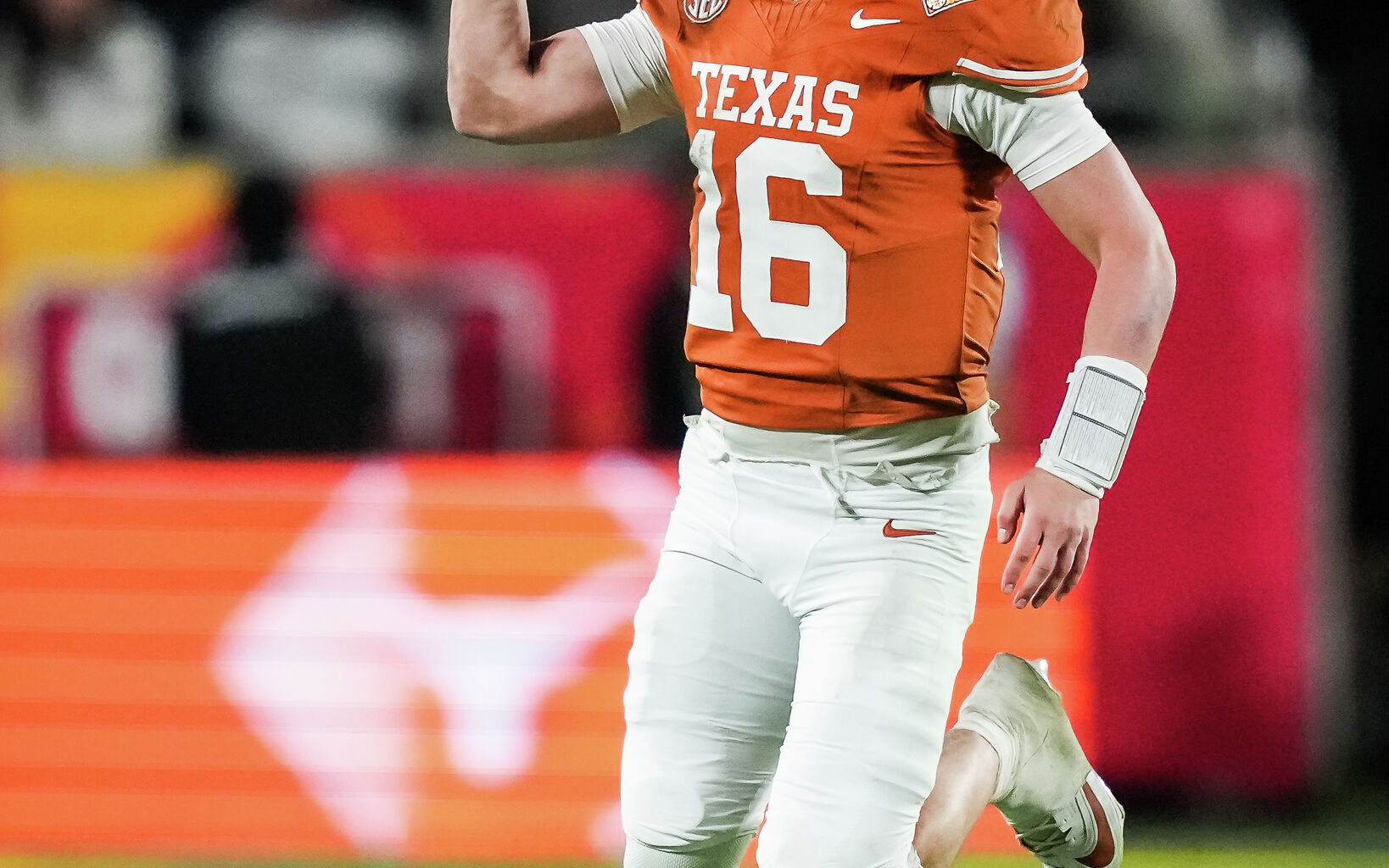
Before Arch Manning could release the deep ball, Florida defensive lineman Brien Taylor Jr. plowed over left guard Connor Stroh, latching onto Manning and slinging the Texas football quarterback to the ground with the ease of a large dog whipping around a favorite chew toy.
This was Manning’s life during the first half of the Longhorns’ season, with a six-sack showing Oct. 4 by the Gators marking the low point for a beleaguered Texas offensive line.
With its transfer portal movements — and roster-retention efforts — the Texas coaching staff has signaled its intent to avoid a similar outcome in 2026.
The Longhorns started their offseason by retaining left tackle Trevor Goosby, who was considered one of the five best NFL prospects at his position by prominent ESPN draft expert Mel Kiper Jr. Then, they added Oregon State guard Dylan Sikorski, who solidified himself as a strong interior pass-blocker during his redshirt freshman season with the Beavers.
Thursday, Texas landed a commitment from Wake Forest tackle Melvin Siani, one of the best pass-blockers in the nation last year. Just 10 other power conference tackles played 500 snaps or more and allowed 10 or fewer quarterback pressures. In seven of the 13 games he played, he did not give up a pressure, according to Pro Football Focus.
The difference between the offensive line Texas fielded during that disastrous effort at Florida in 2025 and the one the Longhorns could run out in 2026 looks dramatic — at least according to the metrics.
These are the five Texas linemen who played the majority of the snaps in that game, followed by the percentage of their 2025 pass-blocking snaps that resulted in a quarterback pressure against Manning:
• Brandon Baker: 4.6%
It’s unclear how exactly the Longhorns will align their offensive line to incorporate their additions — and more incoming transfers could be on the way. Moving right tackle Brandon Baker inside to guard to allow space for Siani is one solution that could make sense. If that scenario plays out, Texas could field an entire offensive line full of players who allowed pressures on less than 5% of their pass-blocking reps last season:
• Connor Robertson: 3.9%
Robertson’s introduction at center helped spark a midseason improvement for the Longhorns along the line, particularly in pass protection. In Manning’s first seven games, opposing defenses put him under pressure on 41.4% of his dropbacks. During his final six games, that pressure rate fell to 30.3%.
Manning’s first seven games ended with him completing 60.3% of his passes, averaging 207 yards per game with 12 touchdowns and five interceptions. In the second half of the season, when provided with a pass-protection unit that was merely average rather than disastrous, he posted a 62.3% completion percentage, averaging 286 passing yards with 14 TDs and two interceptions.
The unit in front of Manning has the potential to play more than just average football in 2026. If the Longhorns can support their quarterback with strong play in the trenches, what version of Manning can they unlock?