
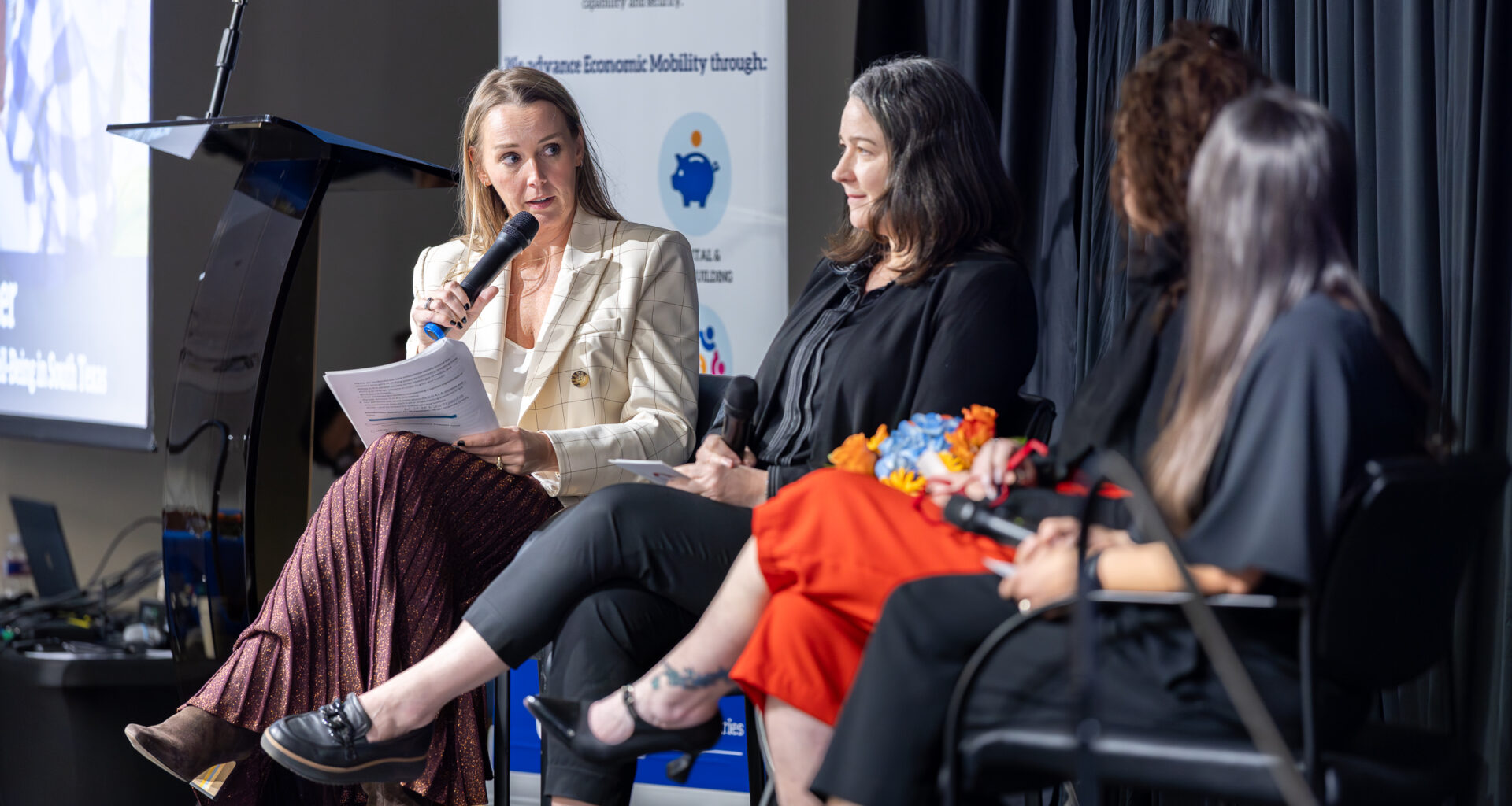
Direct monthly cash assistance coupled with a financial mentoring program helped poor San Antonio residents save money, reduce stress and improve health outcomes, according to a first-of-its-kind study conducted by Methodist Health Ministries.
The nonprofit previewed the results of its two-year-long, $7 million randomized clinical trial on Thursday, originally launched in 2022.
The study, known officially as the GOALS (Generating Opportunities for Achieving Lasting Success) initiative, involved nearly 600 participants from 13 of Bexar County’s poorest ZIP codes, ranging from 18- to 60-years-old.
Participants in the study were split into four categories: those who received cash assistance alone, administered via $500 monthly prepaid debit cards to be spent however participants wanted; those who received financial mentoring alone, those who received both cash assistance and mentoring (referred to as CashPlus), and a control group that didn’t receive any benefits.
Local researchers tracked participants’ self-reported health outcomes and financial well-being over the course of two years. The group that received both monthly cash assistance and financial coaching saw the most benefits, according to preliminary results.
This group experienced a decrease in depressive symptoms, increase in annual health checkups, overall reduced stress and self-reported well-being. Additionally, more participants were able to save money, reduce debt, cover emergency expenses, reduce late rent and utility payments and food insecurity.
This group also reported increased confidence in their understanding of budgeting, banking and financial literacy, and 35% of participants in this group enrolled in education or a training program.
“We had 40 or 50 different [well-being] indicators,” said Melinda Denton, a sociology professor with UT San Antonio and one of the lead researchers on the project. “The CashPlus group is consistently making significant progress, both compared to the control group and more so than the other two groups.
“We looked at things like their savings. That was where we saw the strongest results, in their ability to save and plan for emergencies. Poverty is expensive. People who live in poverty tend to be more likely to have an emergency like a broken-down car.”
This group also saw reductions in self-reported mental health issues like stress and depression.
“Having to make these decisions all the time and balance a budget, [not having enough] income to meet those basic needs takes a lot of mental stress and focus and leaves little room for longer-term planning and goal setting,” said Cecilia Ballí, a cultural anthropologist and researcher who conducted structured interviews with participants. “We heard about how exhausting it is to be constantly on the search for resources.”
Vanessa Tobares, director of strategy and impact at MHM, noted that although the results of the study were promising, structural barriers remained for many participants.
“They might move out of their parents home, but now they have higher housing costs, now they lost their child care,” she said. “Those are issues that they themselves cannot manage or change. So when we think about improving economic mobility, we have to continue thinking about both individual assistance … and changing policy and systems.”
MHM partnered with UT San Antonio’s College for Health, Community and Policy, which served as an independent third-party evaluator of the study; local nonprofits Family Service and Empower House SA, as well as Boston-based nonprofit Economic Mobility Pathways (EMPath), which crafted the financial mentoring program.
Thursday’s preview didn’t include the full results of the randomized control trial, which are expected to be released by MHM later this year. A full study will also be submitted to academic journals for publication.
The study was born out of the desire to find concrete ways to lift San Antonio families out of generational poverty.
According to Tobares, MHM has plans to implement direct cash assistance and financial mentoring in the future. The faith-based nonprofit also has a broader goal of contributing to the national conversation around strategies to improve economic mobility and reduce poverty in the U.S., Tobares added.
Methodist Healthcare Ministries is a faith-based nonprofit that does health equity work across South Texas. The organization makes up half of a 50-50 partnership with Nashville-based HCA Healthcare that runs Methodist Healthcare.
“Our board has committed to cash assistance and mobility mentoring being two interventions that we will invest across South Texas,” she said “It’s not going to be immediately across our 74 counties, but we’re going to start with some counties and then slowly roll them out so there will be funding in the future for community-based organizations who want to build their capacity around (this strategy).”