

Maybe the new year has you craving a change and reupholstery is on your to-do list. If so, may we suggest a refresher for yourself before starting on the furniture? Reupholstery can be a great idea, but it’s not an idea to pursue without preparation.
We asked Alejandro Gonzalez of Oak Cliff’s Tlazo Home to walk us through a primer for a successful reupholstery experience. Gonzalez has years of experience as a designer and sells new home furnishings with an emphasis on Latino artists and designers, plus a handpicked collection of refurbished vintage pieces.
Gonzalez says reupholstery isn’t a quick or inexpensive option. “But it’s a worthwhile project, because at the end you have this piece of furniture that looks like new and you have given it a new life,” he says.
Grab a notebook: Class begins now.
Get updates from Abode
Lesson one: intro to reupholstery
When should you consider reupholstery instead of buying new?
The first deciding factor is often sentimental value. A piece you love, something with a history that’s been handed down in the family, may be a perfect candidate for a fabric update.
Beyond that, the primary consideration is the underlying construction of the piece. “If it’s of good quality, then it is worth reupholstering,” Gonzalez says.
Not sure about the quality? Gonzalez suggests checking the price of a replacement piece at the store where the furniture was purchased. If it would cost less to buy new than to re-cover, the piece may not be a great candidate for reupholstery.
Dining chairs or other pieces with exposed wood frames or carved wood elements get special consideration. Gonzalez says they’re more frequently worth updating because of the materials and craftsmanship involved.
“Just throwing it away seems like such a waste,” he says.
Lesson two: fabric shopping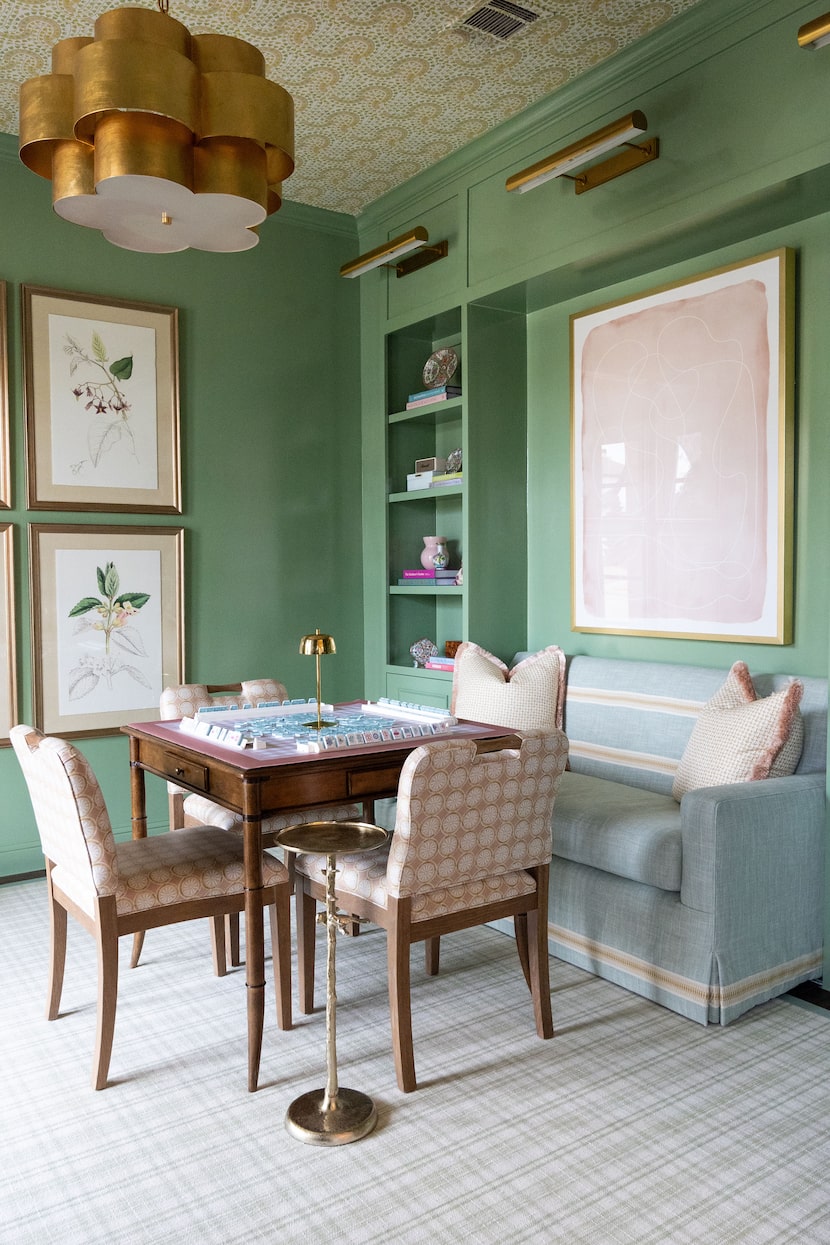
Woodbridge chairs were re-covered in vinyl laminated fabric by Blush & Ocre for a mahjong room designed by Sarah Kuhlman.
Brittan Chrisman
Before you head into the visual stimulation of a fabric store, have an idea what you’re looking for: Solid or patterned? Floral or graphic? Contemporary or vintage? Bold or understated?
Start by looking at the existing fabric and considering what you’d like to change and why. Gonzalez says to ask yourself: “What is it that I’m not liking?” Is the current fabric worn out but still a color or pattern you love? Or are you planning to switch up the whole vibe of a room and looking for a fabric to lead the way?
If you’re working with a designer, he or she will have access to high-end fabrics available in the Dallas Design District. But there are options for shopping on your own, too.
Gonzalez recommends Childress Fabrics and Uptown Fabrics, or the shops in the “mini fabric district” off Harry Hines Boulevard, particularly Wherehouse Fabrics and Best Fabrics.
Walk right past the quilting cottons and garment-weight material. Upholstery fabric can’t be too thin or too stretchy.
Fabrics are rated using a double-rub test in which a fabric sample is run through a machine and rubbed until it shows signs of wear. Gonzalez suggests choosing fabric with at least a 30,000 double-rub count for residential upholstery. (If you don’t see this information on the label, ask.)
When you think you’ve found the perfect fabric, buy just a cutting to take home and drape over your furniture. Live with it for a week or so, watching how it looks as the light shifts. If you’re still happy with it, you’re ready to find your upholsterer.
Lesson three: the expert
You shouldn’t have a problem tracking down a skilled upholsterer in D-FW. “This is an amazing design hub,” Gonzalez says. He recommends looking first for a shop in your own neighborhood. Fabric stores also may have in-house services or recommended shops.
Having trouble? Check out one of his two favorites: Hernandez Upholstery on Reading Street or RL Home Designs & Upholstery in Oak Cliff.
If you have a fabric cutting, take it to the shop along with photos of your piece to start the conversation. Be sure to check how the furniture will get to and from the shop — will they arrange transport or do you?
You can bring rough measurements, but the upholsterer will handle formal measurements and decide how much fabric the job will require. Don’t buy anything but a sample before choosing and consulting with an upholsterer.
The yardage needed will be determined by measurements, the size of any pattern in the fabric and an overage allowance.
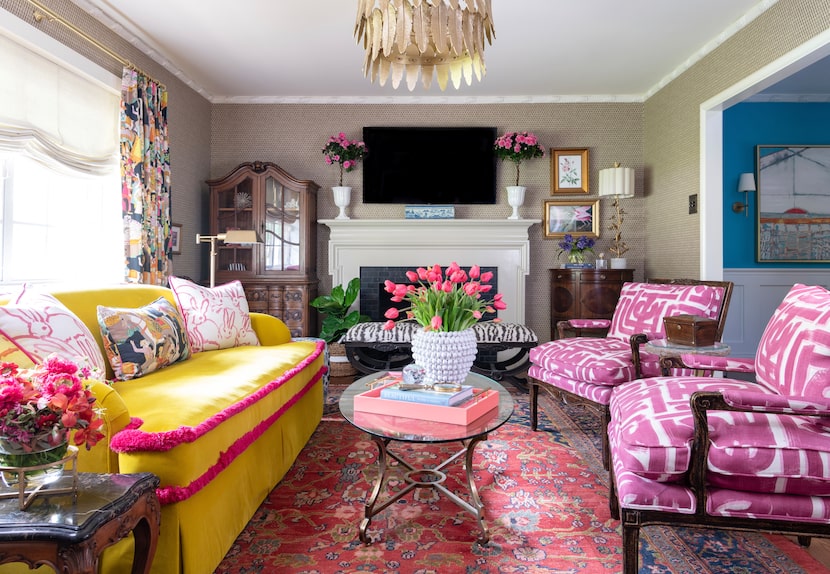
A showstopping fabric for a pair of vintage Minton-Spidell Cressant chairs brings a lot to a room by designer Kim Armstrong.
Michael Hunter
Lesson four: final decisions
Be ready for more decisions once you’ve chosen a shop to do the work. For example, if your fabric has a pattern, you need to choose what direction you want it to run.
You’ll also have to choose a filling. Ultra-soft 100% down is comfy, but it’s also higher maintenance. After “you sit on it, you’re always going to have to fluff,” Gonzalez says.
He often chooses a 50/50 combination of dacron batting and down. If your piece is boxier by design or you prefer cleaner lines, you may want an even higher percentage of dacron. The choice will impact both the feel and look of your furniture. “A lot of upholstery demands clean, strong lines,” Gonzalez says.
If your piece has wood elements, your upholsterer will likely either have a restorer on their team or recommend someone to handle that part of the work.
Finally, be ready to decide on finishing touches. From nail heads and piping to tape and blind stitching, you choose how seams and edges will be either decorated or hidden.
This is where you can really lean into the joy of creating a custom piece of furniture. But it’s also where you need to speak up. “They can’t read your mind,” Gonzalez says. “You have to give as many details as possible.”
Love homes, gardens and design? Get more good stuff from Abode by following us on Instagram, Facebook and LinkedIn.
Bedsheets 101: Everything you need to know about fibers, weaves and thread countA backyard birdhouse guide worth chirping about