
Wednesday is expected to be one of the most significant moments in the history of the Dallas County Commissioners Court: evidence will be presented and a resolution is expected to pass declaring that a man arrested for murder by Dallas Police and later executed in the Texas death chamber was, in fact, innocent of the crime.
What happened to Tommy Lee Walker in 1956 may seem like a long time ago, but it has never been forgotten by many in Dallas’ Black community.
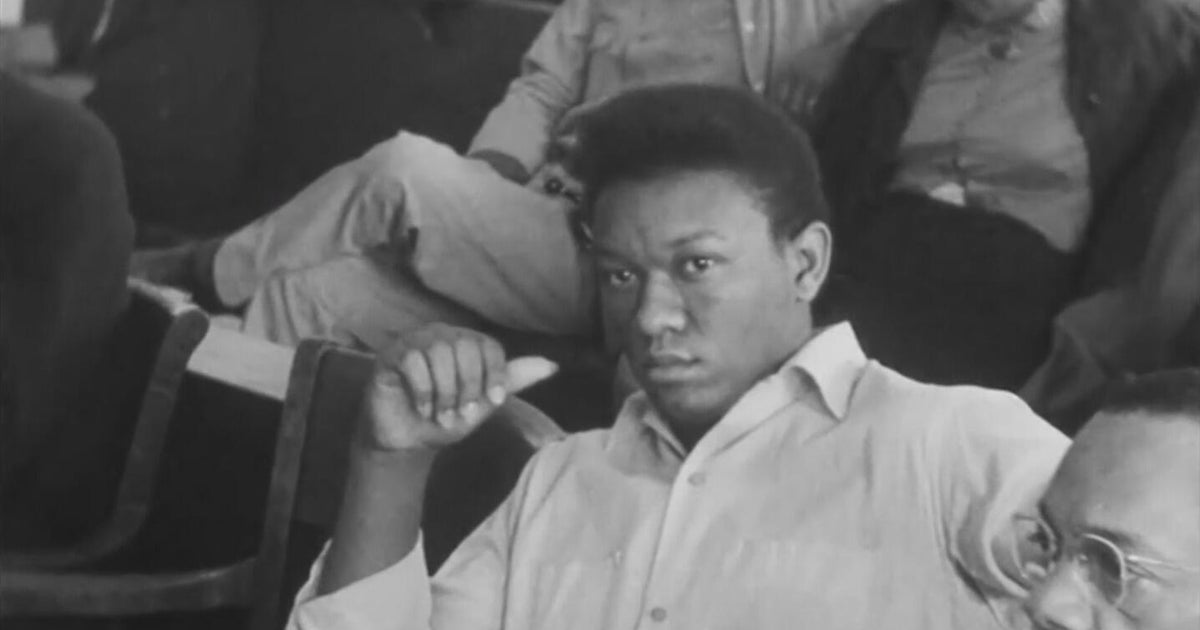
Looking into his eyes in a film from inside a Dallas courtroom, you can only imagine what was going through the mind of Walker.
His unbroken stare into the camera appears to look for reason and fairness that too often didn’t exist in 1956.
The 1956 arrest and execution of Tommy Lee Walker
“The said warden is hereby directed and commanded to pass and cause to be passed through the body of you Tommy Lee Walker, a current of electricity of sufficient intensity to cause the death of you, Tommy Lee Walker,” a judge is heard saying in the film.
A judge sentenced the 21-year-old to death in the electric chair for a murder that overwhelming evidence shows he didn’t commit.
“It’s not difficult to fathom what happened; they grabbed the first ‘Negro’ they saw,” said Dallas County Commissioner John Wiley Price.
Price said that period in the city’s history was scarred by racial injustice.
How hysteria led to a wrongful conviction
It was in Northwest Dallas near Love Field in 1953 when a 31-year-old woman was brutally murdered at night while walking to a bus stop.
There were no witnesses, no evidence left behind, just racial hysteria and unfounded claims that it was committed by a Black man.
“The Klan was basically rampant here,” said Price.
Walker lived across town from the murder scene near a park close to Baylor Hospital.
9 witnesses confirm Walker’s innocence
He was among countless young Black men rounded up for questioning, with some in the white community demanding justice even at the cost of arresting the wrong man.
“That’s kind of what happened here, I guess,” Price said. “From all the evidence that has come to light, that is exactly what happened, and I guess. And you know what, the real travesty of this? Mr. Walker had an alibi.”
Nine people confirmed Walker’s alibi that on the night of the murder, he was with his pregnant girlfriend, who gave birth to their son the next day.
Still, he was arrested 4 months after the crime.
Walker said that after hours of threats and promises, he was coerced into giving a false confession that he immediately tried to recant.
He professed his innocence to the judge after he was convicted and sentenced to death by an all-white jury.
“I feel that I have been tricked out of my life,” Walker said. There’s a lot of other people who have been convicted for crimes they committed and was turned loose. I haven’t did anything, and I’m not being turned loose.”
Walker’s funeral was attended by 5,000 people, and it’s taken 70 years for Dallas to face what, in all likelihood, was a terrible injustice.
“The last thing he said before he was executed was, ‘I’m innocent,'” said Price.
Dallas County commissioners to consider symbolic exoneration
On Wednesday, Price said the Dallas County Commissioners’ Court will have evidence of the case presented during a special meeting and then decide whether to pass a symbolic resolution exonerating a man who paid the ultimate price for being wrongfully accused of murder.
“We think it’s appropriate; we may be the first court in the country to do this. Of course, the community wants this. You can’t move on until you heal that sore that you know is out there,” Price said.
Price said Walker’s now 72-year-old son will be there to hopefully see with his own eyes the justice his father’s eyes seemed to desperately search for but could not find on that day in 1956.