
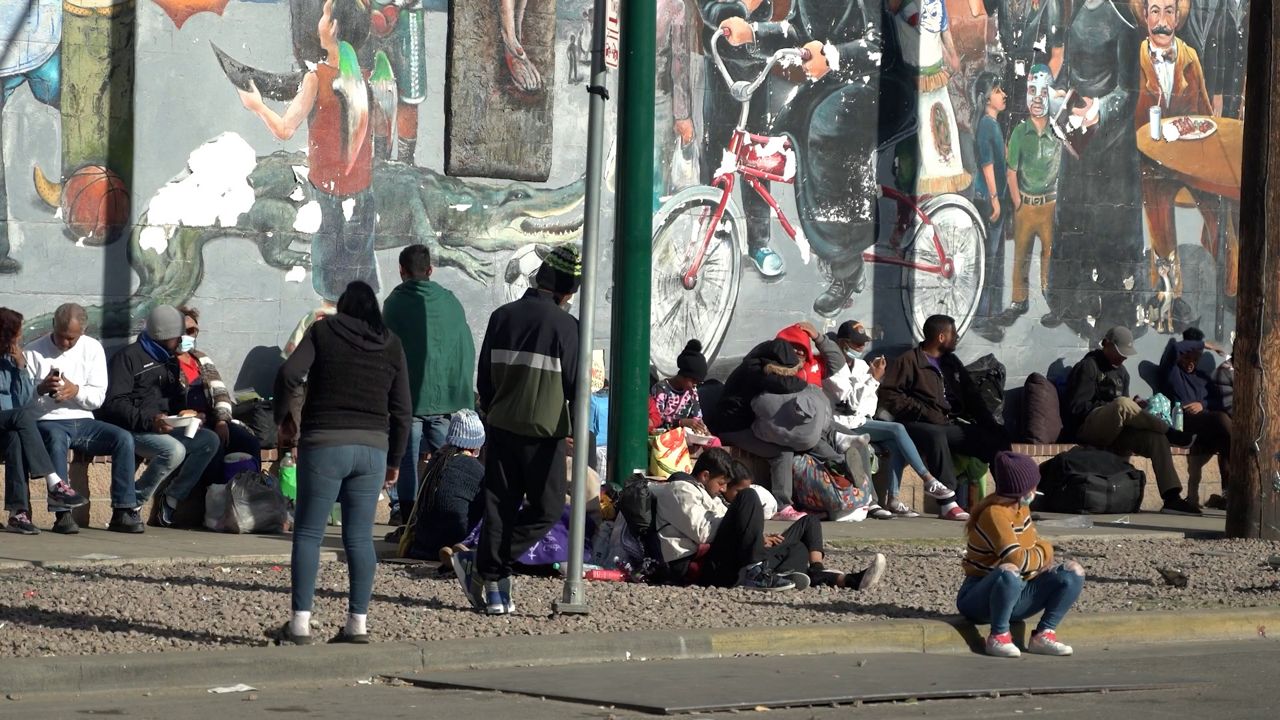
EL PASO — Nearly one year after President Donald Trump returned to office, downtown El Paso looks dramatically different. Streets that were once crowded with migrant encampments are now largely empty, reflecting a sharp shift in federal immigration policy compared to the previous administration.
What You Need To Know
Streets once filled with migrant encampments in El Paso are now empty
Trump’s new immigration policies have led to no migrant releases in the area since May 2025
Opinions on the migrant presence and policy changes vary among residents
Just a few years ago, the sidewalks outside Sacred Heart Church were filled with migrants camping as they awaited help or their next steps. Today, the tents are gone, and the area is noticeably quieter—a change many residents and business owners said has significantly altered daily life downtown.
For years, El Paso was a focal point of the migrant crisis, with thousands of asylum seekers passing through the city. Many slept outside churches, shelters and local businesses as resources were stretched thin. Now, one year into Trump’s second term—and following sweeping changes to immigration enforcement—those scenes have largely disappeared. According to the Department of Homeland Security, no migrants have been released onto United States’ streets after being apprehended and processed by Border Patrol since May 2025.
Not everyone who experienced the surge remembers it the same way.
Javier García, a hardware store owner in downtown El Paso, said he did not view the migrants as a threat.
“When the caravan arrived, I didn’t have any problems with them,” García said. “They were people just like anyone else who came to this country in search of a better future, and regardless of whether a person is legally in this country or not, they have rights.”
Other residents said their experiences were far more negative. Eduardo Castañeda, who lives downtown, said the presence of large migrant groups brought serious problems to the area.
“Those people from the caravan caused a lot of trouble,” Castañeda said. “They started selling drugs, and we didn’t want them here.”
For Castañeda, the impact went beyond quality-of-life concerns. He said he was violently assaulted during that period.
“One night, I was walking, and two Venezuelans followed me in the dark,” he said. “They attacked me, and I lost my eye. They took my jewelry, my money and my wallet.”
Federal data highlights the scale of the situation El Paso faced. U.S. Customs and Border Protection recorded more than 480,000 land border encounters in the El Paso sector during fiscal year 2023. In the same year, more than 174,000 migrants were released in El Paso. By March 2024, the city had issued its third disaster declaration in less than two years, citing the strain on shelters and transportation systems.
Castañeda says the changes over the past year have helped restore a sense of safety in his neighborhood.
“I feel very comfortable here now that all those people have left,” he said. “People can now go out for a walk at night without any worries.”
Supporters of the Trump administration’s immigration policies say the tougher approach has restored order and improved safety in border communities. Critics argue the policies have sharply reduced humanitarian protections for migrants seeking asylum.
In El Paso, however, the transformation is unmistakable. Blocks once crowded with tents and large groups are now quiet, as the city marks one year of dramatic change along the U.S.-Mexico border.