
Some El Paso school districts are tapping into a new solar energy program to save money on their electric bills without needing to install solar panels or make changes to their electrical systems.
El Paso Electric’s Texas Business Solar Power program allows businesses and other qualifying organizations to pay a set monthly subscription price for electricity, rather than paying based on usage.
Last month, the Ysleta Independent School District Board of Trustees voted unanimously to approve an agreement with El Paso Electric to subscribe 15 of its highest energy-consuming accounts to the program for one year, starting Dec. 1. This includes the district’s administrative building and 14 campuses.
In June, the Socorro Independent School District sent a letter of interest to El Paso Electric, expressing a desire to take part in the program.
SISD Chief Communications Officer Daniel Escobar said the district plans to subscribe 12 of its 149 accounts, including six high schools and the aquatics center, to the program for one year.
He said the district is awaiting final approval from El Paso Electric to start the program.
SISD and YISD officials estimate this will save the districts $400,000 to $500,000 a year on their energy bills, respectively, and said they plan to expand the program to other campuses, if successful.
In 2025, SISD paid over $8.6 million and YISD paid $7.7 million on electricity.
“We only did 15 campuses because we want to make sure it works. If it works, we are absolutely looking forward to the opportunity to subscribe and utilize more solar power,” YISD Chief Financial Officer Lynly Cambern told El Paso Matters.
YISD has 49 schools.
Even if the program expands, Escobar noted some SISD campuses may not subscribe to it.
“After one year, if we see the expected savings, we will consider adding middle and elementary schools. Not all district accounts will be enrolled, only those that demonstrate strong potential for cost savings,” Escobar said in a statement.
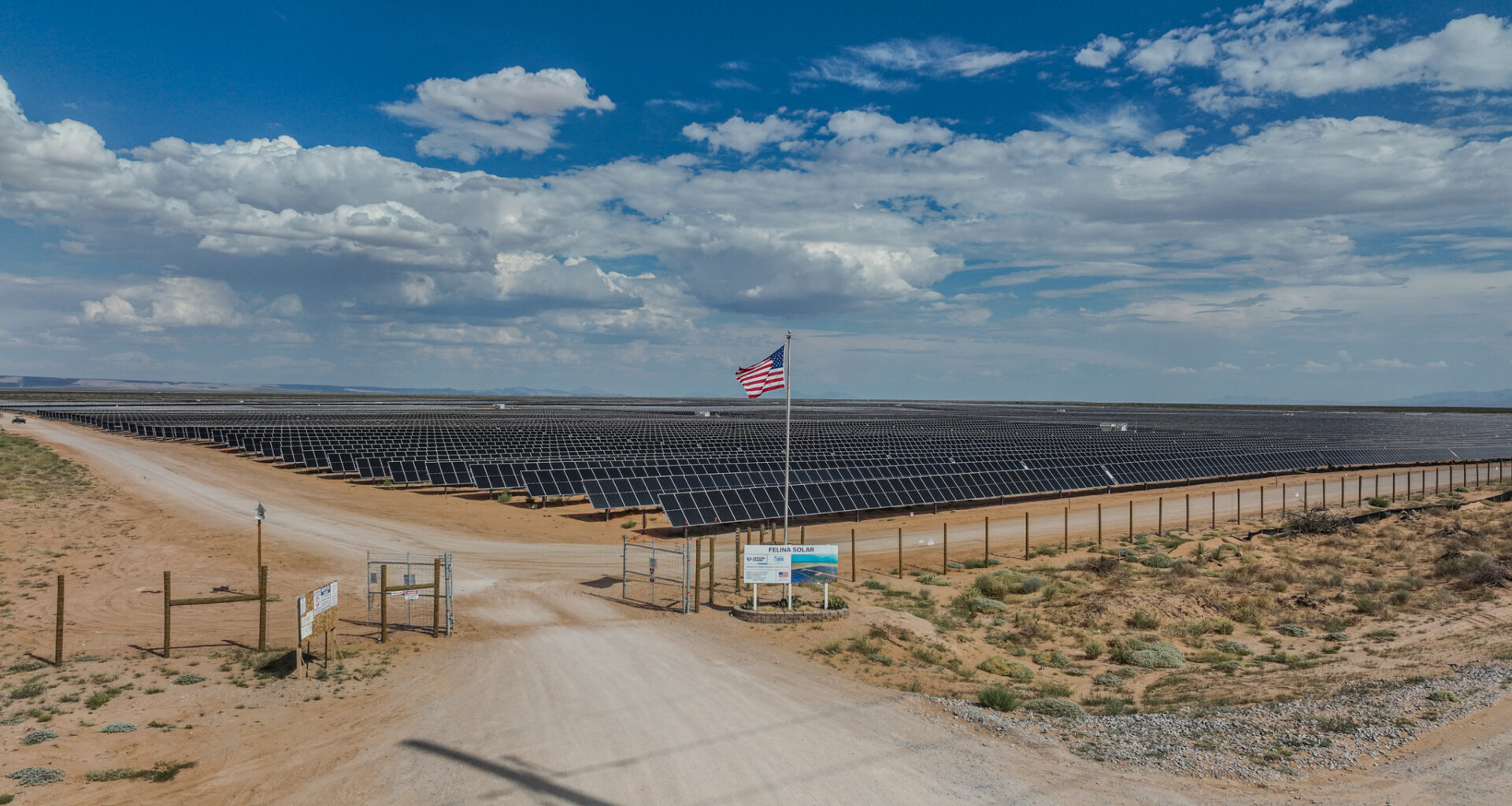
The energy used by the program is generated at the Felina solar farm in Fabens, which was completed in October. It is also supplemented by El Paso Electric’s traditional power sources, including natural gas generators.
This is because the Texas Public Utilities Commission capped the program at 50 megawatts of renewable energy, said El Paso Electric project manager Alejandra Montalvo. Participants in the program may be limited on the amount of solar energy they can consume based on their past electricity usage.
“We’re not allowed to provide a customer access to subscribing 100% of their energy consumption to the program because we want to make sure that we keep this on an equal basis for everybody,” Montalvo said.
Montalvo said the program has reached 55% of its renewable energy capacity and still has 45% open to new subscribers.
Though YISD and SISD became interested in the Texas Business Solar Program to save money, Montalvo said it is not intended to cut costs.
“This is not being promoted at all as a savings program; however, … in some months they are going to be able to see a net credit on their bill statements, just based on whatever subscription amount that they signed up for, and other months they are going to see a charge,” Montalvo told El Paso Matters.
“Cost impacts are going to vary by customer and their usage patterns, and so the savings are not guaranteed,” she added.
Even though the program is not intended to cut energy costs, Cambern said it is the first of its kind to offer potential savings through renewable energy, without requiring an investment in the infrastructure.
“If a homeowner wants solar credit or wants sustainable energy, they actually have to dedicate real space and install solar panels, and there’s a significant capital contribution and infrastructure demand if you’re going to do that. When school districts look at it, we don’t necessarily have the funding nor the expertise to really manage a large solar capacity installation,” Cambern told El Paso Matters.
Cambern said school districts would likely need to ask voters to approve a bond and increase tax rates to install their own solar system.
“We would need to find the capital to invest, and frankly, we need that money reinvested in our regular day-to-day operations,” Cambern said.
YISD has already tried to make investments to lower their energy consumption. Cambern said the district spent close to $18 million in 2017 installing LED lighting and automated heating and cooling systems that use less energy throughout their campuses.
Still, Cambern said electricity costs have increased for YISD in recent years, even though the district has closed facilities and reduced its energy consumption.
YISD went from paying $7.3 million for electricity in 2024 to $7.7 million in 2025, a 5% increase.
“From 2017 to today, costs have continued to climb even though we’re implementing those measures. So really, all we’re doing is trying to minimize the increase each year,” Cambern said.
Escobar said SISD’s electricity costs have remained steady.
“Though costs have gone up our total expenditure has remained steady because we are offsetting higher rates with efforts to reduce consumption,” Escobar said.
Related
LISTEN: EL PASO MATTERS PODCAST