
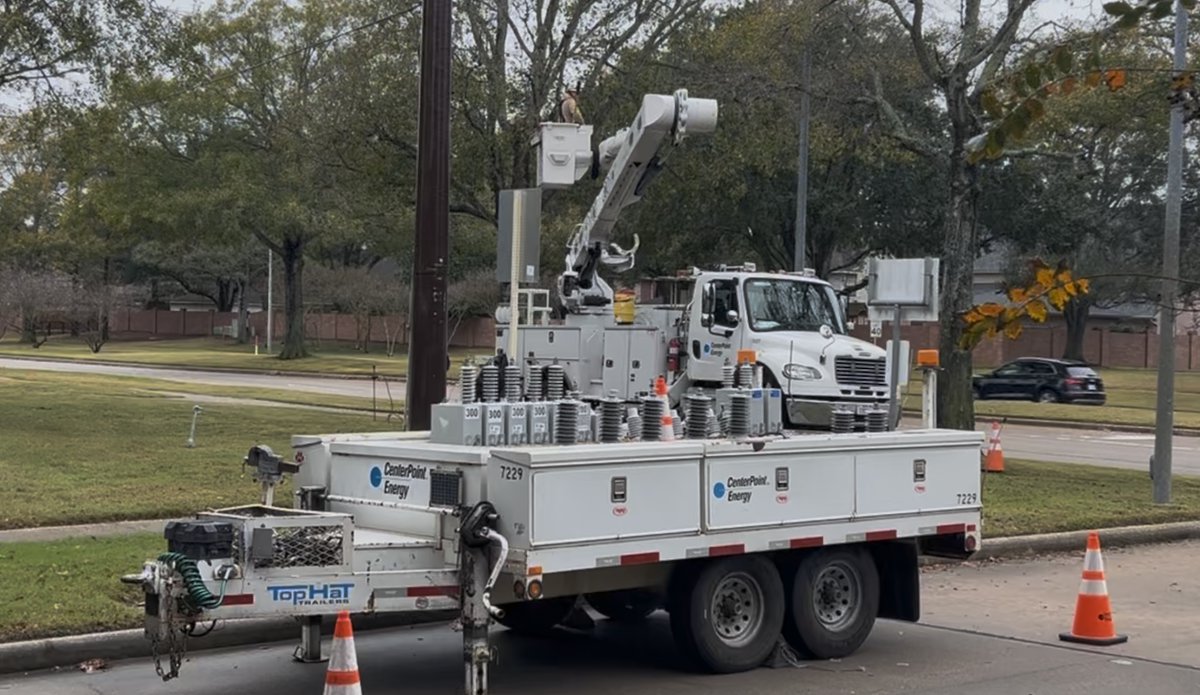
HOUSTON, TX (Covering Katy News) – In a mid afternoon briefing with regional leaders CenterPoint Energy announced it has positioned approximately 3,300 frontline workers, including additional resources brought in from outside the region, at two staging sites in the northern Houston area.
According to those who were part of the briefing, officials said they have sufficient equipment and materials on hand for potential outages including more than 9,200 poles, over 11,500 transformers and more than100,000 splices. Splices are specialized connectors—often 12–16 inch metal tubes with internal gripping mechanisms—to securely join broken utility lines.
CenterPoint now believes the weather event may produce more sleet than ice, which tends to cause less damage to power infrastructure than ice accumulation. Sleet can be pushed aside, while ice creates additional weight and stress on power lines, they said.
Restoration timeline improvements
In a significant change from Hurricane Beryl, CenterPoint will provide customers with estimated restoration times within 12 hours of an outage occurring. Executive Vice President Jason Ryan explained that customers who experience outages will receive notifications through the Power Alert Service indicating power will be restored “no later than” 12 hours from when the outage began.
Those who prefer can check the CenterPoint Outage Tracker website for the same information.
“Very different than in Hurricane Beryl,” Ryan said. “If you may remember, customers really had no idea how long they were going to be off, and that led to great frustration.”
The company will update estimated restoration times as crews assess damage and complete repairs.
Communication efforts
CenterPoint says it has sent nearly 6 million communications to customers about storm preparation and how to access outage information. The utility is maintaining call center staffing to keep average wait times at five minutes or less.
Natural gas operations
For the natural gas system, CenterPoint has pre-positioned 17 natural gas trailers across the service area and activated more than 700 workers. The primary concern for gas service is potential low-pressure events during extreme cold that could cause appliances to malfunction.
Grid stability concerns
Ryan addressed questions about the ERCOT power grid, noting that Monday and Tuesday mornings are expected to see significant demand as temperatures drop into the teens in the Houston area.
While ERCOT currently shows adequate reserves to meet demand, CenterPoint says is preparing contingency plans.
Before resorting to involuntary load shedding (rolling blackouts), both ERCOT and CenterPoint have programs where large industrial customers can voluntarily reduce usage during emergency grid conditions.
CenterPoint has been in contact with large industrial customers who are prepared to back off usage if needed.
“Load shed ought to be worst case scenario, last resort,” Ryan said, adding that the company is preparing for that possibility while not currently expecting it to occur.