
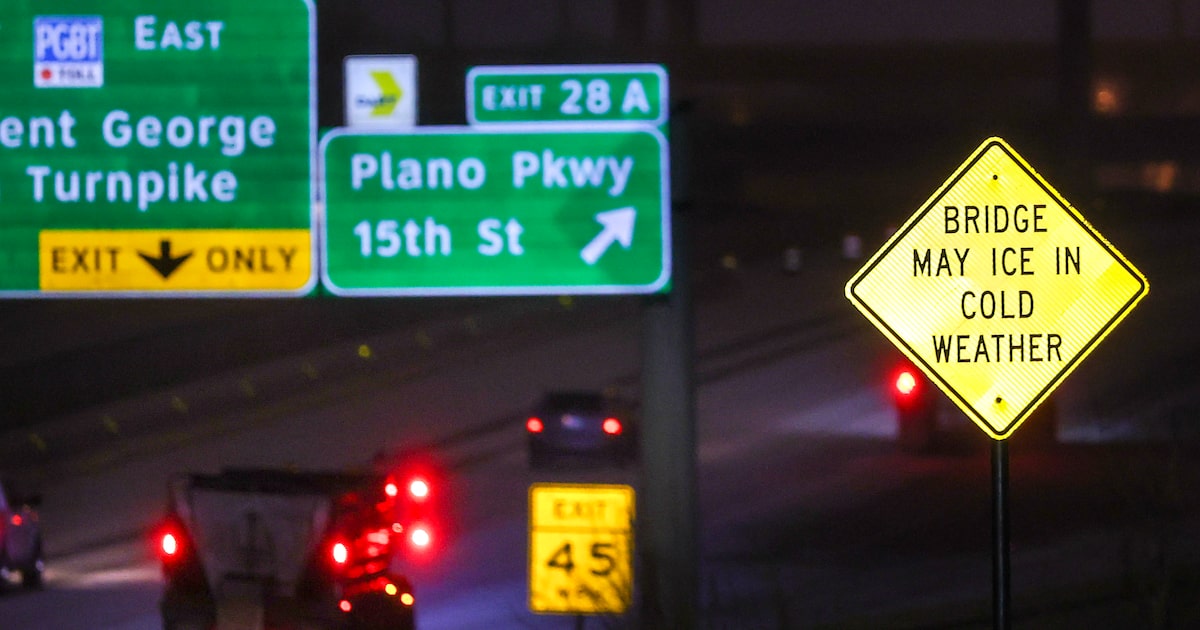
Black ice could become the next travel hazard for Dallas-Fort Worth after days of sleet and snow.
The National Weather Service’s Fort Worth office warns black ice is possible Tuesday morning after snow and sleet from the winter storm refreeze. While temperatures are not expected to get above freezing on Monday, skies are forecast to be sunny in the afternoon, potentially allowing for partial melting. Any melting that occurs is expected to refreeze Monday night, when DFW International Airport has a forecast low of 12 degrees.
This travel threat could also continue to be an issue in the coming days, as temperatures are expected to keep going below freezing each night this week. Here’s what to know about black ice and how to deal with it:
Related

D-FW Weather Wise
What is black ice?
Black ice forms on roads, sidewalks and driveways due to light freezing rain or the re-freezing of snow, water or standard ice. It forms without creating bubbles, the U.S. Forest Service said, which allows it to blend in with any surface it covers.
Why is it called black ice?
While the ice itself is actually clear, it’s called “black ice” because it tends to look like the rest of the pavement on the road.
What do I do if I hit a patch?
If you hit a patch of black ice on the road, the forest service advises drivers do “as little as possible” to allow your car to pass over the stretch. And rest assured, patches don’t usually exceed 20 feet.
If you can, shift into a lower gear, but do not hit the brakes or try to steer away from it.
If the back-end of your car starts sliding left or right, the agency said you can make a very gentle turn of the steering wheel in the same direction. Otherwise, keep your steering wheel straight. Steering in the opposite direction could mean skidding or spinning out.