
TEXAS — Itchy eyes, sore throat, sneezing. All of these symptoms can make it seem as though you have a cold or the flu. Instead, more than likely you’re suffering from cedar fever.
The symptoms can be so severe that some choose to change the way they live during the cedar fever season.
Darrell McAnelly, an Austin resident, is struggling this season.
“This is probably the worst season I’ve had that I can remember,” said McAnelly.
McAnelly is like many Texans this time of year. He rated his pain level on a scale of 1 to 10.
“Probably a 9 or a 10, depending on the day. There’s been a lot of wind this week and I literally have said I’m not going outside,” said McAnelly.
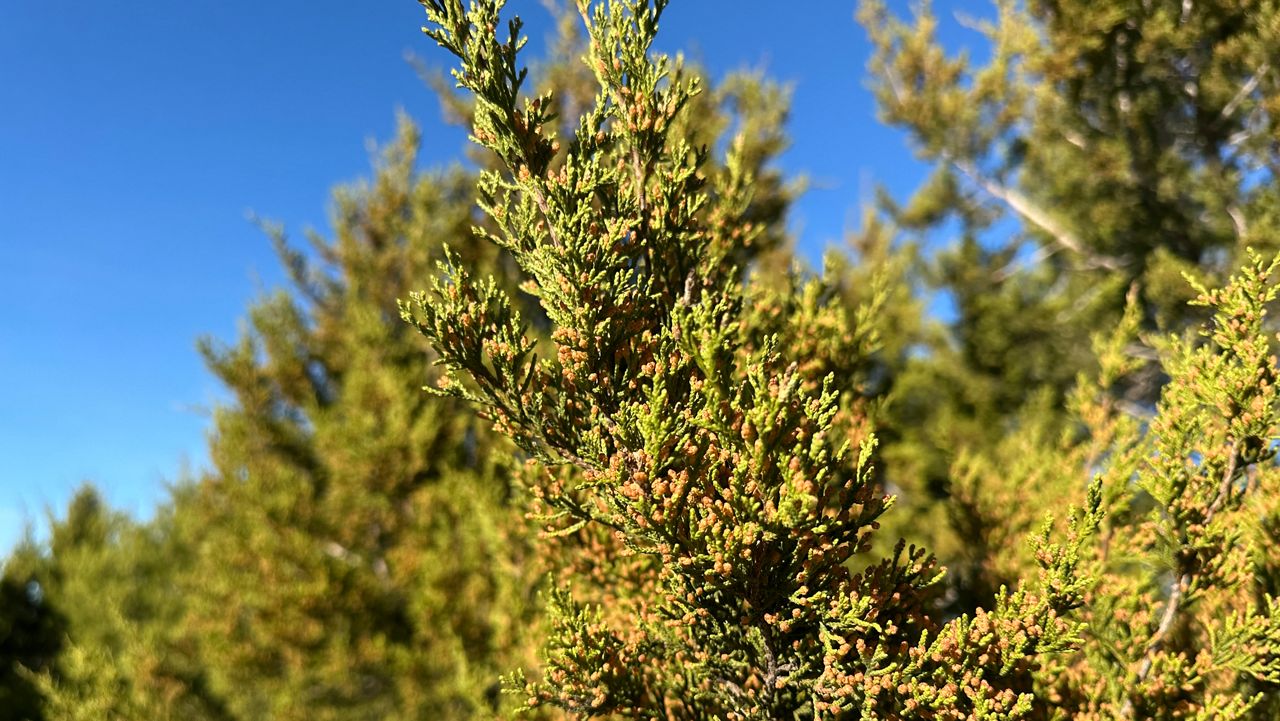
Mountain cedar trees, also known as juniper trees, tend to pollinate from December through February.
McAnelly has tried to stay indoors for much of the duration. He even quit a hobby near and dear to him and his family’s hearts, because it was outdoors.
“We used to have a sailboat. Going out in this in a sailboat…no. If it’s outdoors, it’s cut out completely,” said McAnelly.
He said he’s tried everything—eye drops, nasal sprays, you name it, he’s tried it.
“I’ve had a company come out and clean all my air ducts,” said McAnelly.
McAnelly said he has resorted to wearing a mask like he did during the pandemic.
“If I can still breathe through it, the allergens probably have a harder time getting to my sinuses that way,” McAnelly said.
Spectrum News meteorologist Megan Campbell broke down the science behind it all.
“When we talk about the definition of cedar fever, we really have to talk about the density of how many cedar trees are in the hill country and have now closed in on the I-35 corridor. Back 100 years ago, it was more like the Savannah. You would have one here or there. Due to overpopulation and not as many burns, naturally or controlled, they really have taken over and their pollen spreads like a wildfire,” said Campbell.
It’s estimated there are about seven cedar trees for each person in Texas.
“The sheer volume of it is what really takes over. It takes over our immune systems, and we can’t handle it. Over the last 150 years, due to suppressions, they’ve colonized in the area,” said Campbell.
Campbell offered some remedies.
“There are a few things. Keep those windows and doors shut. Take a shower before bed. Also, limit your time outdoors and change those air filters,” said Campbell.
If all else fails, McAnelly had another idea.
“I’d like to say, ‘hey, let’s go down to the ski country for a month, or the Caribbean,’ but we won’t do that,” said McAnelly.
Instead, he will wait for mountain cedar season to end.