
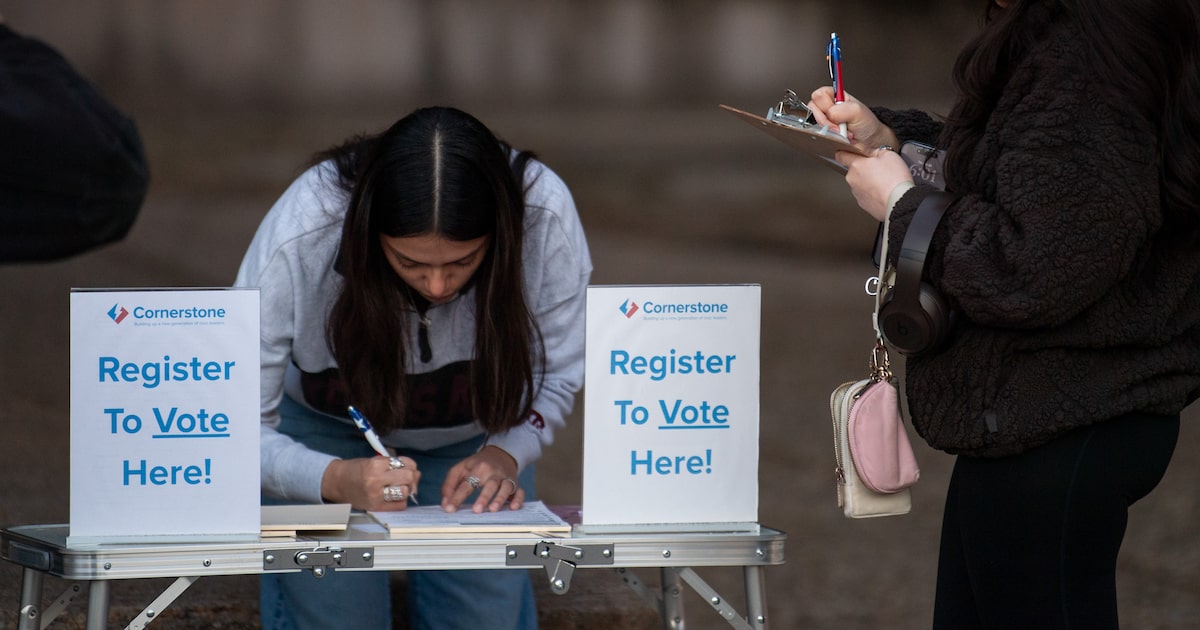
AUSTIN – Texans Pam Varnell and Melissa Amici share much in common, both mothers, deeply rooted in their communities and dependable voters.
They also fall on opposite ends of the state’s political divide, with sharply different views about what the state needs most to move ahead.
Varnell, a 63-year-old business owner in Coppell, has backed Republicans since Ronald Reagan and favors fiscal conservatism. She said charities and churches could better manage most social services, with government focusing on core needs.
“Roads, infrastructure, those types of basics. I’m not interested in spending a dime on anything else,” she said.
Political Points
Amici, a 55-year-old Hispanic and lifelong Democrat in the border city of Laredo, said women’s rights and immigration will be central to her ballot-box picks this year.
Amici, a volunteer on local arts commissions, bristles at portrayals of the border as chaotic and dangerous. She calls it a misleading image that ignores the culture and daily life of South Texas.
“It’s just not like that. The border is beautiful,” she said.
Together, Varnell and Amici represent prized pieces in Texas’ electoral puzzle, the high-value blocs candidates are chasing ahead of the March 3 primary. But not all carry the same weight, and more than half of Texas’ 18 million registered voters may not show up.
That means campaigns’ winning strategies depend more on targeted appeals than broad messaging, courting select set of voters through ads, mailers and localized outreach.
That pushes both parties toward powerful yet diverse segments, including suburban voters, women, seniors, border residents, business leaders, churchgoers and working-class families.
Republicans are leaning into growth, security and smaller government.
Democrats are stressing safety nets, education, health care and cost relief.
With Texas’ vast geography and diverse population, campaigns can’t rely on a one-size-fits-all message, said Renée Cross of the Hobby School of Public Affairs at the University of Houston.
Messages must connect with the priorities of specific groups, she said, noting that talking about capital gains taxes in a blue-collar community would likely fall flat.
That approach already is playing out in several high-profile contests, including the Texas Senate race. On the GOP side, incumbent Sen. John Cornyn faces Attorney General Ken Paxton and U.S. Rep. Wesley Hunt of Houston in the March 3 primary.
Democrats are weighing U.S. Rep. Jasmine Crockett of Dallas against state Rep. James Talarico of Austin.
Other primary matchups, such as attorney general, comptroller and agriculture commissioner, could hinge on small shifts among voters with clear priorities and reliable turnout.
Economic appeals
Outside groups are crafting messages to motivate those voters in advance of the primary.
Texans for Lawsuit Reform, which tends to back conservative causes, promotes lower taxes and pro-business policies as a benefit not just for companies but for families and workers.
“The Texas business community represents millions of jobs and the families those jobs support,” CEO Ryan Patrick said. “The economic engine that powers our great state is built on entrepreneurs and the large companies relocating to Texas.”
For Democrats, coalition-building has long been tougher as it tries to defend a handful of congressional seats, challenge entrenched Republicans and gain ground in the Legislature.
A statewide victory, said Katherine Fischer, executive director of the Texas Majority PAC, which works to elect Democrats, requires improvement across nearly every part of the electorate.
“The math problem in Texas for Democrats is that there’s not enough of one particular type, or even a few particular types of voters, to where you could only focus on them and still win,” she said.
Still, Democrats are leaning into messages they believe resonate across different groups, such as public education, affordability, personal freedoms and immigration reform.
“Democrats need to provide people with a reason for why they’re struggling,” said Zach Adams, director of political strategy at digital ad firm VDX.tv, which helps Democrats. “There are real villains out there, people who are exploiting the state for their own personal gain and you have to be willing to name them, regardless of how that impacts your fundraising ability.”
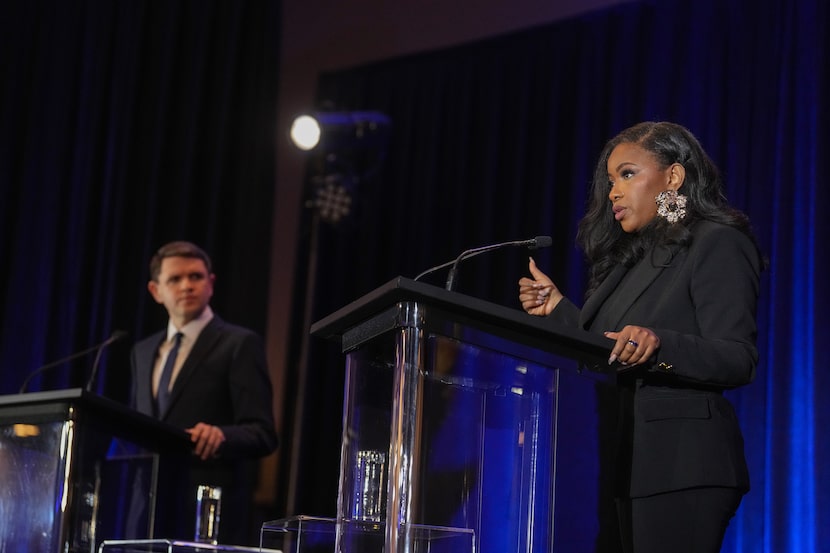
Primary candidates for U.S. Senate, Rep. Jasmine Crockett, D-Texas, right, and Texas state Rep. James Talarico, D-Austin, left, participate in a debate during the Texas AFL-CIO Committee on Political Education Convention, Saturday, Jan. 24, 2026, in Georgetown, Texas. (Bob Daemmrich/Texas Tribune via AP, Pool)
Bob Daemmrich / AP
Those themes have marked the Democratic Senate candidates’ early campaign efforts:
Talarico has aired ads casting himself as a challenger to Trump-era politics and to what he calls “billionaires and their puppet politicians,” aiming to channel frustration with concentrated wealth and influence.He also launched a Spanish-language spot airing in Univision markets statewide under the tagline “¡Vale La Pena!,” highlighting education and teacher pay.Crockett has rolled out “Juntos con Crockett” digital ads tailored to Hispanic voters, focusing on cultural and community concerns.
On the Republican side, some activists say voters are growing impatient with political gridlock, even if it means favoring candidates with less experience who promise disruption and change.
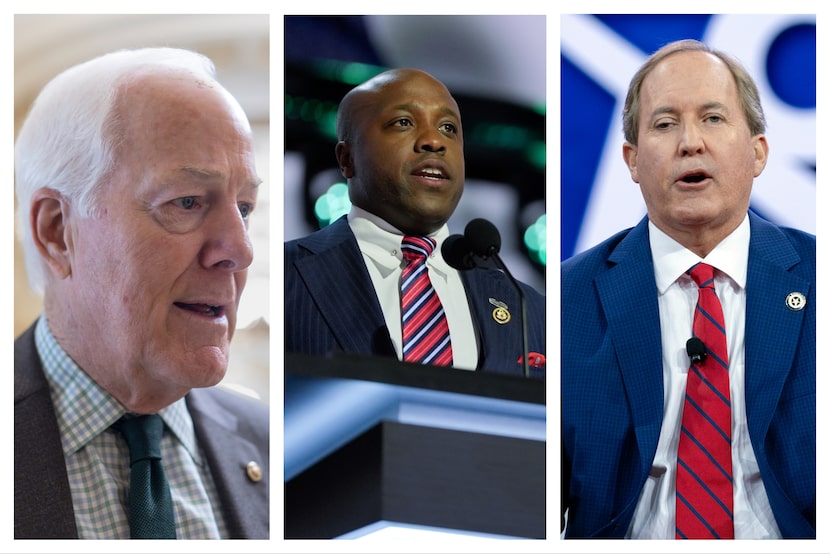
U.S. Sen. John Cornyn, R-Texas, is seeking reelection to a fifth six-year term. He faces primary challenges from U.S. Rep. Wesley Hunt, R-Houston, and Texas Attorney General Ken Paxton.
The Associated Press
“There’s a lot of obvious concern…about the extreme sides both parties seem to be on these days,” said Bill Finstad, a GOP precinct chair in North Richland Hills who regularly speaks with conservative suburban voters.
“They would like to have politicians work together to accomplish things,” he said. “People are saying they deserve to see things get done.”
Seeking base voters
GOP Senate candidates have leaned into primary messaging directed at the party’s most reliable conservative voters, especially those with cultural and security concerns:
Cornyn, in new TV ads, has cast Muslim-linked groups as public safety threats, backing efforts to revoke a major Islamic civil rights organization’s tax status and tying the issue to terrorism.He also has touted his ties to President Donald Trump and his support of tax cuts, tougher immigration enforcement and expanded border security.Paxton has released an AI-generated spot depicting Cornyn alongside Crockett, the Democrat, accusing him of being too close to liberals, a message designed to energize pro-Trump primary voters.
Away from television screens and digital feeds, voters are telling candidates they want change and clear action on the issues that matter most to them.
Leslie Barrows, a Republican, hears it across Tarrant County as she knocks on doors in her bid for a countywide family court judgeship.
Those who consistently answer the door, she said, tend to come with “specific wishlists,” focusing less on experience and more on policy positions.
Cross, the Houston researcher, said that for candidates navigating Texas’ political mosaic, meeting those expectations can be key to winning.
“Whether it’s a politician talking to voters or a business leader talking to a very diverse team,” she said, “it’s important for them to target the message, because otherwise people are just going to tune out.”