
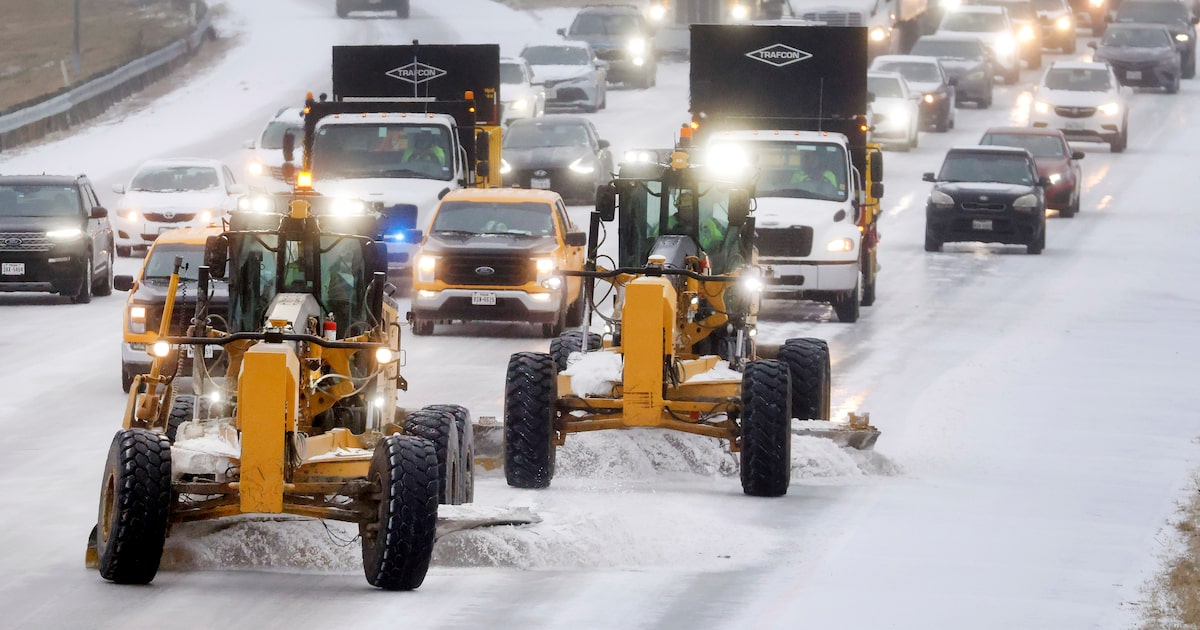
Dallas’ latest winter storm has come and gone, but it left behind a familiar question:
Why did so few snow-bound residents ever see a city plow on their streets?
The short answer: The city doesn’t have many, and expanding that fleet would come with significant costs and budget tradeoffs.
So much so, it could mean trimming popular programs and services to pay for heavy equipment used only a few days every year or so.
Breaking News
With just eight plows for 11,700 lane miles of roads, city officials say it’s a math problem as much as a policy choice.
“We just don’t have the capacity to do it,” said Tina Richardson, assistant director for the Department of Transportation and Public Works.
“We would have to hire triple the amount of people, triple the amount of trucks and plus, our trucks wouldn’t be able to get down a lot of these streets,” she said.
Here’s how it adds upAbout 4,500 lane miles prioritized during winter stormsEight snow plows in the city fleetAbout 100 dump trucks available for sandingSixty of those equipped with V-box sand spreaders, headed by crews that started downtown and moved outwardAbout 200 workers on 12-hour shifts during the stormNearly 1,600 routes treated
Cost of this year’s response: about $500,000, starting Jan. 24 and into the next week.
Where crews focus
Treated:
Major thoroughfaresBridges and overpassesHigh-traffic corridors
Usually not treated:
Residential streetsNeighborhood roads
Unless:
There’s a major safety risk like a steep hillFirst responders need access
Most neighborhoods are left waiting for sunlight and warmer temperatures to melt ice.
The city’s winter tools
Snow plows:
Eight large trucks mounted with plowsUsed mainly to break up iceCrews work to avoid damaging streets, manhole covers and infrastructure
Sanding trucks:
About 100 Freightliner trucks, 60 with V-box attachmentsSpread a 93% sand, 7% salt mixRoughly 6,000 cubic yards used during the storm
Richardson said the sleet and ice during the first days of the storm quickly covered sand on the roads. “People thought we didn’t do anything because they couldn’t see the sand,” she said.
Brine, but not used this time:
Typically sprayed before storms as an anti-icing agentSkipped because heavy rain would have washed it away
“It’d be in the Trinity River more than on the street,” Richardson said.
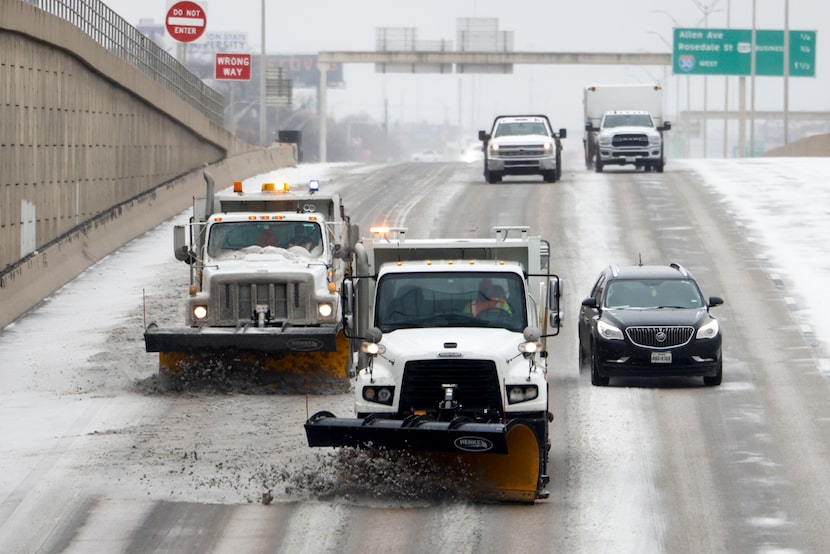
TxDOT trucks plow and treat Interstate 35W with brine, Saturday, Jan. 24, 2026, in Fort Worth.
Elías Valverde II / Staff Photographer
The price tag
Expanding Dallas’ winter-fighting equipment wouldn’t come cheap.
Each heavy truck with an attached plow is about $280,000. Based on that city-provided tally:
Four new plows ($1.1 million) = about the city’s annual budget for managing Bahama Beach, the city-owned water park in Oak Cliff.Seven new plows ($2 million) = roughly the budget for school resource officers in the police department.Eight new plows ($2.2 million) = about the annual cost to operate the streetcar that runs between downtown Dallas and the Bishop Arts District.Sixteen new plows ($4.5 million) = nearly the same as the annual savings from a recently shelved plan to close four library branches and consolidate staff.
The department’s overall budget this year is $157 million, with the bulk going to construction, engineering, inspection and street maintenance.
What’s next?
Richardson admitted frustration is understandable. Dallas’ storms are enough to disrupt, just not enough for a bigger plow fleet under current resources.
“I don’t think that that’s feasible,” she said. “Maybe in future years, we can expand emergency operations to include more residential areas of the city.”