
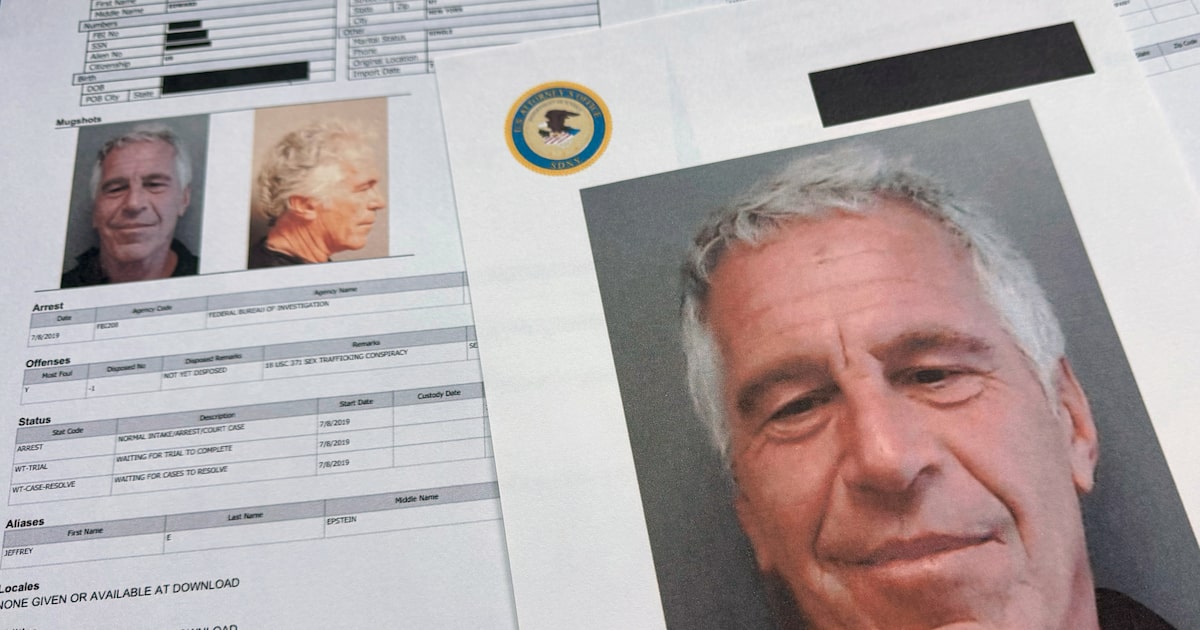
WASHINGTON — Dallas-based Match.com provided convicted sex offender Jeffrey Epstein with suggested dating profiles of young women years after his release from jail, newly released federal records show.
“Congratulations on your first 18 matches,” the dating site informed Epstein in an email on July 5, 2012. “We will continue to send you new matches.”
That initial round of matches included photos and usernames of women from across the country, ranging in age from 21 to 26, including a 26-year-old in Dallas and a 24-year-old in Austin.
Messages from the popular dating site to Epstein email accounts are among the millions of pages of Epstein-related documents the Justice Department has released since Congress passed legislation in November mandating their disclosure.
Political Points
The Dallas Morning News’ review of the records offers the first detailed look at Epstein’s Match.com activity, raising questions about the company saying it would screen for sex offenders.
Headquartered in Dallas, Match Group is the parent company of many prominent dating apps and sites, including Match.com, OkCupid, Tinder, Hinge and others.
Match Group, in a statement late Thursday, said the activity occurred more than a decade ago, before the company improved its safety tools and practices.
The company said its “Trust & Safety efforts” have since been “significantly strengthened through improvements in technology and our continued investment in safety.”
Epstein was required to register as a sex offender as part of an agreement with prosecutors in 2008 in which he pleaded guilty in Florida to state charges involving a minor. He was released from jail after less than 13 months.
In 2019, federal prosecutors charged him in New York with sex trafficking of minors, accusing him of abusing dozens of underage girls over years. He died in jail while awaiting trial.
Dating profiles sent
The documents show Match.com sent Epstein emails repeatedly in 2012 with suggested matches. Thumbnail photos of the women are not visible in the redacted documents.
It is unclear whether Epstein contacted any of the suggested matches.
The site sent an email on July 4, 2012, welcoming Epstein to “the Leading Online Dating Site.”
“Congratulations! You’ve joined the most dynamic group of singles out there,” according to the email. “We’re responsible for more dates, relationships and marriages than any other site. Period.”
The message asked him to review his information, which included verifying Epstein’s known gmail account, his username of “jeeproject” — using his initials — and that he was seeking women.
The email with his first batch of suggested matches arrived the next day.
It appears Epstein had previously set up a profile on OkCupid. He received a welcome email from that dating site in January 2011.
“Hello, good news,” that email read. “Your login name: gggeb Your personality: really great How bad OkCupid girls want you: so bad Your profile, as of 8 milliseconds ago: approved!”
The OkCupid emails continued for years, including messages warning the account could be disabled from disuse and showing him photos of prospective matches waiting if he returned.
Match acquired OkCupid in 2011, around the time Epstein was apparently setting up his account. It is unclear whether he contacted any of his OkCupid matches.
Registry screening plan
The Associated Press reported in 2011 that Match.com said it planned to begin screening users against the national sex offender registry.
The move came after a woman sued the company, saying she was assaulted by a man she met through the service.
The company said at the time it had avoided adopting the screenings for years because of concerns they were unreliable, but technology had improved enough to make such measures feasible, if imperfect.
The company advised users to stay on their toes regardless and warned against a “false sense of security.”
The terms of use posted on the Match.com site today explicitly state users understand the service “does not conduct criminal background or identity verification checks on its users or otherwise inquire into the background of its users.”
Match Group in 2018 formed an advisory council of experts and advocates involved in the study and prevention of sexual assault, sex trafficking, abuse, harassment and similar issues.
“Match Group brands use a network of industry-leading automated and manual moderation and review tools, technologies, processes and policies — and spend millions of dollars annually — to prevent, detect and remove people who engage in inappropriate behavior on our apps,” the company says on its website.
Those tools include automatic scans of profiles for concerning language and images, along with manual reviews of suspicious profiles, activity and user-generated reports.
Match.com and other dating sites are under no legal obligation to conduct criminal background screening, said Ari Waldman, director of the University of California, Irvine Law School’s Center for Technology and Justice.
Section 230 of the Communications Decency Act broadly immunizes online platforms from bad things people say and do on their platforms.
Waldman said age verification systems are often easily bypassed by people who are underage and the nature of dating sites allows users to tailor the people they are likely to be matched with.
“That makes them particularly dangerous weapons for pedophiles and sex offenders,” he said.
Profit pressures
He said for-profit online platforms, including dating sites, have a clear financial incentive to drive engagement and less incentive to risk those profits by trying to throw off bad actors.
Match.com’s terms of use have safety tips that advise users to hold initial meetings in busy public places, tell friends and family about their plans and leave dates if they feel uncomfortable.
Waldman said users should take precautions, but that should not replace the responsibility of platforms to actively work to make their services safer.
Congress has shown some interest in dating app safety.
In 2020, Rep. Raja Krishnamoorthi, D-Ill., then-chairman of a key oversight subcommittee, pressed Match and other owners of prominent dating platforms on how they screen users.
Krishnamoorthi said reports that free apps allowed registered sex offenders had heightened concerns and warned safety “should not be a luxury confined to paying customers.”
He cited the case of a man who pleaded guilty in 2019 to third-degree child molestation after being accused of raping an 11-year-old girl he met through a dating app.
Account suspended
Some documents in the Epstein federal files show screening for sex offenders can produce results.
In December 2013, Epstein received a notification from Microsoft that the Xbox LIVE account associated with his email address was being permanently suspended.
Another message followed hours later from a redacted sender. It said the suspension was based on the New York attorney general’s partnership with Microsoft and other online gaming companies to remove New York-registered sex offenders from online gaming services.
The effort was intended to “minimize the risk to others, particularly children.”
Epstein on Match.com
• Jeffrey Epstein received suggested dating profiles from Dallas-based Match.com in 2012, including women in their early 20s in Texas and across the country, newly released federal records show.
• The documents show the dating site continued sending Epstein suggested profiles despite his status as a registered sex offender.
• Experts have warned about dating app risks for years, though some companies have enforced registry-based suspensions.