
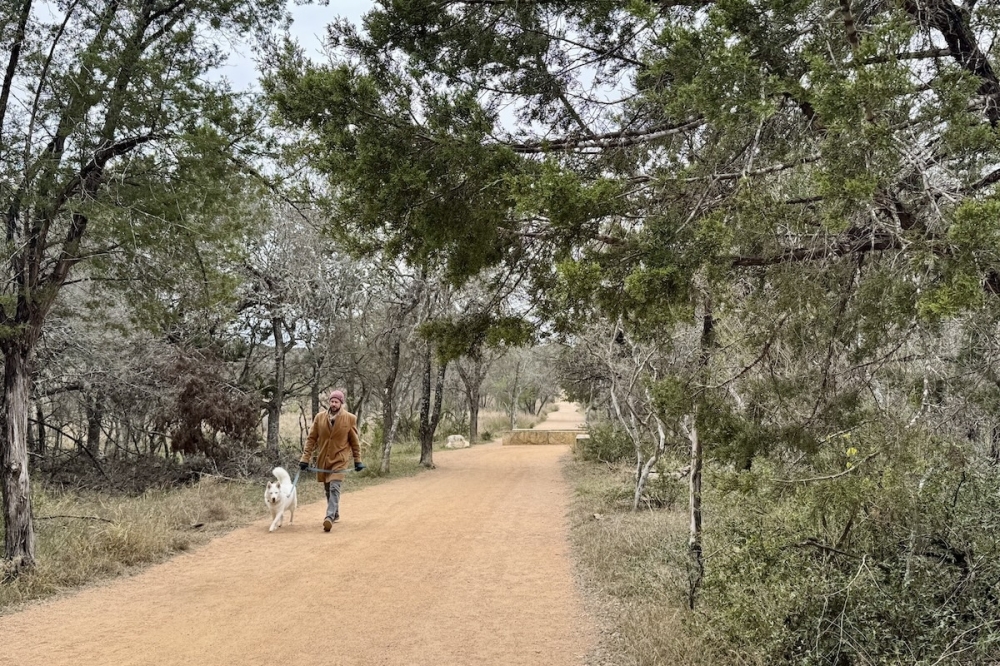
Stretching over 100 miles in a loop around the city, the Howard W. Peak Greenway has over 50 major trailheads, with links to local parks and approximately 1,600 acres of green space near creeks and natural areas.
The big picture
District 9 council member Misty Spears said the greenway has revolutionized how San Antonians interact with their city.
“It’s one of the [greatest] quality of life investments we’ve been able to make for San Antonio, particularly in North San Antonio, to provide a safe place for recreation, unite neighborhoods and connect our communities with nature—all while protecting our drinking water supply by preserving land over the Edwards Aquifer recharge zone,” Spears said.
Brandon Ross, capital programs manager for the parks and recreation department, said the city celebrated completing 100 miles of trails in 2022 and has now finished roughly 103 miles, with an additional 6 miles currently under construction.
Ross said funding for the greenway began in 2000 with a sales tax initiative, with new initiatives passed in 2005, 2010 and 2015. Around 2020, funding shifted away from sales tax toward bonds.
“When the 2020 bond was coming around, the sales tax was decided to be used for something else,” Ross said. “And so at that point, the county and the city basically strategized on how to fund it from that point forward.”
The newest voter-approved funding, part of the 2022 bond program, provided a major infusion of $103.5 million in funding, while Bexar County furnished $84.3 million in a one-time 10-year commitment, Ross said.

The specifics
Ross said the greenway comprises multiple trail networks, such as the Medina River Greenway, Leon Creek Greenway and Salado Creek Greenway, with each offering a unique experience.
“Every one of these trail segments are a little bit different from each other,” Ross said.
Henry Rosales, president and CEO of the American Volkssport Association, said the greenway has transformed San Antonio from a largely unwalkable community to an environment that encourages residents to get outside, exercise and experience the outdoors.
“When we create walkable communities, [with] trails like this, people get out and utilize them,” Rosales said.
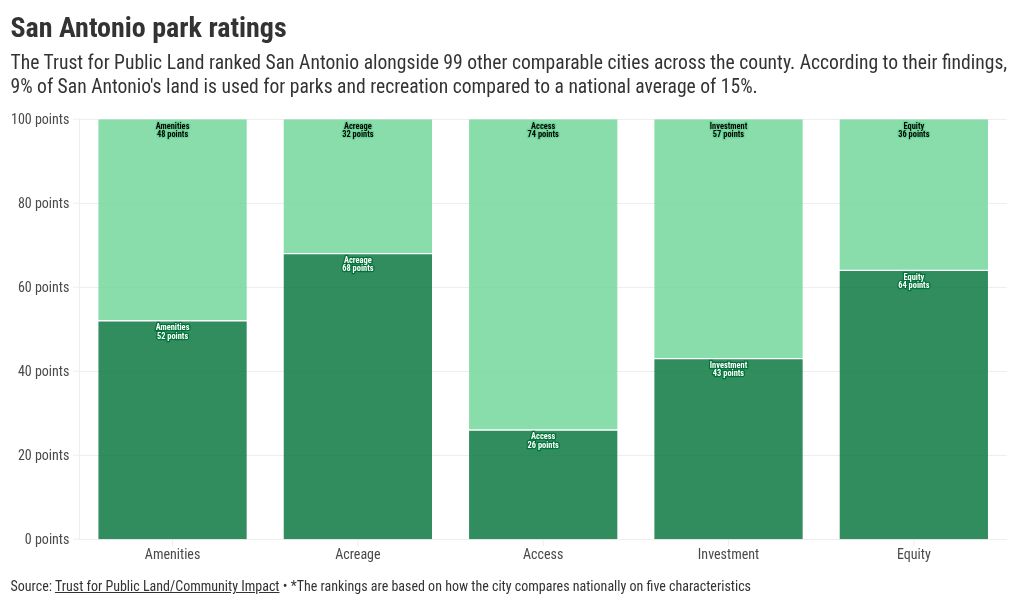
According to the Trust for Public Land, a national nonprofit that builds parks and protects green spaces, San Antonio uses 9% of its land for parks and recreation, which is lower than the national average of 15%. The nonprofit ranked San Antonio’s park system 57th out of 100, with 50.6 points out of 100.
 The approach
Ross said another feature of the greenway is its location, noting that the city has purchased over 1,700 acres of floodplain. He said multiple trails are built along creeks in the floodplain and on land unsuitable for development, and that these trails function as funnels during flash floods.
“These areas are basically drainage ways, and so when we preserve that property … it is more environmentally sustainable, [and] these flood plains continue to function as the drainage system for San Antonio when it floods,” Ross said.
Due to the porous nature of the soil in North San Antonio, purchasing land and preserving it is vital for the city’s water supply, Spears said.
“By preserving land over the Edwards Aquifer recharge zone, the greenway helps capture and retain water, protect our drinking water supply, and reduce flooding and drainage problems,” Spears said.
The local impact
Current funding sources for the greenway trails include the 2022 General Obligation Bond, San Antonio Water System, the Tree Preservation Fund and CPS Energy.
Brett Finley, president and CEO of Metro SA Chamber, said the greenway has boosted walkability, offering local businesses new opportunities.
“You’re really starting to see a proliferation of businesses, cafes, specifically coffee shops, that can pop up [by the greenway] because it’s going to increase foot traffic,” Finley said.
Rosales said the greenway is an amazing promotional tool for the city.
“Because of this trail system, we can bring in international walkers for marathons and half marathons—it really helps us showcase the city,” Rosales said.

What to expect
Ross said the loop is estimated to be completed within five to seven years. An additional 8 miles, constructed in five projects, is estimated to begin in early 2026.
Ross said one key to closing the loop is a forthcoming 7-mile project, which will encircle Lackland Air Force Base and Port San Antonio.
