
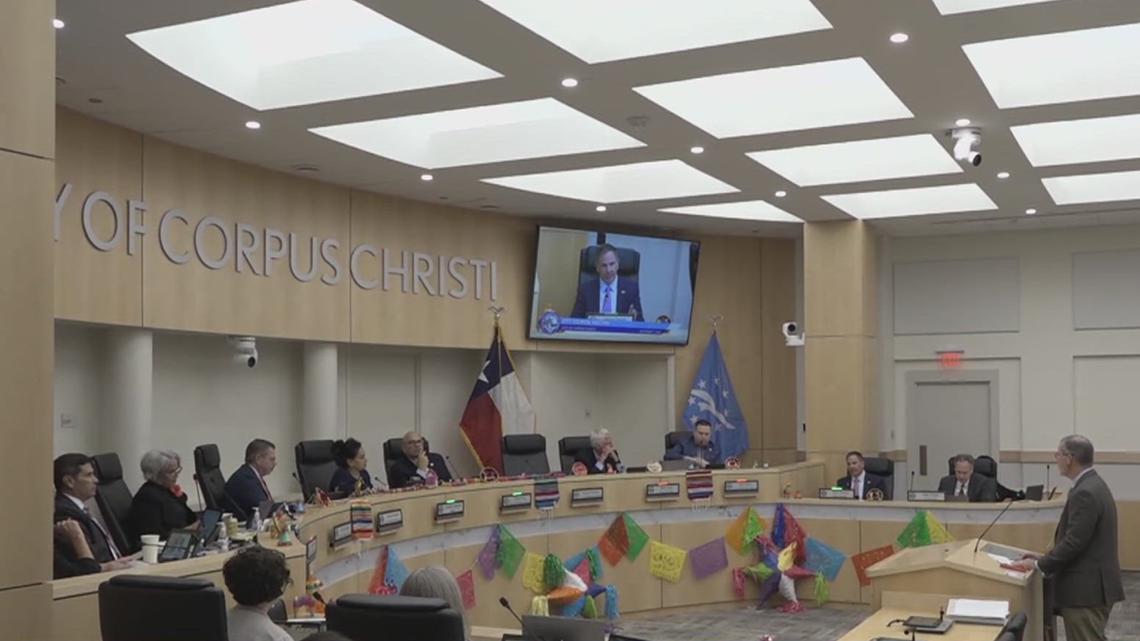
CORPUS CHRISTI, Texas — Tempers flared again at City Hall today — this time over a $2.7 million payment tied to the long-debated Harbor Island desalination project.
RELATED: Corpus Christi water curtailments could start in 2026, industry warns of job losses
The proposal called for the city to pay a nonrefundable reservation fee to lock in 50 million gallons of water a day from the Nueces River Authority’s planned desalination plant. The catch? The city would have to pay up now — with no guarantee of getting the money back.
Mayor Paulette Guajardo, City of Corpus Christi said, “Water rates are unknown, final cost don’t know, design don’t have it, power don’t have it, there’s no financing, there’s no permits.”
John Byrum, Executive Director, Nueces River Authority responded. “Somebody has got to get these folks some water, ma’am.”
Councilman Everett Roy was among those questioning the deal, especially the part about the money being nonrefundable.
Everett Roy, City Councilman stated, “They have the gall and nerve to sit there and put us under a contract that says you put the money up and we don’t get our money back at any time. Who enters an agreement like that?”
But not everyone agreed with the criticism. Councilwoman Carolyn Vaughn fired back, accusing some of her colleagues of playing politics over water. “You sit up here now and I think you have a bad taste in your mouth because it’s not the Inner Harbor. Well, either you want desal or you don’t. You want water or you don’t.”
In the end, the council voted to delay the decision until October 21, hoping to get more details before committing millions.
Afterward councilman Gil Hernandez told 3 News, “We just need a little bit more information so that we have a good idea what we should reserve and not just reserve whatever amount.”
Byrum wanted to assure the city that his agency has now backed out of a project or failed to finish one, “We have not failed on anything that we started to do. Matter of fact, failure is not an option here.”
For now, the Harbor Island deal is on hold, but the water debate in Corpus Christi is far from over.