
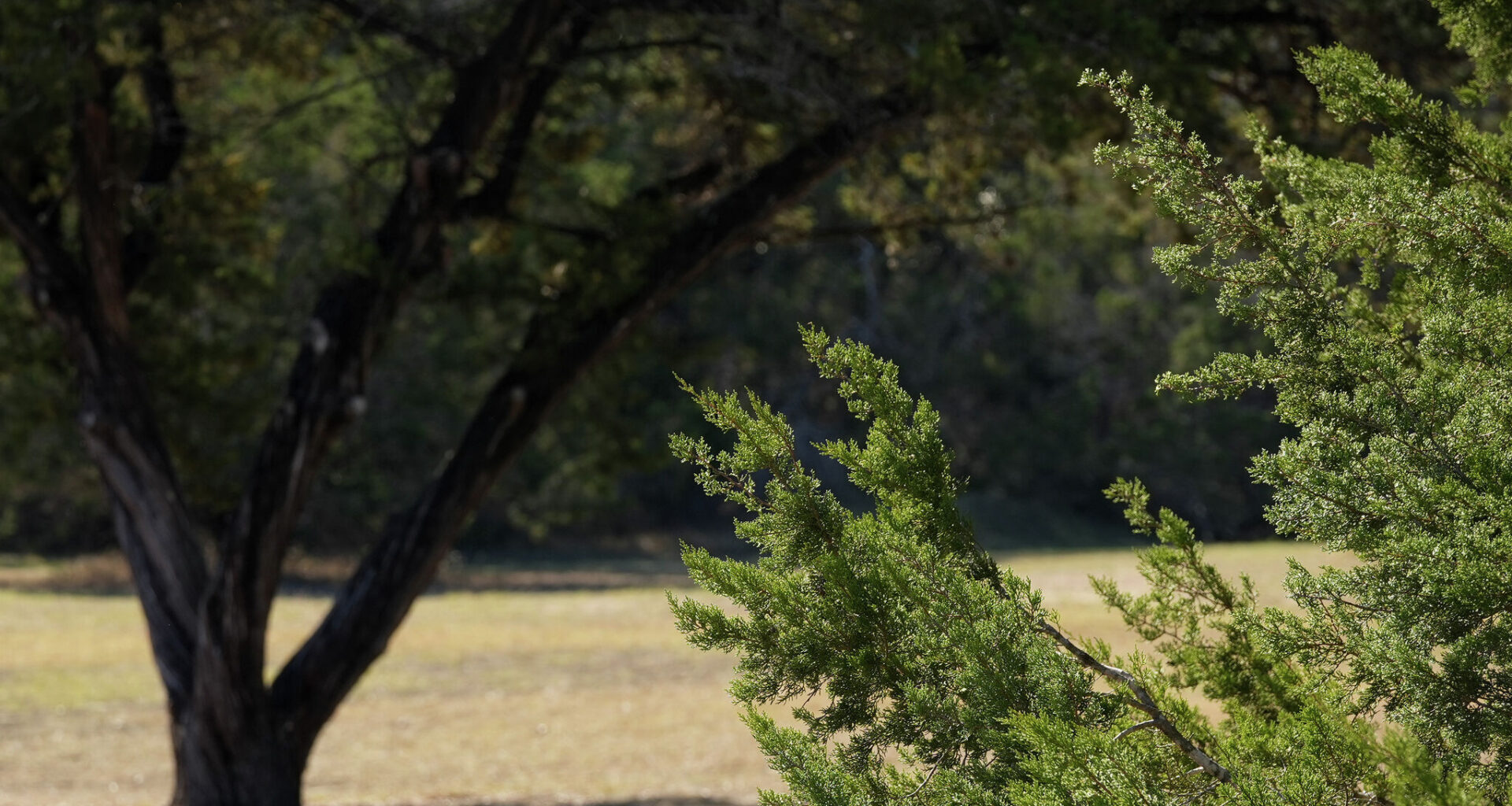
Ashe juniper trees blow in the wind at Mary Moore Searight Metropolitan Park in Austin on Jan. 14, during a period of high cedar pollen concentration in the air.
Jay Janner/Austin American-Statesman
So far this year — setting aside the January freezes — our weather has been dominated by breezy, dry cold fronts, each one stirring up cedar, aka Ashe juniper, pollen as it sweeps through.

We are in the middle of cedar fever season: The time of year when pollen from trees scientifically known as Juniperus ashei, fills the air, invades our sinuses and triggers allergy symptoms for many across Central Texas.
Article continues below this ad
CEDAR FEVER: Can you become immune to cedar pollen?
This isn’t surprising because the Edwards Plateau, or the Texas Hill Country, is home to 24 million acres of Ashe juniper trees, according to the Texas Parks and Wildlife Department. They’re spread across a broad swath of Texas, from the Red River to the Rio Grande, including the Hill Country west of Interstate 35, where junipers grow alongside live oaks.
Regions in Texas where juniper trees are at least 1 inch in diameter or larger. The highest concentration is over the Texas Hill Country.
Texas A&M Forest Service
These trees typically begin producing pollen in mid-December, triggered by chilly weather. When a cold front moves into the region, air pressure drops, humidity decreases, and the pollen cones on the trees open. Gusty winds behind the front then lift the fine, lightweight pollen, allowing it to float and travel for miles away from its original source. That’s why cedar can affect many Texans who don’t live near large concentrations of juniper trees.
Article continues below this ad
“Cedar fever is irritating to many due to the quantity and density of Ashe junipers in Central Texas that all produce pollen at the same time, which leads to a high concentration of pollen in the air,” said Robert Edmonson, Texas A&M Forest Service Biologist, and ISA Certified Arborist.
How can I manage cedar fever?
If you’re new to Texas or unfamiliar with “cedar fever,” it can be confusing because it coincides with the peak of cold and flu season. Cedar fever symptoms, such as fatigue, sore throat, runny nose, itchy eyes, partial loss of smell, and a slight increase in body temperature, closely resemble those of a cold. However, if your fever exceeds 101.5 degrees then pollen is not the cause, and you’d need to seek medical attention.
Article continues below this ad
Robert Butler, an ear, nose and throat specialist at Austin ENT Clinic, said there are several options for treating or managing cedar allergies:
Minimize exposure to cedar pollen by traveling or staying indoors when possible.
Use air filters and purifiers in your home and car to reduce pollen levels.
Use saline rinses for sinus relief.
Manage allergic reactions with antihistamines and nasal steroids.
Explore allergy testing and immunotherapy to block reactions to pollen, mold, or dust.
When the immune system mistakenly identifies benign substances such as pollen as harmful invaders, the body releases chemicals like histamine that cause allergic reactions such as sneezing, a runny nose, itchy eyes and congestion.
ProfessionalStudioImages, Getty
“The old saying, ‘if it itches then it’s allergy’ is fairly accurate,” Butler said. “Viruses will wane over 10 days while allergies will usually worsen as a season progresses and (illness) peaks two to four weeks after it starts.”
Article continues below this ad
Are cedar trees good for Texas?
While Texans often grumble about the problems these trees cause, they do have their benefits. Mature trees provide shade, shelter, and food for wildlife, and early settlers relied on their strong, rot-resistant wood to build fences that could last 50 to 100 years. Spanish settlers also used the wood for roof beams in missions across Central Texas.
Beyond providing food and shelter, these trees have long served other purposes as well. Native American tribes used the limbs, leaves, and berries for medicinal purposes like treating anemia as a blood tonic, easing childbirth and postpartum pain, and helping relieve symptoms of the common cold, flu, and other ailments. The berries are still used today to flavor gin, as a pepper substitute in cooking, and as an essential oil ingredient in products like hand sanitizers.
Ashe juniper allergy season coincides with meteorological winter, starting in December and lasting into February.
ARC Allergy and Asthma
These trees also play a significant role in land management because they can thrive in a wide range of environments, including overgrazed areas and rocky terrain. That adaptability is a big reason Ashe junipers have flourished and become one of the most widespread trees in the Texas Hill Country.
Article continues below this ad
How long does the season last?
Central Texans are in for at least three more weeks of cedar allergies before spring brings a whole new wave of pollen from budding and flowering trees.