
By Archer Wilburn
It is hard to imagine in a world of smartphones and advanced technology that there is a literacy issue in the United States. But in Dallas ISD, fewer than half of all third graders read on grade level.
This reality got the attention of Catherine LeBlanc, a Dallas philanthropist and community advocate who, while ministering in prisons, was shocked by how many inmates showed signs of illiteracy.
Having witnessed the sociological ramifications that arise when reading is not mastered in childhood, LeBlanc was energized to seek solutions.

In 2009, Catch Up and Read was founded to equip children in underserved communities to read on grade level by the end of third grade.
“Significant literacy gaps will put students at a much higher risk of falling behind, thus making it harder to succeed in school and beyond,” explained Carol Goglia, president of the North Texas nonprofit. “By addressing this literacy deficit, we strive to get students to the high school graduation stage with solid reading proficiency and ultimately break a generational cycle of poverty. We must learn to read, so we can read to learn.”
Catch Up and Read leadership blames a late 20th century decline in reading education in the United States on the emergence of a “whole language” approach, which focused on learning entire words, repeating sayings, and memorizing words through frequency, rather than phonics.
Teachers weren’t teaching students how to break apart words — to sound them out.
“Reading education is a science,” Goglia said, citing early 2000s federal research that concluded phonics instruction is crucial to teaching young readers. “There is a scientific approach that works, which involves getting back to the fundamentals of reading and building the blocks necessary to decode words.”
That’s why Catch Up and Read emphases teaching the teachers.
“If we provide high quality professional development focused on evidence-based literacy practices to teachers who put that training into action, then we will increase teacher effectiveness and students’ reading proficiency,” Goglia said.
To that end, Catch Up and Read has deployed seven full-time literacy coaches to 23 Dallas ISD elementary schools, training nearly 200 teachers and reaching 800 students with an individualized reading approach.
In 2024, 60 percent of all students involved in the program improved by an entire grade level in reading proficiency, and 100 percent grew their reading capacity, the nonprofit reported.
“We believe that the teachers who are in the school with these students daily have the greatest impact on student achievement,” Goglia said.
Catch Up and Read provides stipends to compensate participating teachers for their extra efforts.
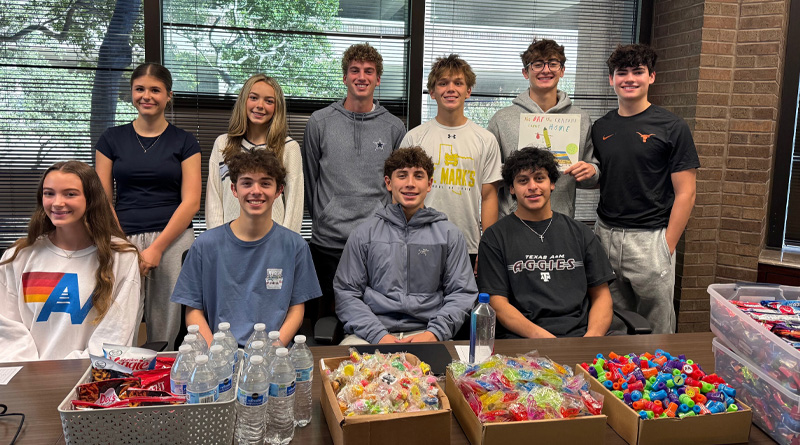
The work has caught the attention of North Texas teens like Greenhill School student Sam Schulz, who founded the Catch Up and Read Teen Leadership Board in the fall of 2025.
“I think reading is a skill you must have to be successful,” Schulz said. “Most of my peers take reading for granted because we were lucky to learn to read through strong programs. But that is why we started the Teen Board. To help Catch Up and Read and to help develop opportunities to learn to read.”
Students from St. Mark’s School of Texas, The Episcopal School of Dallas, The Hockaday School, Ursuline Academy, and Highland Park High School also serve on the board.
Their plans include a winter book drive and teacher and student appreciation efforts, plus promoting awareness, tutoring, and supporting the annual Reading Rally.
“Watching these local high school students give back to the younger generation through book drives and other supportive efforts is exciting,” Goglia said. “We are grateful for their involvement.”
Archer Wilburn is a junior at St Mark’s School of Texas.