
Published on February 11, 2026
By Cynthia Lemus, Office of Communication
When someone is bleeding heavily, every minute matters. The Arlington Fire Department’s new Whole Blood Program allows first responders to administer blood to patients at the scene or during emergency transport, providing lifesaving care before they reach the hospital.
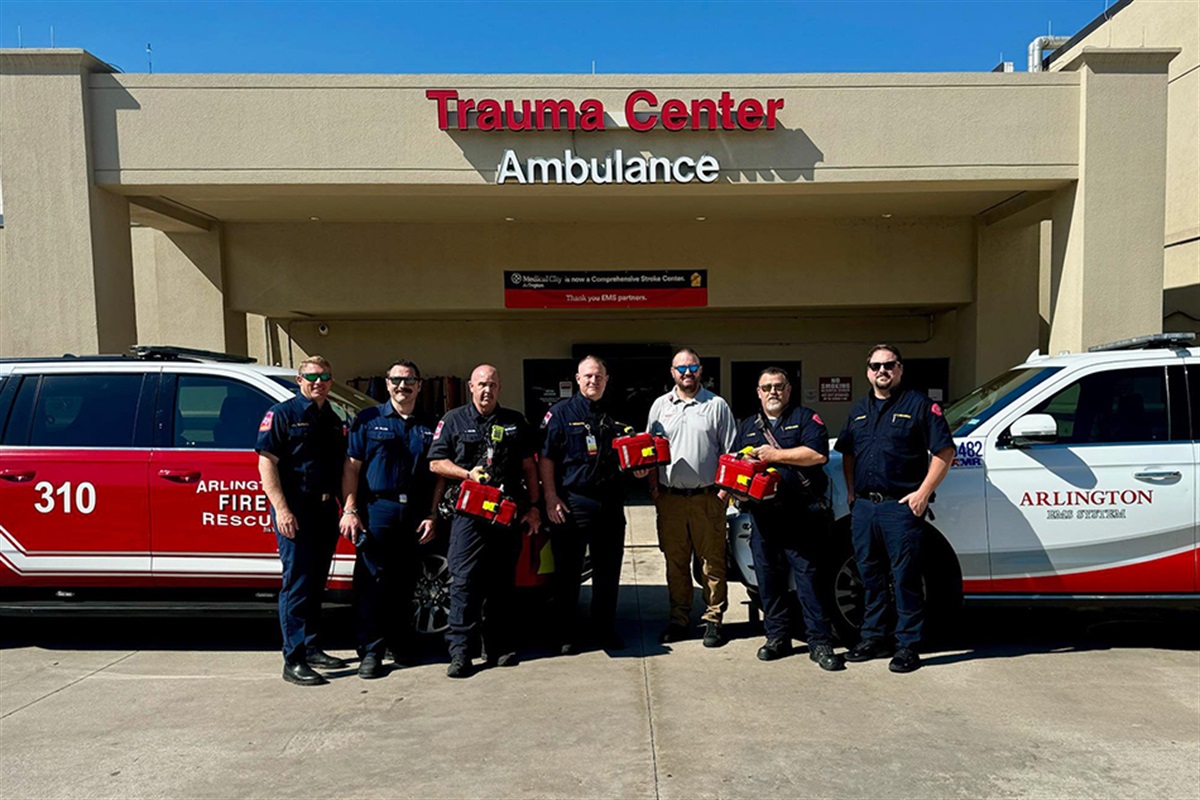
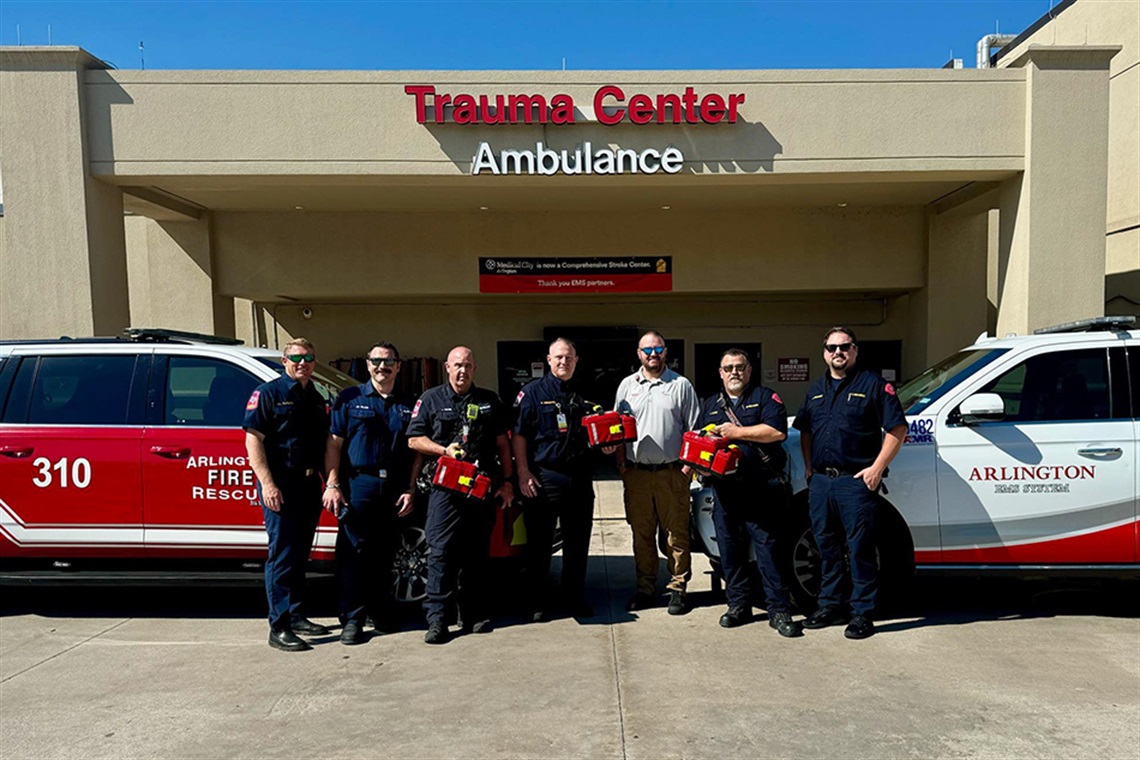
The program is a coordinated effort between the Arlington Fire Department, American Medical Response, Medical City Arlington and other hospital partners across the region. Since launching in October, first responders in Arlington have administered whole blood approximately 24 times. Those cases include traumatic injuries such as vehicle crashes and violent incidents, as well as medical emergencies like gastrointestinal bleeding, dialysis complications and postpartum hemorrhage.
“We’re able to give an entire unit of blood, warm and ready, within about five to six minutes,” Arlington Fire Lt. Jason Adams said.
Whole blood contains red blood cells, plasma and clotting factors — everything the body needs to replace blood lost during trauma or serious medical emergencies. This approach allows paramedics and firefighters to begin advanced treatment immediately rather than waiting until hospital arrival, said the City of Arlington’s Medical Director, Dr. Keegan Bradley.
“We’re giving someone back the blood that they would be bleeding out. What we’re doing is taking all those components and putting them back together in one bag, so it has everything you’d expect in someone’s blood,” said Dr. Bradley.
The City’s 9-1-1 dispatchers play a critical role by identifying severe bleeding calls early and activating a blood response.
“When someone calls 911 and they’re experiencing severe bleeding, our dispatchers can identify that quickly and send a blood response. That allows us to start lifesaving care much earlier than we could before,” said Lt. Adams said.
Arlington is among a small group of communities nationwide offering pre-hospital whole blood transfusions — a sign of the region’s leadership in emergency medical care.
“We’re only in about two to three percent of systems in the country doing this. It’s a very small group, and it highlights how Arlington Fire, AMR and our hospital partners, including Medical City Arlington, have stepped up as leaders in this type of care,” Dr. Bradley said.