
TEXAS (KTAL/KMSS) — For decades, a Texarkana psychiatrist was the go-to for prosecutors seeking the death penalty in Texas.
Nicknamed ‘Dr. Death,” James Grigson advocated for the death penalty in over 100 of 167 capital trials. Almost all resulted in death sentences.
While police lauded his methods, his peers were horrified. The case of Jeffery Wood helped to shatter an already shaky reputation and turn the Texas justice system on its head.
The Texas Dr. Death: Expulsion, ‘crime prediction,’ legacy
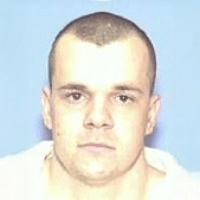
Jeffery Wood
Jeffery Lee Wood was born in San Antonio in 1973.
He was diagnosed with a learning disorder, ADHD, and mental health issues that caused his placement in special education classes.
On January 2, 1996, Wood was involved in a robbery.
He and Daniel Earl “Danny” Reneau planned to rob a Texaco station in Kerrville. The station was within walking distance of where they lived, and they had become friendly with store manager William “Bill” Bunker and clerk Kriss Lee Keeran.
The four discussed stealing the safe, with Bunker providing the group with information on the surveillance system and the safe, and suggesting that they do it the day after the holiday weekend, when the safe should be at its fullest.
Keeran refused to help, while Bunker testified that he did not take the planning seriously.
Reneau did take it seriously and entered the store with a gun. When Keeran refused to go to the back office and lend assistance, Reneau shot him.
Wood, who had been waiting outside in the truck, entered the store after hearing the gunfire. Reneau ordered Wood to help take the money.
The men escaped with a surveillance VCR, other items, and about $11,350 from the register, but were arrested later that day.
Wood led officers to the place where Reneau discarded the murder weapon.
According to Wood’s then-girlfriend, Nadia Mireles, Wood told Reneau to leave his gun at home. She said Reneau put the gun down, later picking it up when Wood was not in the room.
Mireles’ testimony was used in Reneau’s trial, but not in Wood’s trial, allegedly for a chilling reason.
According to police and prosecutors, Wood knew Reneau would kill Keeran if he did not cooperate. If that were true, that would make Wood guilty of capital murder under the Texas “law of parties.”
‘Law of parties’ states that a person can be charged with a crime they did not commit if he or she “should have anticipated it as a result” of another crime.
If Wood thought that Reneau had left the gun, the death penalty would be off the table. So, allegedly, prosecutors left out the person who could corroborate his statement in order to ensure the death penalty was possible.
According to law enforcement, Wood “downplayed” his knowledge of the killing, but later said he knew. Wood says the latter statement was made under duress.
Kerr County decided on a rare course of action. Officials sought the death penalty for both men.
According to the Death Penalty Information Center, only 22 accomplices have been executed in the United States since the death penalty was reinstated in 1976; 12 of them were in Texas.
Wood was initially found to be incompetent to stand trial, a ruling that was later reversed.
Despite having no prior violent offenses, a history of mental health issues, and claiming he thought Reneau left the gun at home, Wood and Reneau were both convicted and sentenced to death. Reneau was executed in 2002; Wood’s fate is still in the air, largely due to one man.
Hoax or history? How to spot fake historical markers around Texas
Dr. Death
James Paul Grigson, Jr. was born in Texarkana in 1932.
After high school at Texas High, he attended Texarkana Community College before continuing his education at Texas A&M and attending the University of Texas Southwestern Medical School in Dallas for his medical degree and forensic psychiatry residency.
Grigson received his first court appointment at the Dallas County courthouse while working as a psychiatry professor in 1963. He entered private practice in 1967.
In 1981, Dr. Grigson was the focus of a 1981 Supreme Court decision.
The court unanimously decided that a psychiatrist could not interview defendants without their permission or use the information at trial without being warned.
Yes, Dr. Grigson would interview people before trial to determine if they were competent, then come back and use the interview to testify against them in favor of execution.
Over time, his focus shifted from determining a defendant’s competence to stand trial to testifying as an expert in capital murder cases.
This is where he earned the nickname Dr. Death.
Over the course of his career, he testified in so many death penalty cases because prosecutors loved him.
He avoided medical jargon and kept things simple for the jury while calling defendants sociopaths, not a real medical term.
He compared a ‘sociopath’ killing for the first time to other people eating at an excellent restaurant for the first time. Something they are likely to do repeatedly if they enjoy it.
He was smart, funny, and down to earth.
Most importantly, he would say things that no other psychiatrist would say.
Dr. Grigson would testify with 100% certainty that, if released, a subject would absolutely commit a violent crime again.
Even if they had no history of violent crime. Even if he had never met them. Even though the rest of the psychiatric community was adamant that it was impossible to make that determination.
Dr. Grigson was quick to say that he did not testify for a side but based on his scientific opinion, despite his peers saying there was no way to draw his conclusions. At times, despite what seemed to be clear help for the prosecution.
In a 1990 interview with Texas Monthly, Dr. Grigson relayed a story of one such instance.
During the testimony of another prosecution psychiatrist, Dr. Grigson watched the jury and noticed a woman sitting with her legs crossed, seemingly not willing to consider voting for death.
During a recess, he told the prosecution about his observation. The prosecutor then looked into the woman’s background and found a weakness: a 14-year-old daughter.
With Dr. Grigson on the stand, the prosecutor specifically asked him if the defendant was the type of person who would rape and kill 14-year-old girls.
According to Dr. Grigson himself, that line of questioning is what changed the juror’s mind. They unanimously voted for the death penalty.
Juries are often hesitant to condemn people to die. Dr. Grigson was almost always willing to tell them that it was the right thing to do, even when his actions seemed wrong or unethical at times.
History in your backyard: What you missed about Marshall, TX
Dr. Death and Jeffery Wood
Dr. Grigson testified that should Wood ever be released, he would pose a threat in the future.
Primarily based on his recommendation, the jury sentenced Wood to death. There was only one problem.
Neither the prosecution nor the jury knew that Dr. Grigson had been expelled from the American Psychiatric Association and the Texas Society of Psychiatric Physicians.
He was expelled from both organizations for unethical conduct.
The American Psychiatric Association was clear that Dr. Grigson was “arriving at a psychiatric diagnosis without first having examined the individuals in question and for indicating while testifying in court as an expert witness that he could predict with one hundred percent certainty that the individuals would engage in future violent acts”.
Wood’s has been scheduled for execution on two occasions. One in 2008 and another in 2016. Stays of execution were granted each time because of concerns about his competency and false testimony used to convict him.
Still, two governors have refused to commute his sentence.
The way Wood’s case progressed was so controversial that Keeran’s father requested that then-governor Rick Perry commute his sentence in 2008.
In 2017, Lucy Wilke, the prosecutor in Wood’s original trial, wrote a letter to the Texas Board of Pardons and Parole asking that the board recommend Gov. Greg Abbott commute Wood’s sentence to life in prison. She noted that she was early in her career and would not have asked Grigson to testify if she had known about his expulsions.
Thus far, all efforts have failed, and Wood is still on death row with no date set for his execution.
Copyright 2025 Nexstar Media, Inc. All rights reserved. This material may not be published, broadcast, rewritten, or redistributed.
For the latest news, weather, sports, and streaming video, head to KTALnews.com.