
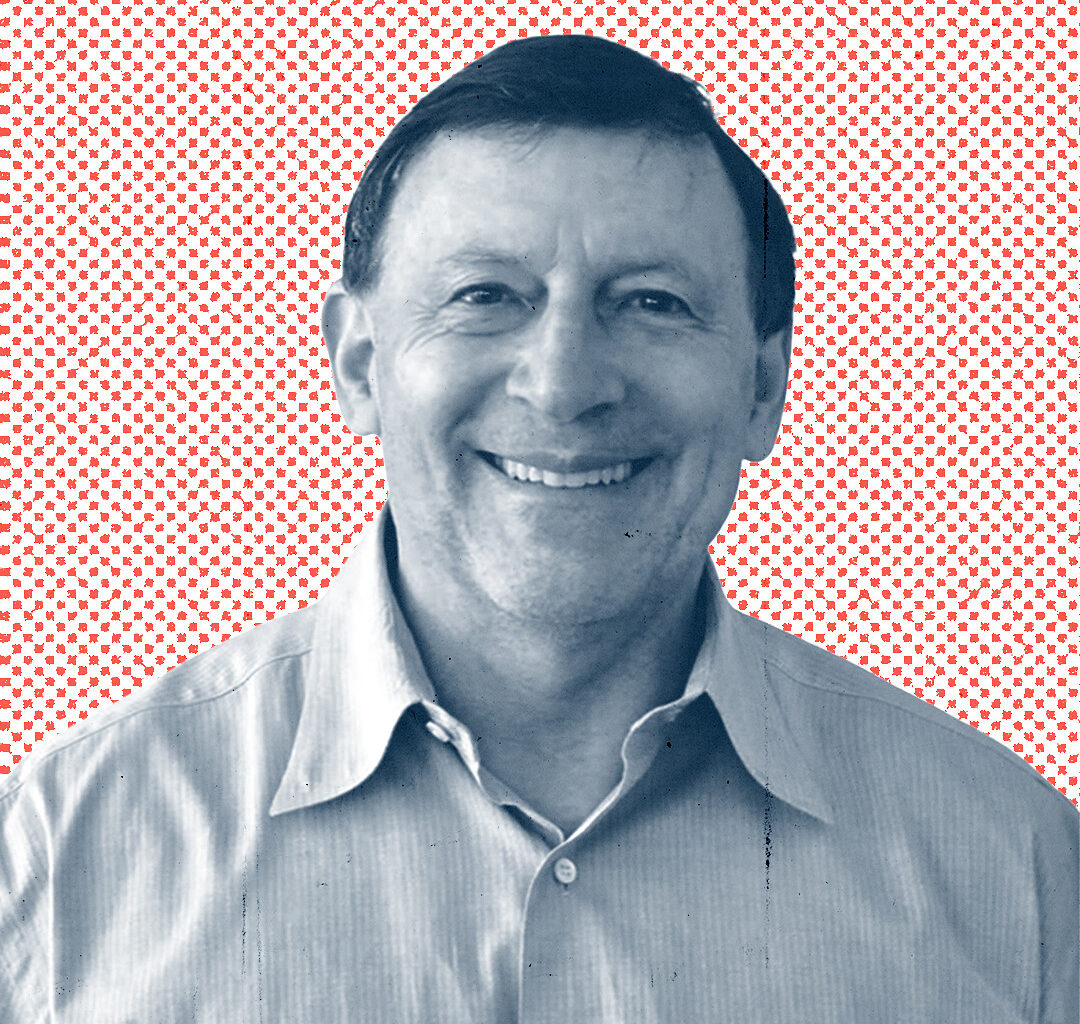
Candidate name: Jon Buchwald
Age: 63
Public email address: campaign@citizensforjon.com
Campaign website: citizensforjon.com
Social media: Facebook: @buchsons; Instagram: @jon4congress2026
Education: MBA in entrepreneurial management, Wharton Business School at the University of Pennsylvania; BA in computer science, University of California, San Diego
Occupation and workplace: I am currently a full-time candidate, but most recently I have been a consultant in strategy and change management, and adjunct faculty member at SMU Cox School of Business, and UTD Naveen Jindal School of Management, teaching in the entrepreneurship department of both.
Previous elected office(s) sought or held: None
How long have you lived in Texas and in your district?
I have lived in Dallas since 2016, and I am proud to call myself an “adopted son of Texas.” I feel that my neighbors in Texas and the district have adopted me and my wife and made us truly feel that this community is our home.
What are your qualifications to serve in this office?
The current Congress is in a state of dysfunction. To be effective, members of Congress should possess the skills and experience to know how to listen and work together for the common good for the sake of the nation as a whole. Over the course of my 30-plus year business career, I have worked with many business leaders who were in search of direction and could not agree on one. I used my ability to quickly gain credibility and get people listening to each other to effect positive change in these organizations.
The unique skills that I bring to Congress are:
Unifying people by helping them learn to listen to one another
Creating positive change where fear and anger previously dominated their emotions
Leading large groups that have strongly differing perspectives and even values
Solving complex commercial challenges across five continents and different cultures in both the business and government sectors
Deriving credibility and influencing change by how I engage with others
I firmly believe that my skills and abilities will help transform the Democrats in Congress from a group that reacts to the GOP, to one that moves the entire country forward to solutions for our many problems.
Equally important I have already begun the job of U.S. representative:
I have talked to thousands of voters across the district, who are fed up with gridlock and inability to govern in Congress. They feel the American Dream is slipping away, are losing faith in their government and are frustrated with Washington politics and corruption.
I have read the entirety of House Resolution 1 (Big Beautiful Bill) cover to cover, identifying its full impact on the American people. I am deeply committed to informing voters and have been giving talks to voters that dissect this bill in a way that makes it easy to understand.
I have developed and prioritized a plan to fight against the negative effects of HR 1 and create a more fair and equitable tax structure for all Americans.
Without more of these skills in Congress, we will see a continuation of the status quo, where budgets and laws designed to help the average American are put in limbo.
What are your top three priorities, if elected? Briefly describe how you would approach each.
My campaign is built around restoring the American Dream. This means putting money back into working people’s pockets and treating the pursuit of happiness as a human right so that people can live the life they choose with good health, a safe and affordable home and financial stability. Unlike past Democratic platforms, I have chosen to approach these issues holistically, recognizing that they are interrelated.
Financial stability is a priority touching on many areas that include the economy overall, inflation, wages and opportunity. To briefly summarize, we must pay living wages, rebuild our manufacturing capabilities, and make access to capital, such as SBA loans, easier for local businesses.
Tax credits to small and medium sized businesses whose costs for commonly used goods are rising the fastest, along with incentives for them to pass these savings on to customers.
Create a more fair and equitable tax structure for all Americans, especially tax credits targeted specifically to the middle class
Elimination of trade wars that result in economic retaliation against us and negotiating sustainable trade agreements to avoid disruptions to our supply chain.
If billionaires at Davos are saying they want to pay more tax to support the middle class, then why not take them up on it? As we increase our revenue, then we also need better oversight to ensure that we spend wisely.
I support the creation of an affordable and accessible healthcare system. Having had global experience in health care, and being a two-time cancer survivor has put me in a unique position to reimagine health care reform into a series of initiatives, such as free primary care supported by catastrophic Medicaid, that I believe will be easier to pass through Congress and implement than past large sweeping attempts to make health care more affordable and accessible.
In addition to affordability and accessibility, patient choice is critical. A health care program should never lock a patient into one care option when there are multiple possibilities.
Affordable and accessible housing is a concern not only for young people but even for successful parents whose adult kids are still living at home or are living paycheck to paycheck. Treating housing as infrastructure by creating more access to capital for increasing urban density will help balance supply and demand.
What is the single biggest issue your constituents face? How would you address it?
In speaking with thousands of Congressional District 24 voters, I’ve heard concerns ranging from the state of democracy to ICE to women’s rights, but affordability and financial concerns are most frequently mentioned. A common sentiment of many professionals and seniors is that they have worked hard and planned for the future, but life keeps getting more expensive and stressful. Even parents who have achieved financial success express concerns over kids who still live at home or are surviving paycheck to paycheck.
The root causes of these economic challenges span housing, healthcare and an educational system that needs improvement to prepare young people to take on the real world. While some of my responses may appear redundant, my platform is a holistic one that addresses the set of problems that are tied to affordability. We need to treat housing as infrastructure to better balance supply and demand and reduce the cost of home loans themselves so that more young people can afford to buy sooner in life.
We also need an educational system that makes our kids Real World Ready. This entails bringing financial literacy, entrepreneurship and skilled trades to our public schools so that our K-12 educational system provides a clear path to earning and saving. I support the creation of an affordable and accessible healthcare system. Having had global experience in health care and being a two-time cancer survivor has put me in a unique position to reimagine health care reform into a series of compact and readily implementable initiatives, such as free primary care supported by catastrophic Medicaid.
Why are you seeking this office?
Over the last decade our nation has become more divided while our democracy and freedom have been under attack, and the rule of law ignored.
Congress is no longer an effective check on the executive branch, placing intense pressure on the judiciary and attorneys who fight for our rights.
I made the decision to run for Congressional District 24 because, over my 30 years in business, I feel I’ve been blessed with the skills necessary to leave America and the world a better place than I found it. These skills are:
Unifying people by helping them learn to listen to one another.
Creating positive change where fear and anger previously dominated their emotions.
Leading large groups that have strongly differing perspectives and even values.
Solving complex commercial challenges across five continents and different cultures in both the business and government sectors.
Deriving credibility and influencing change by how I engage with others.
Equally important I have already begun the job of U.S. representative:
I have talked to thousands of voters across the district, who are fed up with gridlock and inability to govern in Congress. They feel the American Dream is slipping away, are losing faith in their government and are frustrated with Washington politics and corruption.
I have read the entirety of House Resolution 1 (Big Beautiful Bill) cover to cover, identifying its full impact on the American people. I am deeply committed to informing voters and have been giving talks to voters that dissect this bill in a way that makes it easy to understand.
I have developed and prioritized a plan to fight against the negative effects of HR 1 and create a more fair and equitable tax structure for all Americans.
I firmly believe that my work experience, skills, qualifications and campaign approach are the best suited of any candidate to go up against Beth Van Duyne in Congressional District 24, the highest income district in the state. My background and professional approach to engaging voters already have built a strong base of grassroots support in the district while my experience of medical bills that nearly broke me resonates with people who struggle to make ends meet. I believe that Congressional District 24 Democrats are ready for a new path and campaign that stands a real chance of both flipping this district and crafting solutions to America’s economic and social problems.
Who are your top five campaign donors?
My donors are all individuals, and I respect their privacy. I have not accepted any PAC money.
Have you ever filed for bankruptcy? If so, when?
No
Have you ever been convicted of a crime, in Texas or another state? If so, what crime and when?
No
What is your stance on property tax relief?
I believe in tax credits for the middle class and elderly whose property values are rising faster than their wages, or who are on a fixed income. Property taxes are important to our schools, so rather than cutting them, there should be a federal offset that mitigates the increase in property taxes so that people are not forced out of their homes due to a lack of overall affordability.
What are your priorities for public education?
My program for public education is called “Real World Ready.” As an educator, I believe that our schools need to do a better job of preparing our kids for the real world inside of the K-12 educational system. This includes bringing financial literacy, entrepreneurship and skilled trades into our schools.
One advantage that wealthier kids have is that they receive more exposure to finance and business in the home. Bringing financial literacy and entrepreneurship to our public schools will help bridge the educational gap between the haves and have-nots. Financial literacy must include an understanding of how to plan a budget, understanding the financial risks associated with credit cards, and the costs vs. benefits of going to college or directly into the workforce.
What is your stance on banning or regulating THC products?
They should be treated similarly to tobacco and alcohol products. THC is commonly used, and we should learn from the prohibition era.
What is your stance on legalizing casino gambling in Texas?
Texas derives close to $500 million annually from gaming revenue agreements with Native American tribes, with very limited types of games. Texas could do well to expand the types of games and send the increased tax revenue to our public schools. People already are gambling, and access to gaming is already so widespread that Native American casinos are unlikely to cause more people to gamble. Why should Oklahoma or Louisiana get money that could be going to our schools?
What would your approach be to regulating Texas’ growing data center landscape to balance energy and water needs with economic growth?
Proposals for individual data centers should be handled on a case-by-case basis, considering the trade-offs between the local economy and energy/water needs.
If there are cases to be made for data centers, then we most definitely need to shore up our electrical grid, and the data center should be a contributor to the cost. On a federal level, we need to bring back tax credits for green energy like solar panels that were eliminated by House Resolution 1 so that people can more readily generate their own energy.
What is your stance on border security, and how do you believe it should be addressed?
We need a balanced approach to border security that treats people humanely while taking into account the need for a secure border and proper enforcement of the law. Specifically my plan includes:
Treating warehousing of human beings is a civil rights violation that should not be tolerated.
Holding executives of for-profit detention facilities accountable for human rights violations.
Strengthening our border security with an organization whose mission, culture and training balances stopping illegal border crossings, defending themselves against attacks, and treating illegal border crossers humanely.
Streamlining the path to legal immigration for those who have been in America, and have contributed to our tax base.
Engaging with Latin American allies to address the reasons that people choose to flee to the U.S. (these include human rights violations, infrastructure and economics; it is critically important to note here that China’s inroads into Latin America over the last 10 years, combined with treatment of undocumented immigrants are a reason that the Chinese are viewed by many as a stronger ally than the U.S.).
Do you support passenger rail projects, such as high-speed rail in Texas? Why or why not?
Having traveled to six continents, I have used high-speed rail many times and found it to be a safe and efficient way to travel. If properly designed and planned a high-speed rail would make an excellent way to get around Texas. Texas needs to do proper “market research” to determine if there is a sufficient market to support the operation of high-speed rail and make it economically viable. The construction and operation also would create needed jobs.
What would you do to support affordable housing in Texas?
In addition to increasing supply and simplifying home lending by enabling direct seller-to-buyer home loans, I will seek to solve the issue of there being a huge waiting list for apartments that accept vouchers. There are two primary causes for the lack of supply for people who need vouchers: caps on funding drive the wait for vouchers themselves, and the ease of denying an apartment to someone with a voucher. I will fight to raise the voucher caps, and fight discrimination against people with vouchers.
How would you address rising health care costs?
Costs in health care certainly can be reduced in ways beyond my plan for free primary care supported by catastrophic Medicaid.
I favor expanding Medicare’s ability to negotiate prescription drugs. Medicare’s ability to negotiate is limited to only a very few drugs. This needs to expand to a wide range of commonly used drugs. Although it’s important to recoup drug research and development costs, the ability to extend and otherwise game patents through “evergreening” methods should be limited, which will expand access to lower cost generic drugs.
I favor removing commissioned sales reps from the OR and replacing them with salaried technical advisors (sales reps in the OR are common with medical devices). These technical advisors should be required to follow the same compliance measures as commissioned sales reps are today. Product expertise is important in the OR, but there’s no reason to have commissioned reps who are incentivized to upsell.
Additionally, I favor a uniform set of billing and reimbursement rules that reduce administrative complexities and costs in hospitals and doctors’ offices.
How would you approach working with colleagues of the opposite party to foster bipartisan collaboration?
In my 30-plus years in business, I’ve walked into many situations where people initially don’t know me or don’t want a consultant in the room. The most important thing you can do is non-judgmentally listen to them and stand in their shoes. This is an important skill that I will bring to Congress and the approach that I will use with my colleagues.
When I get to Washington, I will do this with all 500-plus colleagues across the House and Senate, and it will take time. When I’m done, every one of them will see that I am able to stand in their shoes, and that I know what success means to them. While this sounds simple, it’s an executive skill that requires one to engage in the right conversation and ask the right questions. This is a key reason that I will gain credibility quickly and become an agent of change in Congress.
This <a target=”_blank” href=”https://fortworthreport.org/2026/02/16/jon-buchwald-democratic-candidate-for-u-s-house-texas-district-24/”>article</a> first appeared on <a target=”_blank” href=”https://fortworthreport.org”>Fort Worth Report</a> and is republished here under a <a target=”_blank” href=”https://creativecommons.org/licenses/by-nd/4.0/”>Creative Commons Attribution-NoDerivatives 4.0 International License</a>.<img src=”https://i0.wp.com/fortworthreport.org/wp-content/uploads/2021/04/cropped-favicon.png?resize=150%2C150&quality=80&ssl=1″ style=”width:1em;height:1em;margin-left:10px;”>
<img id=”republication-tracker-tool-source” src=”https://fortworthreport.org/?republication-pixel=true&post=392770&ga4=2820184429″ style=”width:1px;height:1px;”><script> PARSELY = { autotrack: false, onload: function() { PARSELY.beacon.trackPageView({ url: “https://fortworthreport.org/2026/02/16/jon-buchwald-democratic-candidate-for-u-s-house-texas-district-24/”, urlref: window.location.href }); } } </script> <script id=”parsely-cfg” src=”//cdn.parsely.com/keys/fortworthreport.org/p.js”></script>