
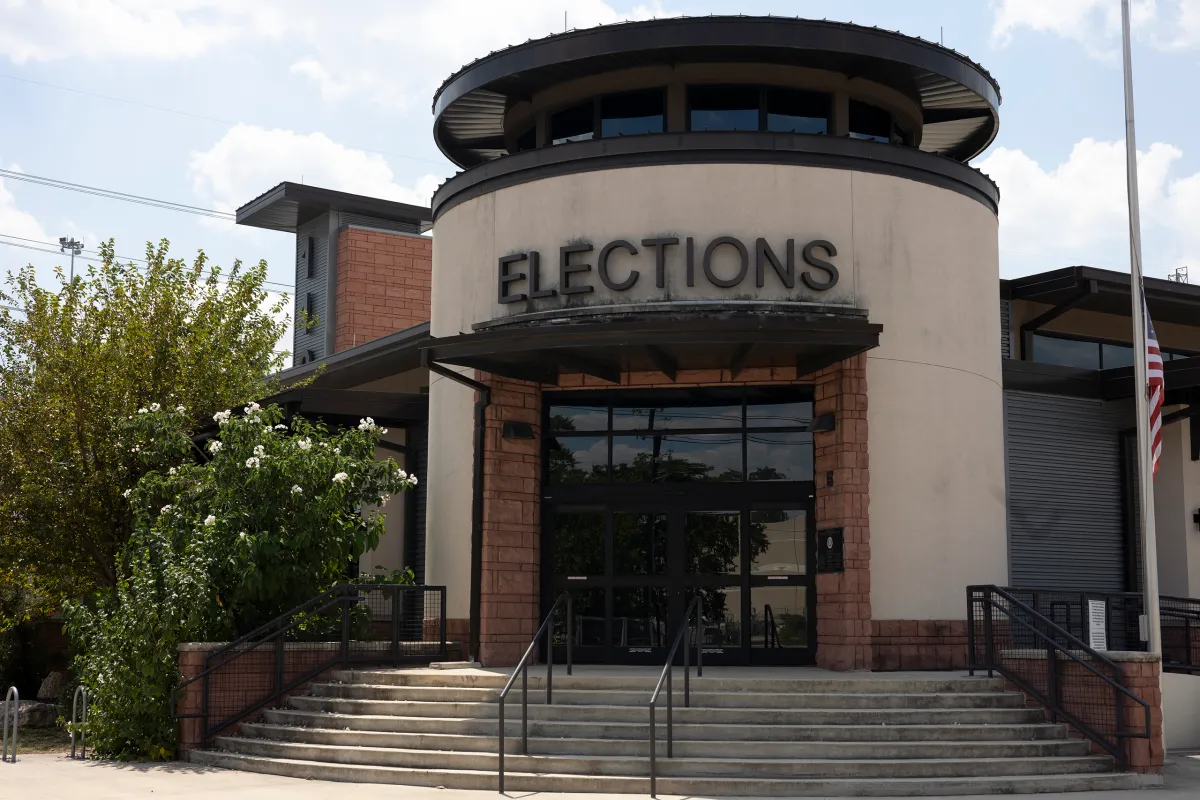
Forced to choose between a new paid voter registration system or a free state program that’s been faulty, Bexar County Commissioners voted Tuesday to move to a new private vendor for the 2026 midterm election.
The contract totals roughly $2 million for a voter registration and elections management system software package.
Like other large counties, the Bexar County Elections Department was thrust into chaos last summer when its longtime voter registration vendor, Votec, went under.
They had to quickly onboard to a free state system, known as TEAM, at the same time that system was undergoing a massive update.
The result was a massive backlog of voter registrations that the county had to hire temporary staff to manually enter in the days before early voting for the state’s November constitutional amendment election.
A similar backlog occurred in the lead up to the March 3 primary and was also resolved in the nick of time. However, voter registration cards — one of the many forms of identification people can use when they go to vote — have still not been delivered due to the delay.
Under pressure to resolve the issues, this week county leaders forewent the traditional request for qualifications process to purchase services from a new vendor, VR Systems.
VR Systems is now the vendor of choice for a number of other large Texas urban centers, including Tarrant, Denton, Collin and El Paso counties.
One of its executives even attended a January meeting of the Commissioners Court to complain that Bexar County was causing unnecessary delays in the contracting process.
But county leaders said they were being extra cautious to ensure that VR Systems would truly provide better services than the free state system once the TEAM System update is fully functional.
Commissioner Grant Moody (Pct. 3), the court’s lone Republican, remains one of the new system’s biggest critics — arguing Tuesday that the county didn’t need to hasten its normal contracting process for an election still months away.
While VR Systems won’t be up and running in time for the March primary or May primary runoff, Bexar County Elections Administrator Michele Carew said it will be used for the 2026 midterm election in November.
She stressed the need for a system that could move applications faster, as well as give local election officials control over the reports and data input process.
“We have ballot-by-mail applications that have come into our office, we’re about 20,000 in [for the primary], it takes us seven to 10 minutes per application to just get it into their system,” she said. “Not only that, other counties are reporting that some of the data that they’re inputting into there is getting wiped out.”