
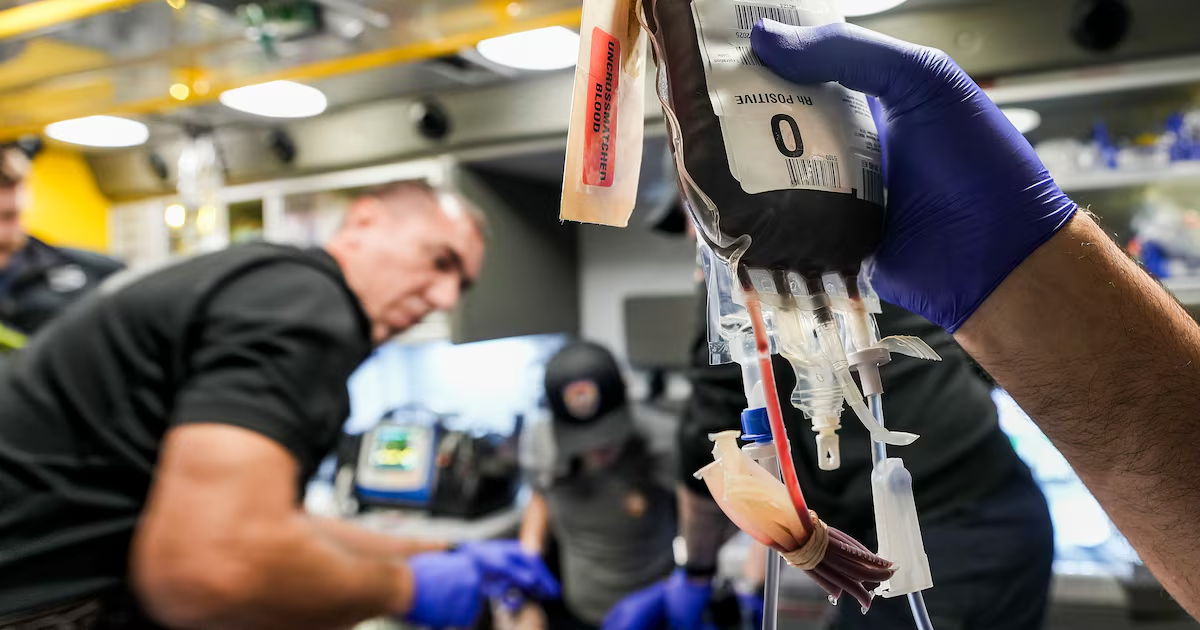
In the year since Dallas paramedics began giving blood in the field, 40 patients with life-threatening bleeding have received transfusions.
Thirty-four of them survived.
That remarkable statistic has prompted Dallas Fire-Rescue leaders to expand the program, making blood available within 10 to 15 minutes to any patient in the city who needs it.
“The success and the impact of this program is measured by the lives that have been saved by this program,” said Fire Chief Justin Ball at a news conference at Dallas City Hall on Tuesday morning.
Breaking News
When the blood program began as a pilot in early 2025, blood was stationed with two emergency medical services supervisors, who respond to the most serious calls. After six months, the department doubled the number of supervisors carrying blood.
Soon, seven EMS supervisors will each carry two units of blood each shift, for a total of 14 units available across Dallas. To date, paramedics have given 74 units of blood.
The public safety nonprofit Safer Dallas Better Dallas is helping facilitate the program’s expansion through the donation of new equipment — including three military-grade coolers, blood-warming units and specialized tubing — that is expected to be implemented by the end of the month.
The fire department announced it would trial the transfusion of blood in the field in response to an award-winning investigation published by The Dallas Morning News and the San Antonio Express-News in late 2023 that highlighted a national epidemic of potentially preventable bleeding deaths.
The reporting explored the case of Malik Tyler, a 13-year-old boy who was shot and killed while walking home in 2019. Trauma surgeons who reviewed the boy’s autopsy report said he might have survived his injuries had the Dallas paramedics who treated him had blood with them.
Related
For many years, paramedics across North Texas were unequipped to fully treat hemorrhaging patients like Malik, who frequently bled to death before they could receive transfusions at a hospital. Many of those patients have critical injuries from car crashes, shootings, stabbings and accidents. Others are bleeding from medical causes, such as gastrointestinal bleeds. All paramedics had to offer those patients was saline fluids, medications and quick transports.
That, medical research indicates, is not nearly enough. Mortality increases every minute that hemorrhaging patients wait for blood. Without it, the chances of survival are “slim to none,” Ball said.
Quickly replacing lost blood on ambulances — something that was already standard practice in San Antonio and Austin — was the single greatest change that could save more lives, the six-part series found.
“This blood transfusion program is only as good as our ability to get to these patients in the right amount of time,” said Dr. S. Marshal Isaacs, medical director for Dallas Fire-Rescue.
In the years since The News’ investigation was published, emergency service providers in Fort Worth, Arlington and, most recently, McKinney have joined Dallas in launching blood programs. Nationwide, the number of ground ambulance providers carrying blood has steadily grown, according to the Prehospital Blood Transfusion Coalition, a national organization that advocates for and tracks these programs.
Last year, state legislators approved $10 million in funding to help bring blood products to EMS providers in counties across Texas.
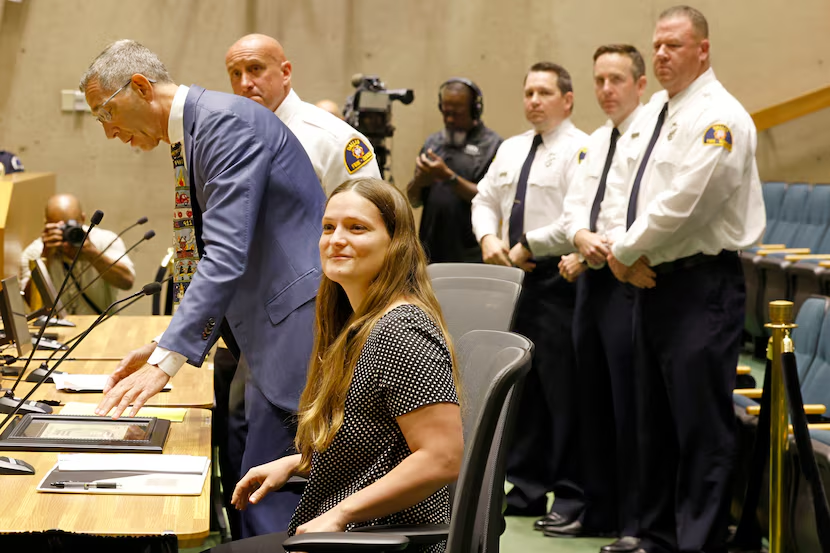
Kate Krause whose life was saved by a transfusion shares her story with Marshal Isaacs, medical director for the Dallas Fire-Rescue, left, and Interim Assistant Chief Scott Pacot, right, during a Dallas City Council meeting, Wednesday, Aug. 20, 2025, in Dallas. Dallas Fire-Rescue paramedics, Marcus Toop, background from left, Joshua Mihalyi and Justin Lovvorn help to save the life of Krause, who is an emergency medicine physician, with an on-scene blood transfusion.
Chitose Suzuki / Staff Photographer
These blood programs have benefited more than just injured patients. About a quarter of the patients who have received blood in Dallas were bleeding from medical causes, Isaacs said.
Soon after the launch of Dallas’ blood program, the initiative was credited with saving the life of a local emergency medicine doctor who was experiencing postpartum hemorrhage while caring for her baby at home.
Three weeks ago, the department administered blood to its first pediatric patient, a 10-year-old.
“Those are mothers, those are children, those are all residents here in Dallas or visitors to Dallas,” said Chris Chiara, EMS section chief for Dallas Fire-Rescue, of the patients who have received blood. “That’s not something that we take lightly.”