
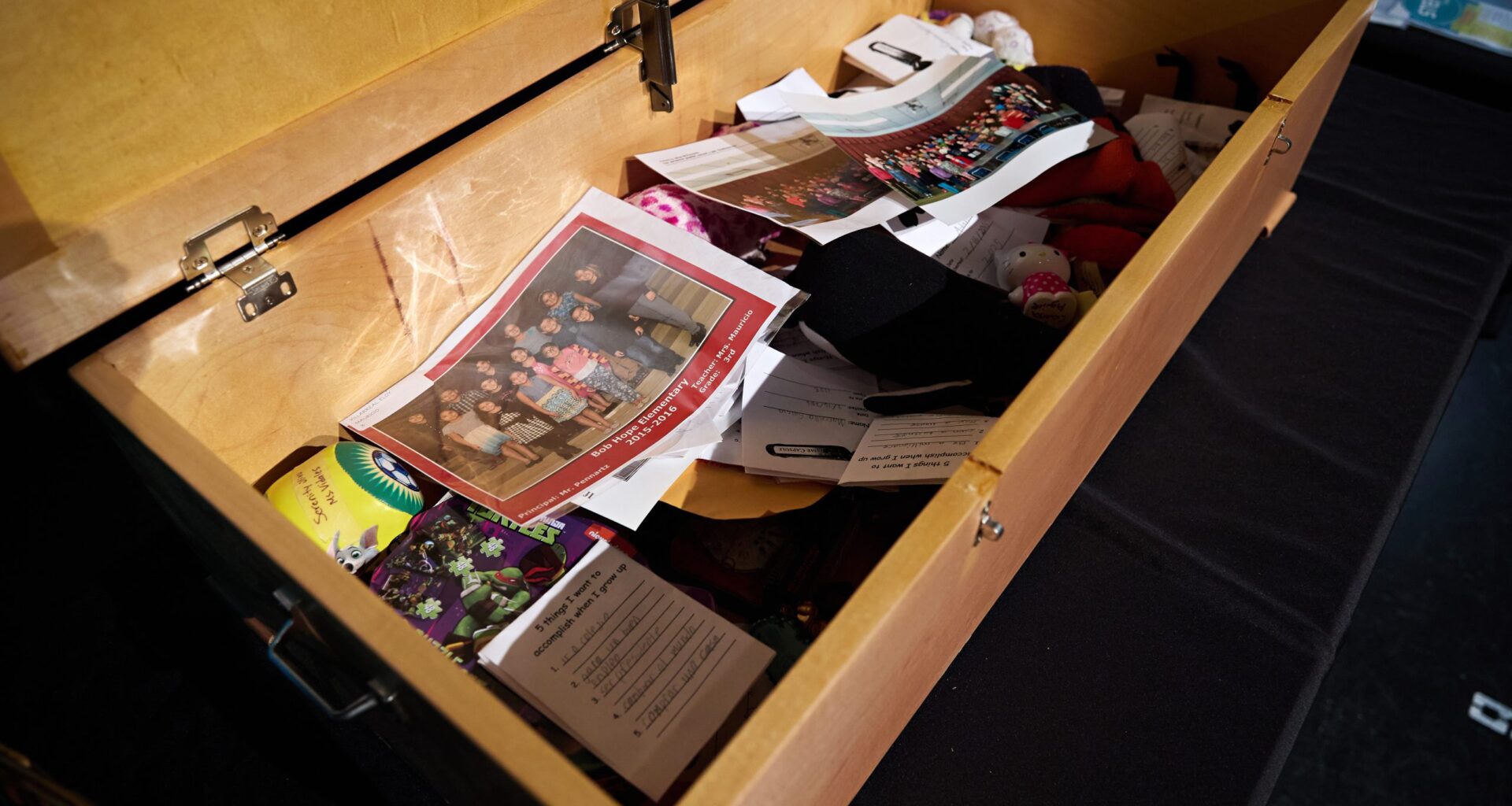
A Teenage Mutant Ninja Turtles 3D puzzle, a Millennium Falcon and My Little Pony, were just some of the treasures left by third graders 10 years ago and were rediscovered as Palo Alto College officials opened a time capsule to commemorate the college’s 40th anniversary.
“I love Star Wars,” Palo Alto College President Robert Garza said. “There were pictures of all the students… one of the young men, they had him in front of the White House and it said ‘president.’ They had a young lady as a singer with a microphone and one of them said ‘FBI agent’ which I thought was pretty awesome.”
Ten years ago, the students in those pictures were second graders at Bob Hope Elementary in Southwest Independent School District. On Tuesday, nine of those students returned to the college, seven of them as Palo Alto students to take a look at what their little selves left behind.
They also ushered a new generation. This time 20 second graders from Miguel Carrillo Jr. Elementary School in South San Antonio ISD left their mementos, photos and messages behind to reminisce in 10 years, when the college turns 50 years old.
“So there’s a whole new crop of students, all wearing their ‘Future Palomino’ shirts and their parents also came with the ‘Future Palomino’ shirts,” Garza said about the second graders. “I think that that shares a message of determination and resilience for our students in our community in a very profound way.”
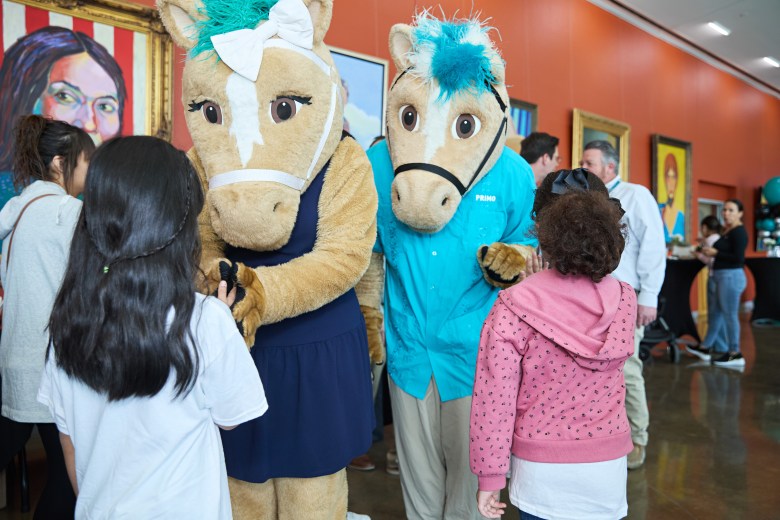 At a ceremony meant to commemorate the Palo Alto College’s 40th anniversary. Second graders from Miguel Carrillo Jr. Elementary School left behind memories that will be revisited in ten years. Credit: Courtesy/ Palo Alto College
Founded in 1985, Palo Alto College is often referred to as “the college that wasn’t supposed to be,” as Garza put it. Located on the South Side of San Antonio, the mostly Mexican-American, working-class neighborhood whose residents were not seen as the “college-going” type.
Despite the misconceptions, in 1983 the Texas Legislature approved the creation of a third college in the Alamo Community Colleges District network, now known as Alamo Colleges District.
Two years later and before a campus even existed, the college welcomed its first class of 231 students who took classes across the community, in high schools, community centers and military bases.
The college’s first president Terry Dicianna was named in 1985. Officials also broke ground on the first phase of the campus, located on a 98-acre parcel of land at Loop 410 and Hwy 16 South. This was initially designed to house up to 2,000 students.
“Here we are for 40 years of care and corazon,” Garza said. “It’s an overwhelming joy that we get to see our community, our students come together and really take advantage of the opportunities.”
Over the last 10 years, the college continued to evolve, Garza said, not only by growing its enrollment from just under 9,000 students in 2016 to nearly 16,000 this year, but by accommodating to the demands of the students and the workforce.
“In us bringing in our nursing program — the only nursing program south of Highway 90 in the Southside community — our dental hygiene program, our welding program, our bachelor’s of business management program. I think [people will] see that we’re here to say that we have developed enough programs so that there is really something for everyone,” Garza said.
In ten years, the second graders will be back to reopen that capsule, which for now will be kept in the Ozuna Library and Learning Center.
Garza hopes that these students and their families find a compelling program to enroll in at Palo Alto, he said. His goal for the next decade is to continue adding pathways of interest to students, and expanding access to programs in high demand such as welding, nursing or automotive, programs that could lead students both into the workforce and into four-year degrees.
“Ten years ago we were a transfer institution and we took pride in our students coming here and transferring to four-year institutions.” Garza said. “Now we have some very high value programs. So if you want to transfer, that’s great. We’re going to help you do that. But now we have other options.”
The San Antonio Report partners with Open Campus on higher education coverage.