
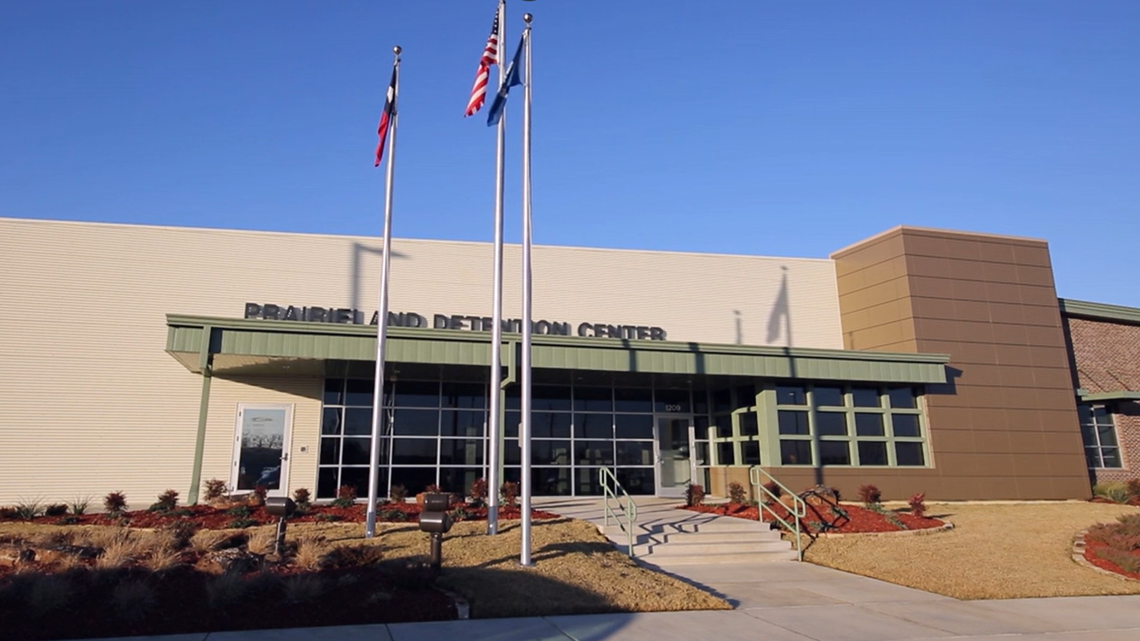
U.S. Immigration and Customs Enforcement’s Prairieland Detention Center in Alvarado.
Charles Reed
Defense Visual Information Distribution Service
A federal judge declared a mistrial on a high-profile shooting case in Fort Worth this week, and the reason surprised a lot of people. It had nothing to do with evidence or witnesses. Instead, the issue was a shirt.
During jury selection in the case of nine people accused in connection with the July 2025 Prairieland Detention Center shooting, a defense attorney wore a T-shirt featuring images of Civil Rights Era leaders under her blazer.
U.S. District Judge Mark Pittman said the shirt risked sending a message to potential jurors and tossed the whole process out. He called it highly unusual and said he had “no other choice” but to declare a mistrial.
So yes, clothing can stop a federal trial in its tracks. And it raises a question, what are the dress code rules in court?
What exactly is the dress code in a Texas courtroom?
Here’s what to know.
What happened with the mistrial?
Judge Pittman told the courtroom that attorney MarQuetta Clayton’s shirt seemed to visually tie the civil rights movement to the shooting case.
He said attorneys are free to make that argument to a jury later, but clothing with messages or imagery should not influence jurors during selection.
He also noted that Clayton had already questioned potential jurors for 22 minutes before anyone realized what she was wearing.
Once he did, Pittman stopped everything.
He said the mistrial would cost taxpayers hundreds of thousands of dollars, and planned a show-cause hearing to determine whether Clayton should be sanctioned.
What is the general dress code for lawyers in Texas?
Most Texas courts expect lawyers to show up in standard business attire that reflects the seriousness of the courtroom.
For men, that usually means a suit or a sport coat with dress slacks, a collared shirt and a tie.
Women are typically expected to wear a tailored suit, a conservative dress with sleeves or a blouse paired with slacks or a knee-length skirt. . Some judges allow high-end business casual as long as it still looks polished.
A blazer with dress pants might pass in certain courtrooms, but the safest choice is always a full suit.
Shoes matter, too. Closed-toe flats, modest heels or clean dress shoes are considered appropriate. Anything that looks too casual or too trendy can become an issue fast.
What clothing is not allowed?
Texas courts draw a firm line when it comes to casual or message-heavy clothing.
T-shirts, tank tops, denim, shorts, and other weekend wear are generally prohibited. Judges also bar any clothing with slogans, political messages or graphic imagery, because those can influence jurors or distract from the case.
That includes shirts with social movements, campaign logos or anything that could send a signal about the attorney’s views.
Outfits with disrespectful, vulgar or offensive imagery are not allowed under any circumstances.
Can a judge really throw out a trial over clothing?
Yes. Judges have what is called judicial discretion, meaning they can act if they believe something might sway jurors or disrupt the fairness of the proceeding.
That can include telling someone to change clothes, removing a person from the courtroom, or in rare cases, like this one, declaring a mistrial.
Judge Pittman said this may have been the first time in American jurisprudence that a mistrial was caused by a lawyer’s outfit, which is why it caught so much attention.
Do all courts follow the same dress code?
Not exactly. While Texas courts share the same general expectation of business attire, the specifics can vary from one courtroom to the next.
Tarrant County, for example, requires lawyers to appear in conservative business clothing and expects men to wear a coat and tie and for women to wear tailored suits, dresses, or professional separates.
The county also makes attorneys responsible for making sure their clients dress appropriately.
The Second Court of Appeals in Fort Worth outlines similar standards. It lists suits, dresses, skirts with blouses or sweaters and sport coats with dress slacks as acceptable options for anyone participating in proceedings.
Related Stories from Fort Worth Star-Telegram
Fort Worth Star-Telegram
Tiffani is a service journalism reporter for the Fort Worth Star-Telegram. She is part of a team of local journalists who answer reader questions about life in North Texas. Tiffani mainly writes about Texas laws and health news.