

TCU tour guides are preparing for spring visits, the most popular time for college tours, but some campus visitors will be virtual, rather than in person.
The university has evolved from offering tours centered around informational-based facts to a student-centered perspective, allowing visitors to connect with TCU students guiding tours.
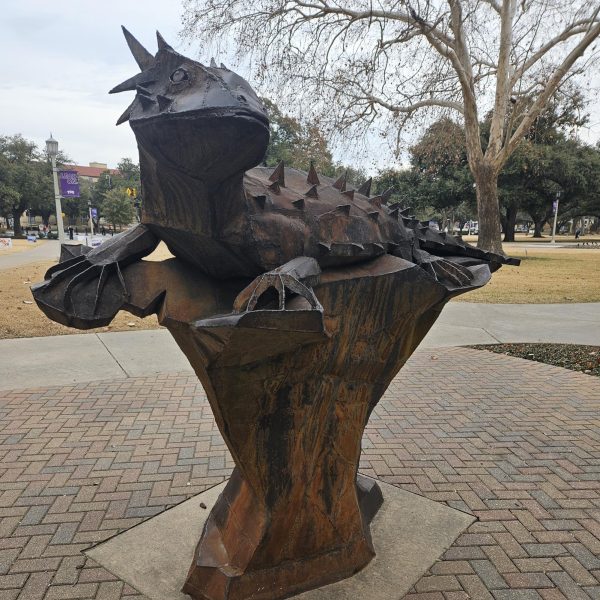 The Horned Frog Statue, between Reed and Sadler halls, was installed in 1984 and created by Seppo Aarnos. (TCU360/Hailey Bentley)
TCU sees nearly 30,000 visitors each year, with campus tours and self-guided tours being the primary sources offered to prospective students to view the campus, said Sophie Deutsch, the director of admission programs.
They also offer Monday at TCU, a full-day tour opportunity including complimentary breakfast and lunch, an academic department visit and a residence hall tour.
Beginning with 13 students in 1873, TCU has seen an expansion of its campus and population in recent years, adding new programs, buildings and study spaces for individuals to spot as they walk along campus.
Deutsch said in the past, tours were primarily informational, serving as a longstanding part of TCU’s admission and recruitment efforts. Tour routes were shorter with fewer stops and a limited scope of facilities and program highlights.
Every year, a comprehensive review is performed on the tour routes to highlight the most relevant experiences, programs and evolving student life, leading tours to shift toward sharing storytelling-focused experiences from students, Deutsch said.
Individuals who are touring TCU have the opportunity to connect with the university’s students through 90 minute-guided tours, allowing them to ask questions about students’ experiences.
“I came to the Visita TCU tour day with my family, which offered Spanish-speaking programming,” said Victoria Zamora, a sophomore marketing and strategic communication dual degree. “I loved how TCU fostered that inclusivity for my family and others who are Spanish-speaking. After that day, I knew I wanted to become a tour guide to pay it forward.”
In the application process to be a tour guide, students first respond to a written prompt and interview. After, students are tested on memorizing TCU facts, followed by a verbal test where they point out several spots on a map, Zamora said.
While in-person tours are most common among visitors today, in 2025, TCU evolved to offer a 360-degree virtual tour for individuals who want to revisit specific spots or for those who cannot make it to campus.
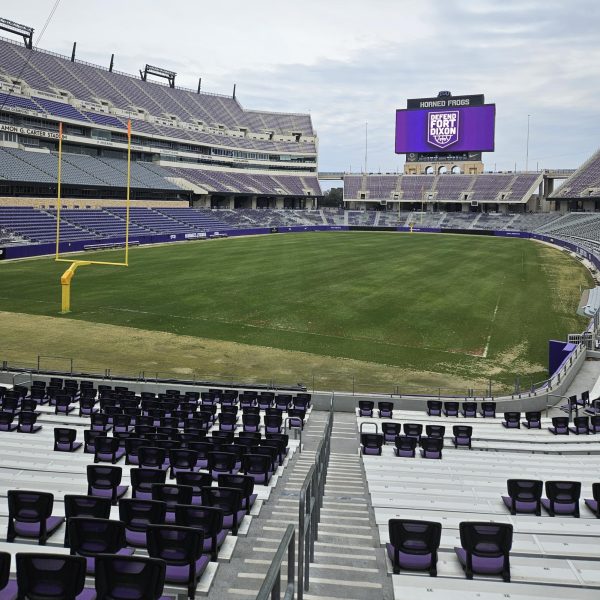 Amon G. Carter Stadium is home to TCU football in Fort Worth, Texas. (TCU360/Hailey Bentley)
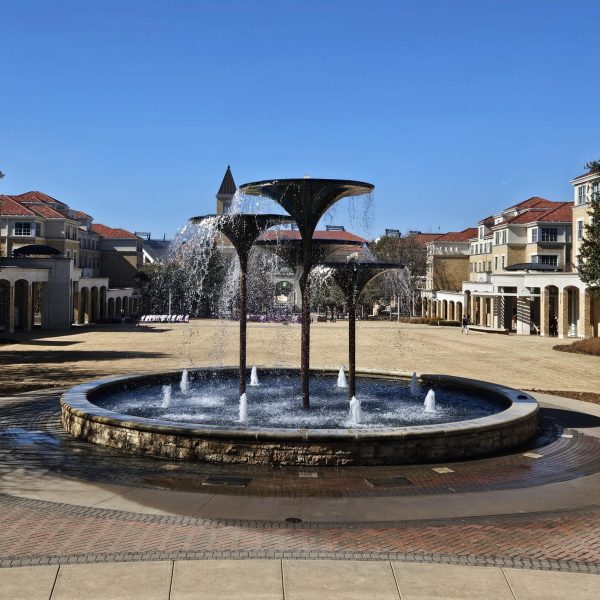 Frog Fountain, located in the campus commons, was a gift from Mr. and Mrs. H.H. Phillips in 1969. (TCU360/Hailey Bentley)
The virtual tours allow individuals to view Amon G. Carter Stadium and Frog Fountain, the most popular landmarks on campus, serving as photo opportunities for guests when guided through in-person campus traditions, Deutsch said.
“I love talking about my personal journey when we end off at the football stadium,” Zamora said. “Especially when I am with a Hispanic family that grew up similarly to me, it’s nice to be able to provide some encouragement as the college application process can be stressful for them.”
Deutsch said that while tours have evolved in both structure and scale, its core value remains to provide prospective students and families with an engaging introduction to life at TCU.