
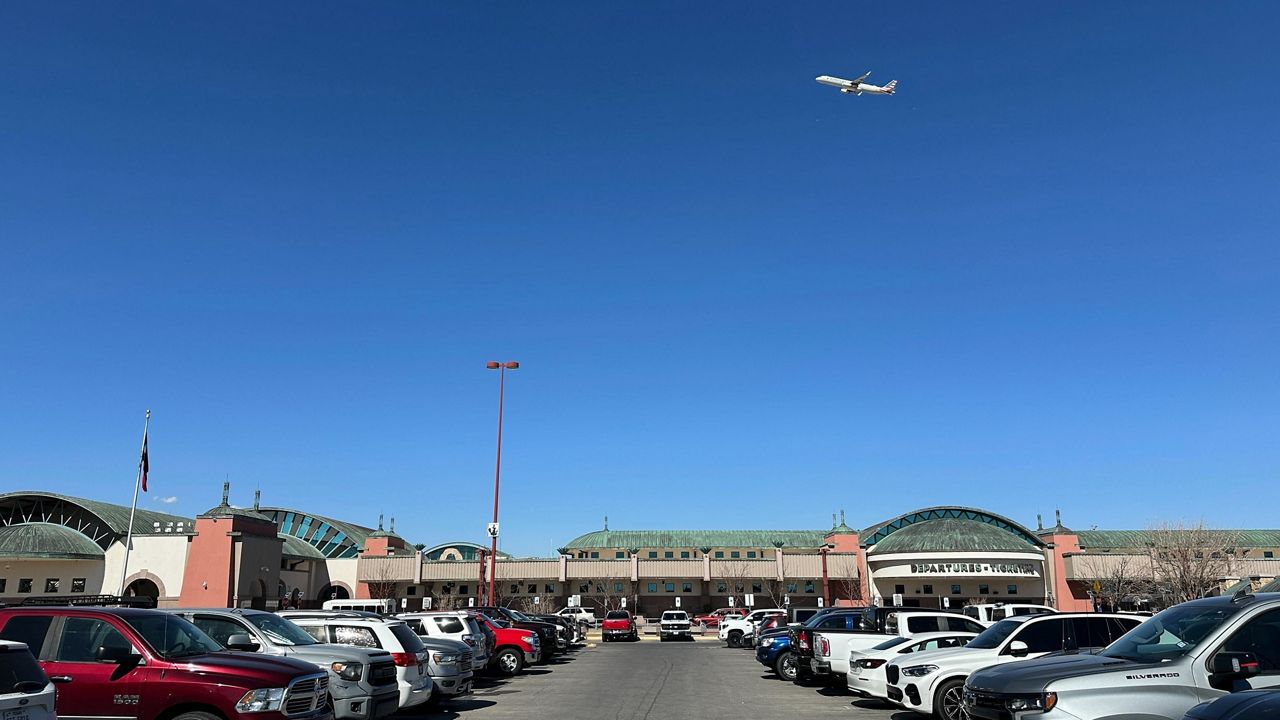
EL PASO, Texas — One week after the sudden shutdown of the El Paso International Airport, questions still linger about how a miscommunication at the federal level led to hours of confusion, disrupted flights and widespread concern across the U.S.-Mexico border.
In the early morning hours last week, El Pasoans woke up to news that the Federal Aviation Administration (FAA) had closed the airspace over the city and said it would remain shut down for 10 days. That order was lifted just hours later, but not before chaos unfolded at the airport and uncertainty spread throughout the region.
U.S. Rep. Veronica Escobar, D-El Paso, confirmed that the temporary closure of El Paso airspace was caused by a miscommunication between the FAA and the United States Department of Defense over the use of new technology equipment at Fort Bliss.
Escobar says the breakdown in coordination triggered the shutdown order, disrupting commercial, medical, private and military aviation activities.
A few days after the incident, Escobar and several Democratic members of Congress sent a letter to Homeland Security Secretary Kristi Noem. In that letter, lawmakers said the incident created “widespread fear, uncertainty, and chaos” in the region and contributed to the rapid spread of misinformation and conspiracy theories.
They are now requesting a classified briefing from federal agencies to clarify what happened, identify where communication failed and outline steps being taken to prevent a similar incident in the future.
El Paso City Representative Chris Canales says the incident should serve as a wake-up call.
“I just want to implore the federal government not to think of El Paso and our airspace as a testing ground,” Canales said.
He pointed to the city’s unique position near the border and multiple military installations, including Biggs Army Airfield and White Sands Missile Range, but emphasized that El Paso is also a large metropolitan area with a busy international airport serving thousands of travelers.
Initially, the Pentagon attributed the closure to Mexican cartel drones allegedly breaching U.S. airspace. Drone incursions along the border are not unusual, but officials later clarified that the shutdown stemmed from internal coordination issues rather than an active drone threat.
Even though airport operations returned to normal the same day, one week later residents and local leaders say the episode highlights vulnerabilities in federal communication and crisis response.
For many in El Paso, the shutdown was brief, but the questions about transparency, accountability and preparedness remain.