
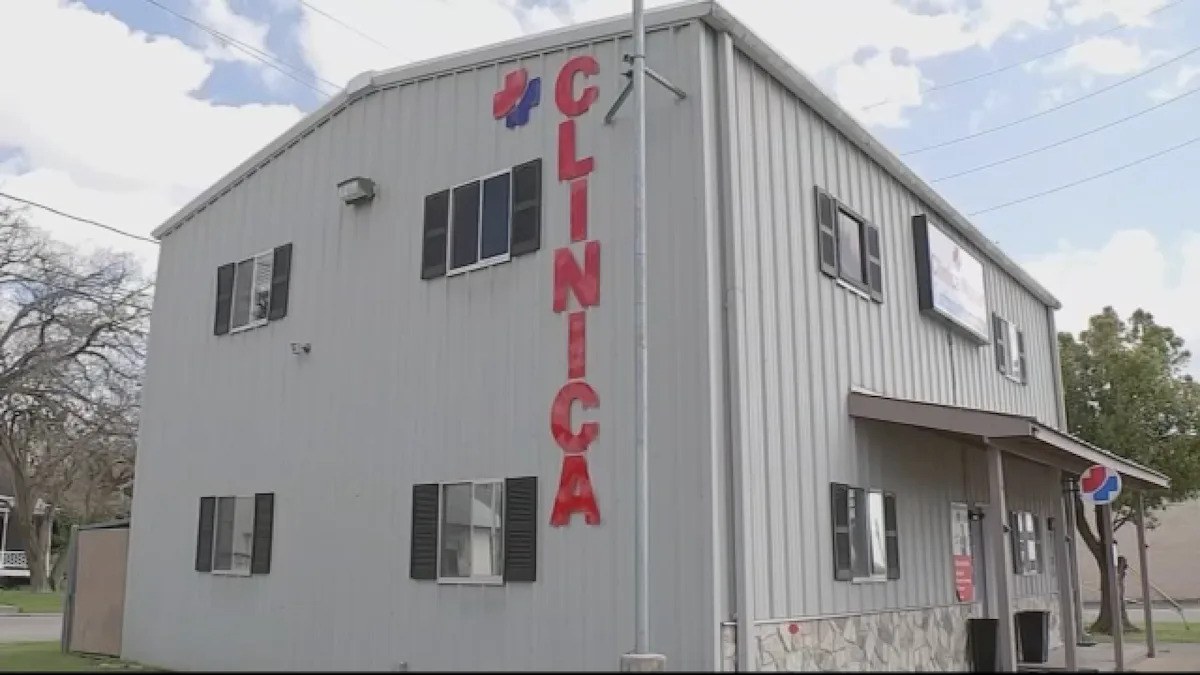
A case involving the Houston-area midwife who is accused of providing illegal abortions was in court on Thursday.
Attorneys said that she is the first person to face criminal abortion charges since the state’s near-total ban went into effect in 2022.
Texas law specifies that those who give abortions, except in very few cases, will face up to life in prison and a $100,000 fine.
According to court records, Maria Rojas is a licensed midwife accused of performing abortions at her clinics in Spring, Waller, and Cypress.
Court documents show a patient told investigators she was led to believe Rojas was a gynecologist and claimed she gave her a drug to end her pregnancy.
A source, according to those court documents, reported Rojas was charging between $800 and $1,300 for abortions.
Rojas did not appear before judges on Thursday, but her attorney argued she is being used as a political pawn.
“This is a case about sensationalism. It is about publicity,” said Marc Hearron, Rojas’s attorney, and a litigator with the Center for Reproductive Rights. “It is not so far a case that appears to be an actual search for justice or the truth.”
A panel of three appellate judges heard from Rojas’s attorney and an attorney from the Attorney General’s office.
The question wasn’t whether Rojas had performed abortions.
It was about whether a judge was correct in ordering Rojas to close her three clinics while her case moves forward.
“The Attorney General’s office did an incredibly shoddy investigation. That’s what the affidavits show,” Hearron argued. “It was headed by a Medicaid fraud investigator with no medical training, no experience with midwifery, no experience investigating abortions or practicing medicine. He truly jumped to some incredibly wild conclusions. He saw someone exiting the clinic and just assumed that person must have had an abortion.”
Judges questioned the attorney general’s office about whether the state clearly stated the reason for keeping the clinics shut down and whether the evidence was properly submitted.
“So isn’t that the very type of case where we need a trial court to explain why there’s a probability of success in the merits based on the evidence they just heard?” asked one judge.
Rojas’s attorney has claimed the state relied on unauthenticated exhibits.
“Why didn’t somebody walk across the hall and get it certified?” asked another judge. “It would have saved us a lot of time.”
Rojas’s attorney said it could be weeks or months before a decision is reached, but this is just one part of much bigger cases.
The issue remains whether Rojas broke the law.
ABC13 reached out to the attorney general’s office for comment, but hasn’t heard back.
The attorney for the AG declined to be interviewed for this story.
For more on this story, follow Pooja Lodhia on Facebook,X and Instagram.