
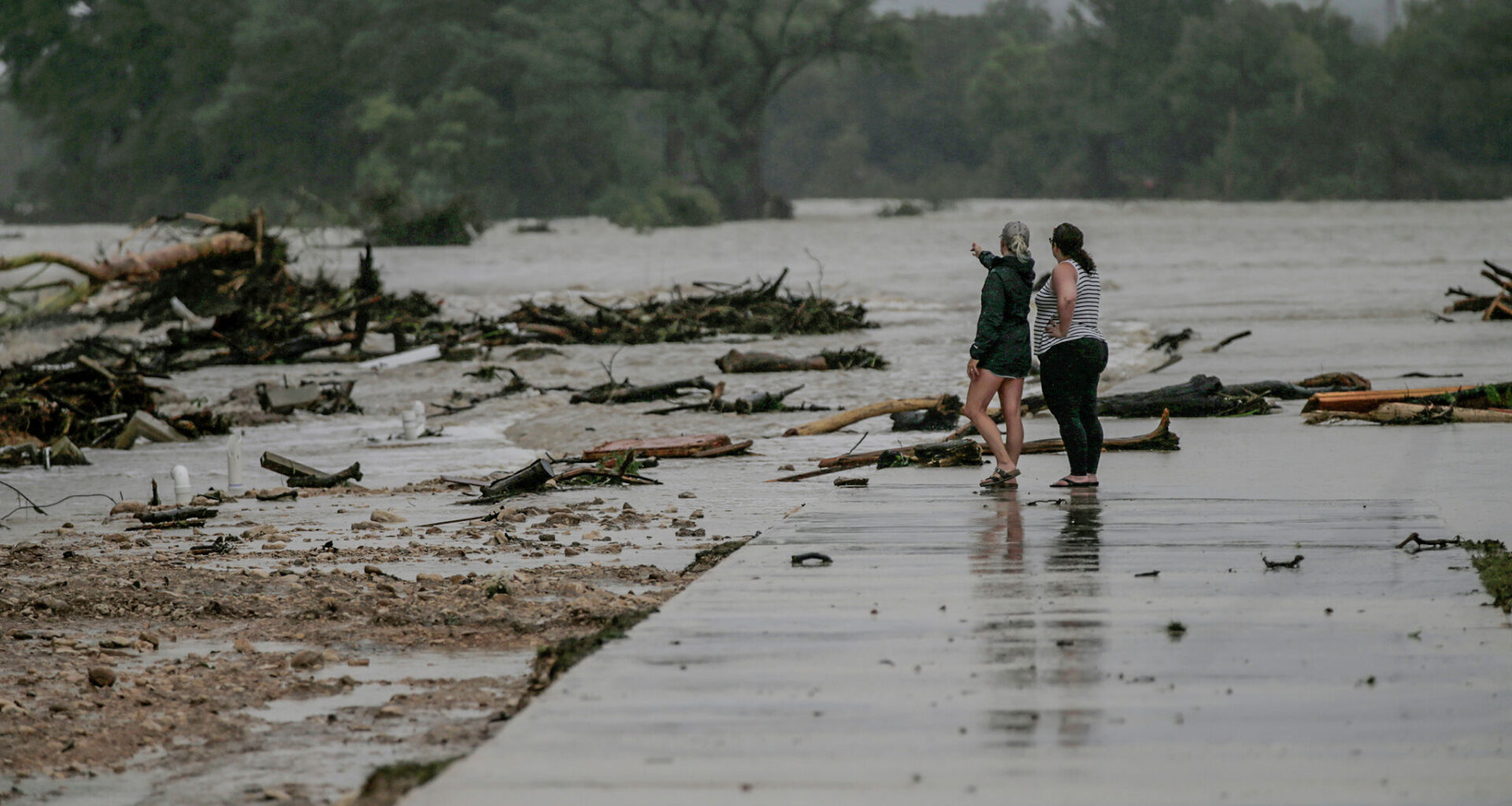
Last summer’s flash floods in the Hill Country claimed 135 lives and caused up to $22 billion in damages. Texas has suffered more weather-related billion-dollar disasters like this than any other state, and it’s not close. The cumulative cost since 1980 is up to $440 billion. And counting.
Last week, though, the Trump administration essentially gave away its authority to limit the pollution amplifying the extreme weather that plagues our state.
After the Supreme Court ruled in 2007 that the U.S. Environmental Protection Agency has the authority and obligation under the Clean Air Act to regulate climate-altering pollution like carbon dioxide and methane, the EPA gathered mountains of evidence of the threats posed to people’s health and safety. The 2009 endangerment finding made it clear why the agency needed to limit this pollution.
Repealing the finding now is not only unlawful, it’s unwise. It will make life more dangerous and more expensive when Texans can least afford either.
My colleagues at Environmental Defense Fund found the repeal could force Texans to spend $110 billion more at the pump in the next three decades and suffer $105 billion in health harms. Across the country, the extra pollution could lead to $4.2 trillion in health and climate harms in the decades to come. That includes up to 37 million more asthma attacks and as many as 15 million missed days of school and work.
Electricity prices could get worse, too. Since the cold, hard lessons of Winter Storm Uri, Texas has strengthened our infrastructure to keep power flowing to our homes and diversified our grid. In the last three years, no state has added more clean energy — which doesn’t contribute to the problem of climate change — than Texas. But the repeal comes as the Trump administration is also busy handing out millions of taxpayer dollars to help keep expensive, unreliable coal plants afloat while blocking faster, cheaper sources of energy that have helped our prices stay low, even as they’ve spiked in other states by double digits and our population — and demand — has grown.
And extreme weather is only going to get more extreme. That will push the cost of insurance even higher — if it’s available at all in some of the most disaster-prone parts of the state. (At the same time, the Trump administration has openly discussed dismantling FEMA and leaving states to shoulder disaster recovery on their own.) Texas homeowners insurance premiums have increased about 20% in each of the past two years. How are working families going to be able to afford to stay in an increasingly risky place to live?
This week, the American Public Health Association, American Lung Association and more than a dozen other environmental organizations filed a lawsuit to challenge the repeal of the endangerment finding. Though the administration has touted that it “saves” Americans from “crushing regulations,” the truth is that it’s only shifting costs to working families. Every new car or truck that comes off the line polluting more than it has to, every power plant that keeps burning fossil fuels, forces us to make up the difference in inhalers and insurance premiums and flood infrastructure.
It couldn’t come at a worse time. We might be used to dealing with disasters, taking care of our neighbors and helping our communities rebuild, but the Trump administration appears to be taking our sacrifices and suffering for granted, unwilling to see the danger that’s bearing down on every single Texan.
Colin Leyden is the Texas state director for Environmental Defense Fund.