
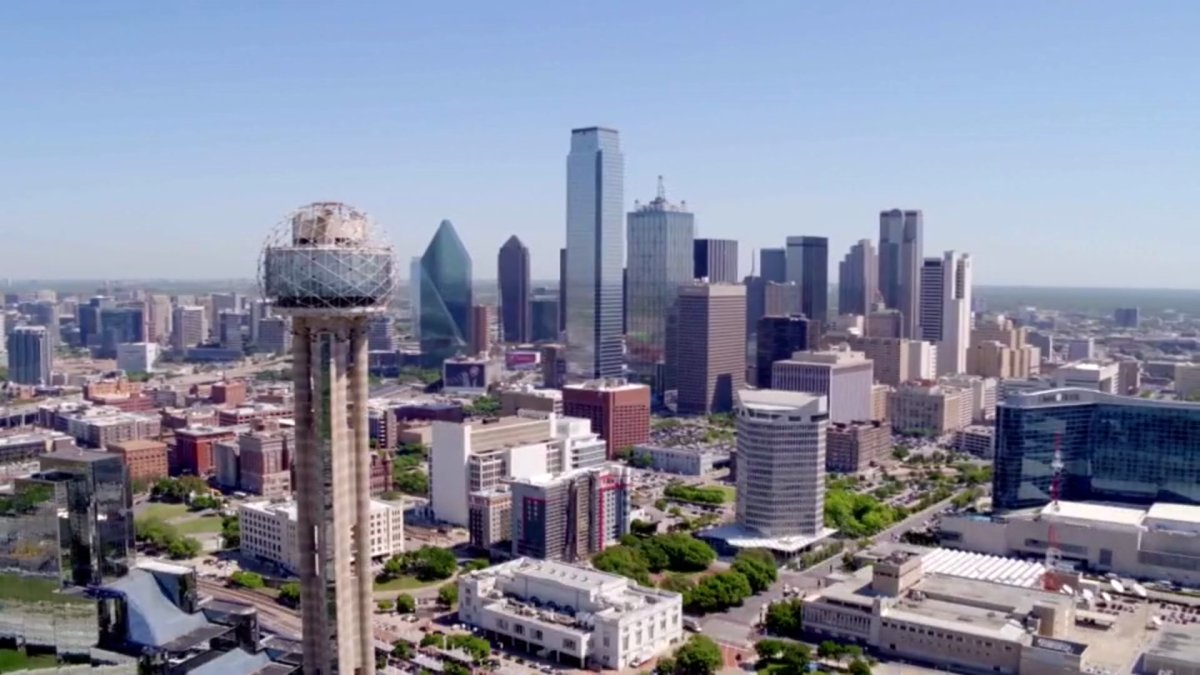
With the 2026 FIFA World Cup headed to North Texas, many people wonder: Could Dallas someday host the Olympic Games?
It’s not as far-fetched as it might sound.
We sat down with Monica Paul, executive director of the Dallas Sports Commission, to talk about how this summer’s global soccer showcase could lay the groundwork for an Olympic bid.
Paul’s passion for the Games runs deep.
“I’m a huge Olympics fan,” she said. “I’ve been to two Olympic Games — Athens and Sydney — in 2004 and 2000.”
More than two decades later, Paul is now spearheading Dallas’ effort to host nine matches during the 2026 FIFA World Cup, one of the largest sporting events on the planet.
In many ways, she says, hosting the World Cup mirrors the Olympic experience.
“I think they’re very similar in terms of the number of people that come to a city, the passion, the different cultures and experiences,” Paul explained.
Like the Olympics, the World Cup didn’t simply land in Dallas. It took years of preparation and competition.
The North Texas bid process began in 2017 and required detailed proposals covering stadium infrastructure, training facilities, transportation systems, safety, security, and the region’s track record hosting major events.
“You’re providing a lot of technical details,” Paul said. “But we have a pretty impressive resume.”
That resume includes one venue she believes stands above the rest.
“I might be biased,” Paul admitted, “but AT&T Stadium, in my opinion, is the best stadium in the world.”
Could she envision an Olympic opening ceremony there?
“I could,” she said without hesitation.
AT&T Stadium wouldn’t be alone. North Texas boasts a deep bench of major venues. Among them: American Airlines Center, Dickies Arena, Toyota Stadium, Cotton Bowl, and Kay Bailey Hutchison Convention Center
“It’s a great asset for us in the venues that we have here,” Paul said.
Beyond bricks and mortar, she says the region’s greatest strength is its people. “Our Texas hospitality is very important to us. We know we have that.”
When the World Cup concludes next July, the infrastructure and relationships built during the process won’t disappear.
“You want these relationships to continue,” Paul said. “That’s how you’re going to be successful for the next major event or the next bid process.”
Dallas has pursued the Olympics before, falling short twice in the past 25 years. But Paul believes the city has evolved. “I think Dallas is really becoming, or starting to be recognized, as a global business city and community.”
Landing an Olympic Games is a long shot for nearly any city. With the 2028 Summer Olympics already set for Los Angeles, it could be years before the Games return to U.S. soil.
Still, Paul sees the World Cup as a pivotal moment. “This is our chance to be on a global stage,” she said. “We want to get it right.”
When asked directly whether North Texas has what it takes to host the Olympics, Paul didn’t hesitate. “Yes, I do think this community has what it takes.”
As for her own role, if that day comes? “I might want to be retired by the time the Olympic Games would come here,” she said with a laugh. “But I would be the biggest champion.”
Even without an Olympic bid, the region’s sports calendar remains ambitious.
North Texas has already secured the NCAA Men’s Final Four in 2030 and the NCAA Women’s Final Four the following year. The city is also bidding for the FIFA Women’s World Cup, and there is ongoing discussion about bringing another Super Bowl to the region.
For now, all eyes are on 2026. But if Dallas delivers on the World Cup stage, the Olympic dream may not be so distant after all.