
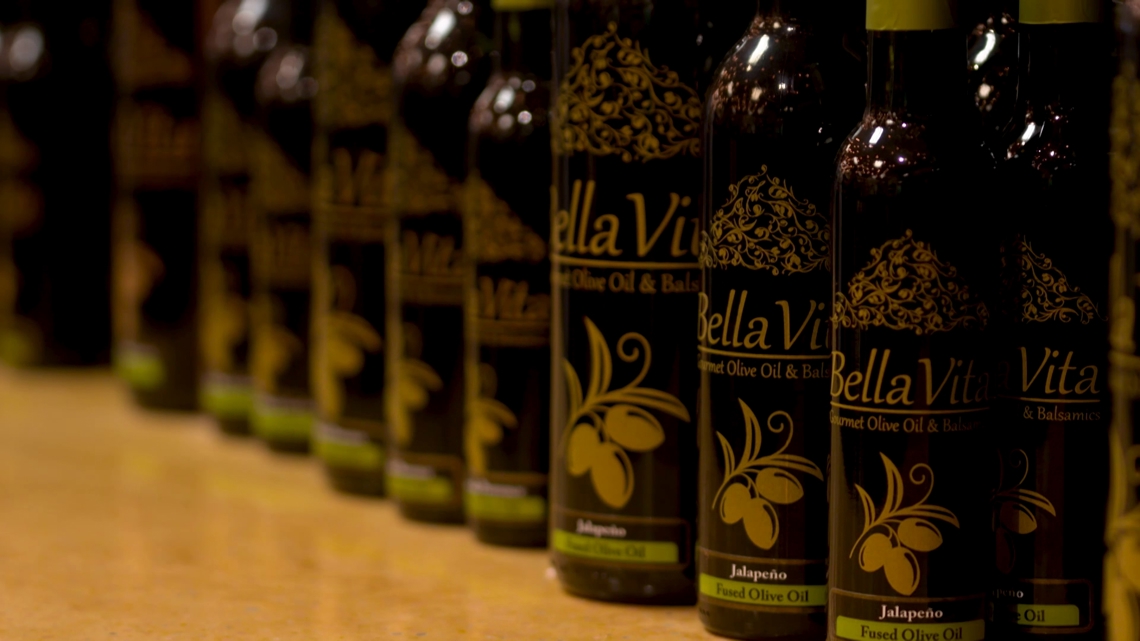
Owner Julie Seely says rising import costs forced layoffs and price hikes, and she’s at risk of closing.
ARLINGTON, Texas — Inside Bella Vita, a specialty olive oil shop in Arlington, owner Julie Seely gestures toward rows of imported bottles she proudly carries.
Someone would have to travel far to find the olive oil and balsamic vinegar she sells inside the shops of Gracie Lane, but she proudly imports them and sells them in her small business.
“Ours comes from all over the world,” Seely said.
Now, she says her small business is on the brink of closing.
“It’s been very rough,” she said.
For months, tariffs have taken a toll on her store. A 25% tariff hit most of the kitchenware lining her shelves. In January, another 10% increase followed.
“They’ve had to raise all the prices, which has caused me to raise the prices,” Seely said.
Nearly everything in her store is sourced from abroad. As costs climbed, she said customers stopped walking through the door. Sales dropped sharply. She let go of her entire staff and now runs the shop alone to recover her losses.
“Shutting down. Not being able to continue,” Seely said.
On Friday, the U.S. Supreme Court struck down most of President Donald Trump’s sweeping tariffs on dozens of trading partners, ruling 6-3 that he lacked authority under a 1977 emergency powers law to impose the broad import taxes.
Chief Justice John Roberts said tariffs amount to a tax, a power reserved for Congress.
On Friday, Trump called the ruling a “disgrace.”
“How ridiculous is that? I’m allowed to embargo them … but if I want to charge them $10, I can’t do that,” Trump said.
The president later announced he had enacted a 10% global tariff by executive order under a different statute.
The Yale Budget Lab estimates tariffs imposed during the trade disputes cost the average U.S. household more than $1,600 per year.
For small businesses like Seely’s, relief may not come soon enough.
“We were excited to hear that,” she said of the court’s decision. “And I hope that going forward things are gonna improve.”
She says she’s slowing orders and watching inventory carefully, hoping she won’t have to turn off the lights for good.