
Commentaries at the San Antonio Report provide space for our community to share perspectives and offer solutions to pressing local issues. The views expressed in this commentary belong to the author alone.
When I sat in Spanish classes taught by Dr. Antonio Rigual at Our Lady of the Lake University in 2010, I had no idea the deep personal impact his vision to promote Hispanic Serving Institutions (HSIs) would have in my life.
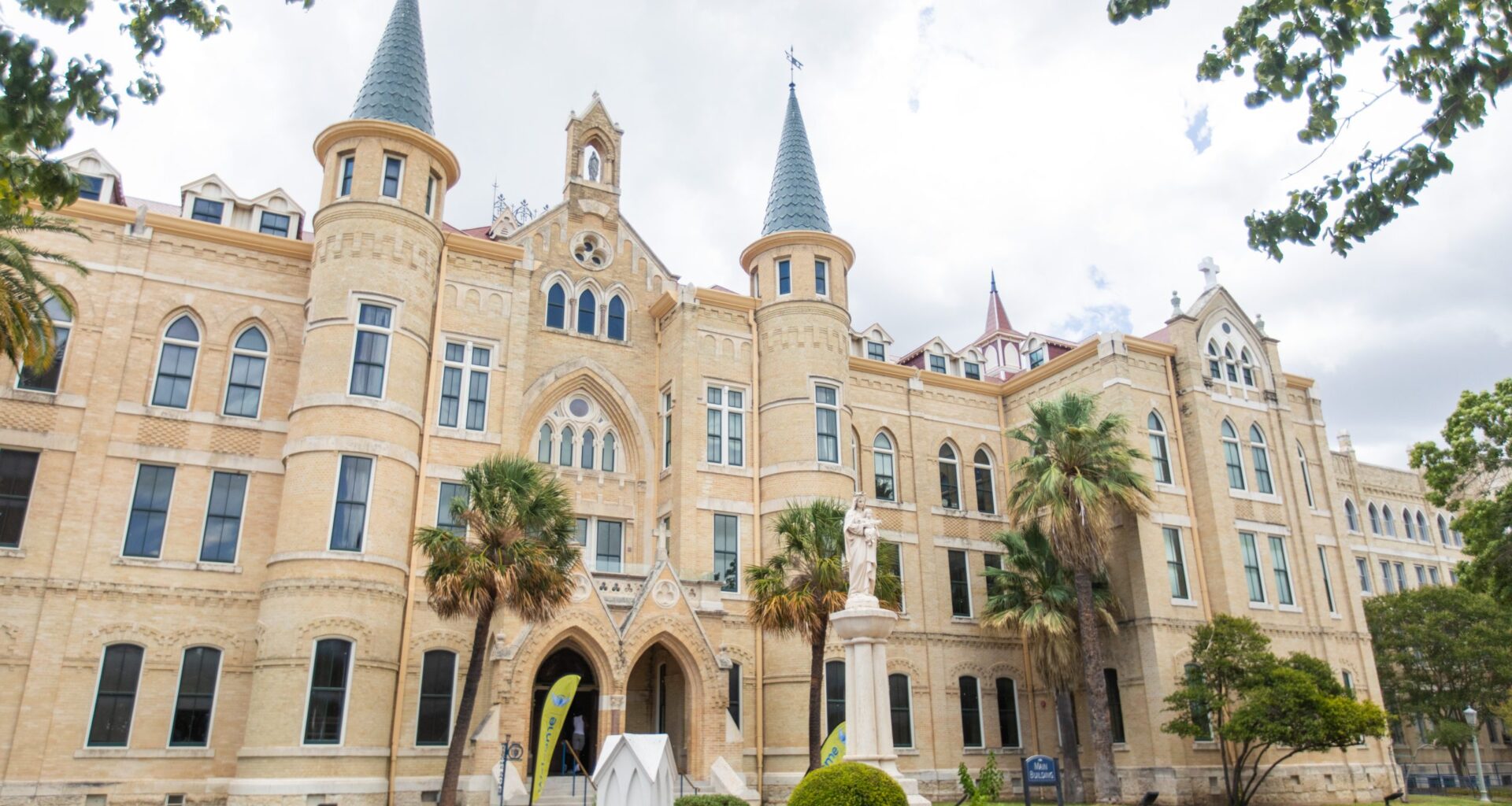
My alma mater is the birthplace of HSIs. After a 1985 visit to Xerox headquarters seeking support for a “Center for Hispanic Higher Education” at OLLU, Dr. Rigual developed the idea that became the Hispanic Association of Colleges and Universities (HACU), making OLLU the first HSI in the nation. HSI is now a designation that covers more than 600 colleges and universities around the country that serve large numbers of Latino students. These vital educational institutions, where 67% of all Latino college students are matriculated, are under attack.
The Hispanic Serving Institution federal designation is awarded to degree-granting colleges with at least 25% of Hispanic or Latino students enrolled.
San Antonio local college officials say the widespread misconception is that these dollars only benefit Hispanic or Latino students, while in reality the programs created using these funds are open to all students.
The latest assaults on education effectively abdicated all federal responsibility for the schooling of more than 73 million K-12 students nationwide and severely limited loan eligibility and debt forgiveness for advanced degrees in fields dominated by women, including nursing, education and social work.
HSIs were not spared, recently receiving a major blow from this administration, which not only refused to defend against a lawsuit seeking to have HSIs declared “discriminatory,” but also withdrew over $350 million in federal grants essential to supporting education for all students at these schools, not just Latinos.
In total, there are 12 public and private colleges designated as HSIs in San Antonio: Our Lady of the Lake University, Texas A&M University-San Antonio, all five colleges under Alamo Colleges District, St. Mary’s University, and the now-merged University of Texas at San Antonio and University of Texas Health Science Center at San Antonio.
HSIs have made the dreams of countless young people a reality, including mine. Two years after taking Dr. Rigual’s class, I received a HACU internship that would open doors I never thought possible.
The internship placed me with the USDA Forest Service as a media intern, training in Washington, D.C., before heading to Florida. For a first-generation student like me, whose family could not afford unpaid internships or costly summer housing, this opportunity was life changing. It was only my second time on an airplane, and it gave me a foot in the door to launch my career in communications.
Those skills and experiences built the foundation for every job I’ve had since. Today, I am the manager of media relations and marketing at the civil rights organization LatinoJustice PRLDEF. And in a full-circle moment, my organization now represents HACU in court as we intervene in Tennessee and Students for Fair Admissions v. U.S. Department of Education, a federal lawsuit that seeks to dismantle the HSI program. The very program that gave me a chance I would not have had otherwise is now under threat and I am using the skills I first learned thanks to OLLU and HACU to defend it.
With clueless or cruel timing, the Department of Education announced during HSI Week last September that it had slashed funding that supports HSIs. Days later, the Department of Education announced it would redirect $495 million in funding to Historically Black Colleges and Universities (HBCUs) and tribal colleges, vital institutions that deserve strong, sustained support. This is not a zero-sum game. HSIs should not have to compete against HBCUs for support.
Congress created the HSI Program to provide critical resources to colleges and universities that already enroll large numbers of Hispanic students. Nationally, more than 5.6 million students of all backgrounds benefit from their programs and eight of the top 10 colleges and universities in the 2024 Social Mobility Index were HSIs. These successes are no accident; they demonstrate why we need strong investment in schools that serve historically under-resourced students.
This makes the recent funding cuts even more devastating on a personal level. OLLU has one of the highest percentages of Hispanic student enrollment in the nation and is a top producer of Hispanic graduates with master’s degrees.
When Dr. Rigual first convened leaders from 18 universities in 1986 to create HACU, he knew something needed to be done about the marginalization of Hispanic education. He built a movement that grew from one campus in the U.S., to Puerto Rico, Latin America and Spain.
Dr. Rigual and HSIs opened doors for me that my family’s financial situation might have otherwise kept closed. They removed barriers and prepared me to succeed. Without HACU and OLLU, I would not be where I am today. Now, I feel an obligation to ensure those same doors remain open for future generations. That’s why I’m speaking out to protect the institutions that changed my life.