
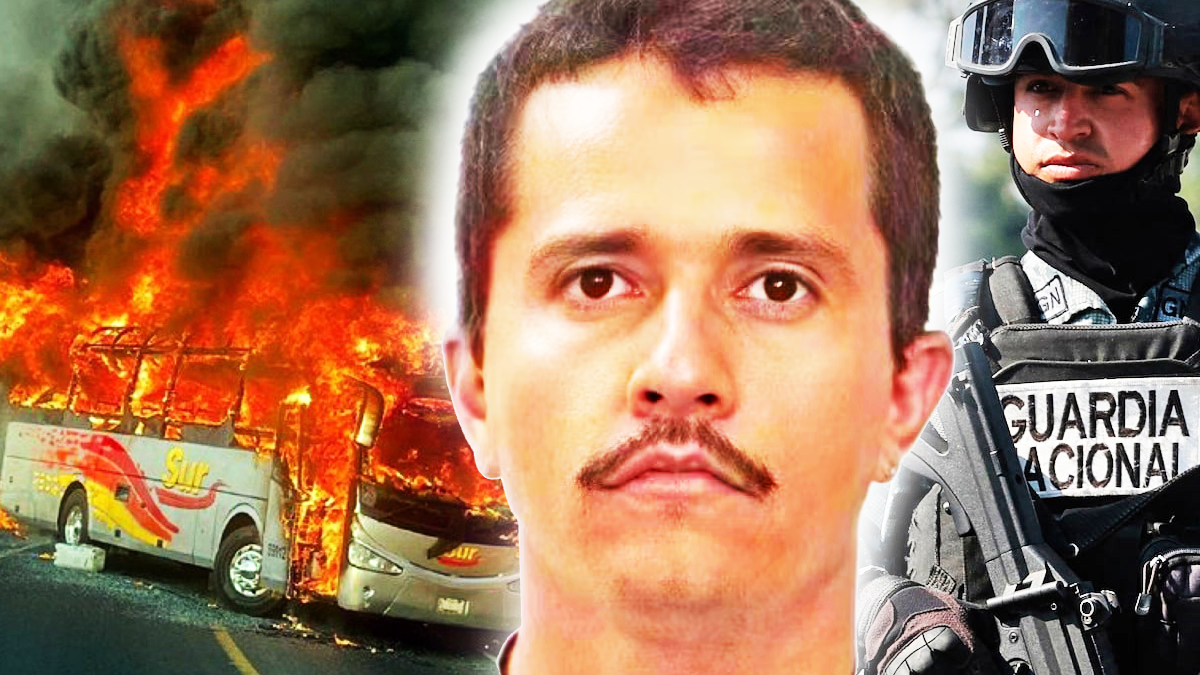
Tapalpa, Jalisco, MX, February 23, 2026: Nemesio Rubén Oseguerra Cervantes, “El Mencho,” leader of the Cártel Jalisco Nueva Generación (CJNG) based in the State of Jalisco was captured by Mexican military forces and later died on the way to the hospital. Yesterday’s military operation to capture the cartel leader in Tapalpa Jalisco, about 82 miles from Guadalajara, resulted in the death of seven cartel members, three, including Oseguerra Cervantes, who died from injuries on the way to get medical treatment. Mexican Special Forces led the operation, according to officials of the Mexican Defense Department. The Mexican Air Force and the Special Reactionary Force of the Mexican National Guard helped in the operation. Three Mexican military members were injured. An unconfirmed report says that a National Guard member also lost their life in the operation.

Mexican military officials reported that in addition to the capture of cartel members, weapons and armored vehicles were secured by Mexican forces. Among the weapons seized included rocket launchers capable of downing aircraft or destroying military tactical vehicles.
The CJNG has the reputation of being extremely violent and has created its own irregular military unit to control territory and defend against the Mexican military.
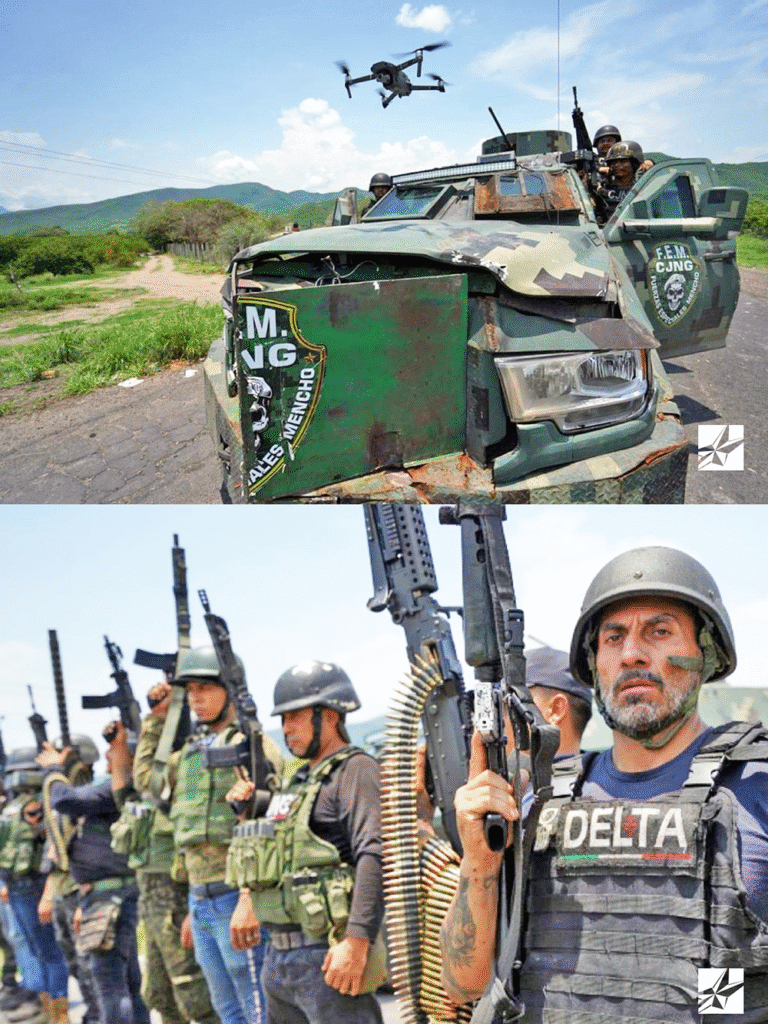 Photographs posted on social media by the Cártel Jalisco Nueva Generación. Martín Paredes/El Paso Herald Post
Mexican leaders say that the CJNG has been decapitated with the death of Oseguerra Cervantes. This has led to violent reprisals by members of the cartel. Vehicles and buildings were set on fire by cartel members who were careful not to kill civilians in an apparent message to the government that it did not want to escalate the situation and instead send a message.
It is also a common tactic for cartels to block roads with burning vehicles to limit military operations in the area against them. Early reports show that the violence has resulted in the death of several security forces, including six national guard members and a jail guard after an uprising at the local jail in Puerto Vallarta.
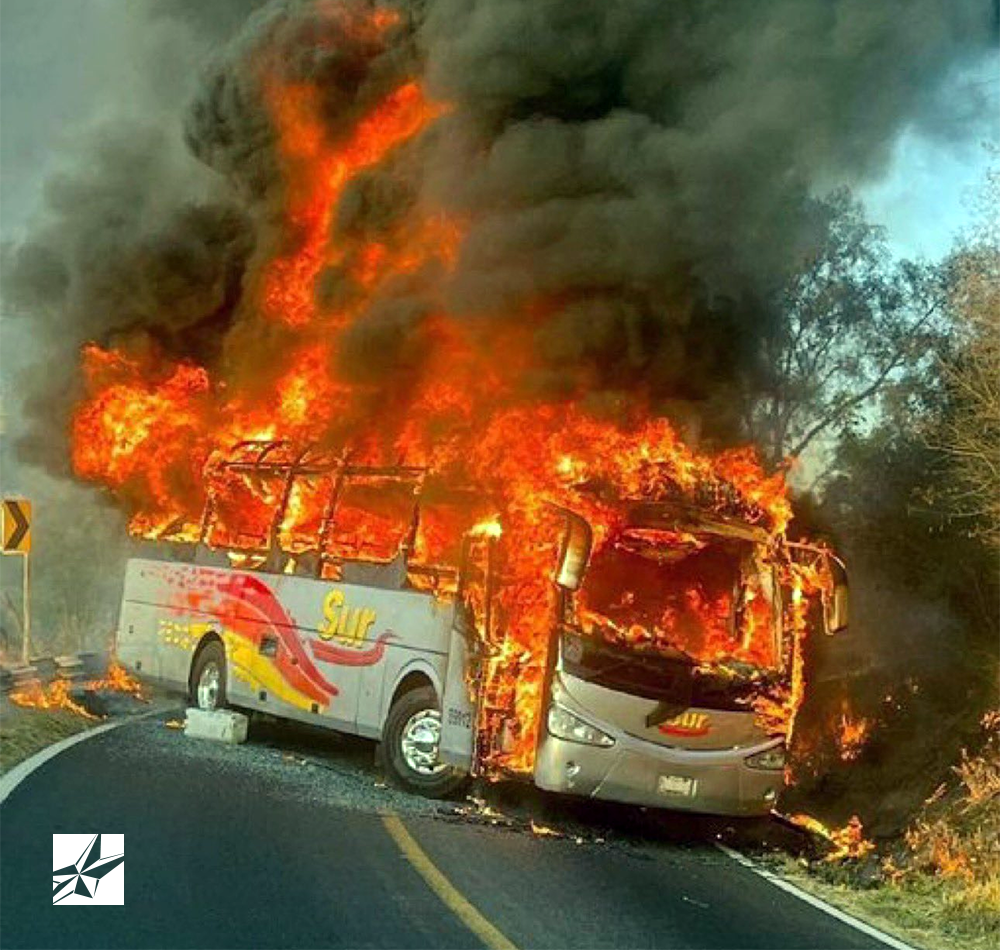 Bus on fire in Jalisco, February 22, 2026, no passengers were hurt.
The U.S. offered a reward of up to $15 million for his capture.
Although various news reports and social media posts suggested that cartel operatives were sowing violence across México, the violence was mostly limited to Jalisco and Michoacán. After the capture of Oseguera Cervantes by Mexican military forces, members of the cartel set up roadblocks and set vehicles on fire in Jalisco. Smaller sporadic acts of violence were reported in about a dozen Mexican states. Mexican President Claudia Sheinbaum, responding to the reports of unrest posted on social media that “most of the country was operating normally.”
Nonetheless, because of the violence some flights were delayed in México while officials assessed the violence. Some flights in Puerto Vallarta, about 192 miles from Tapalpa, were cancelled leaving some U.S. passengers stranded there for some time. Security remains high this morning, but airports are open across México. However, yesterday’s flight disruptions will delay some flights today and some airports may be congested.
Mexican military forces have cleared most of the cartel roadblocks. Although video of passengers running from gun fire at the Guadalajara airport circulated on social media, the chaos was from gunfire outside of the airport and the airport was not breached according to official reports.
Pictures of aircraft on fire at the airport were artificially generated (AI) and there are no reports that any aircraft were set on fire.
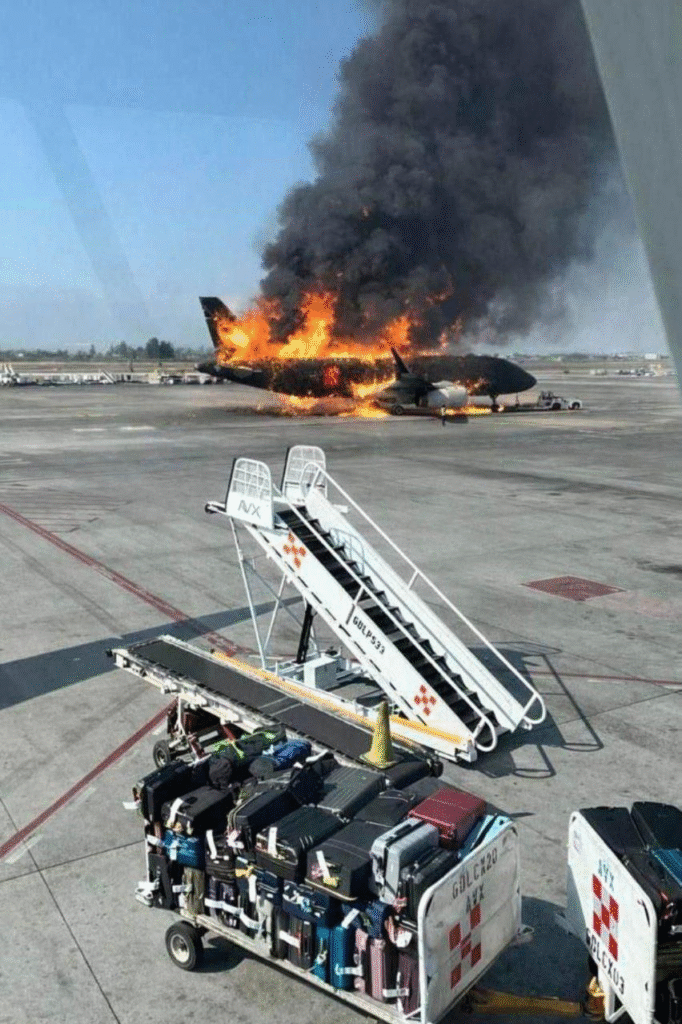 AI generated fake picture of aircraft burning at the Guadalajara airports, posted on social media on February 22, 2016
Reports also circulated on social media that U.S. military troops were involved in the operation.
U.S. Involvement
Although social media posts stated that U.S. military forces were directly involved in the operation to capture Oseguerra Cervantes, there were no U.S. military forces on the ground at the time of the operation. Mexican military forces credit U.S. intelligence for helping in the operation through the existing bilateral security framework. White House Press Secretary, Karoline Leavitt, posted on social media yesterday in the evening that “The United States provided intelligence support” for the operation.
The Drug Enforcement Agency (DEA) considers the CJNG, which traffics in fentanyl and is present in all 50 U.S. states, one of the most powerful cartels. The CJNG became the dominant Mexican cartel after infighting between Joaquín “El Chapo” Guzmán Loera and Ismael “El Mayo” Zambada weakened the Sinaloa cartel. Both Guzmán and Zambada are in U.S. prisons.
The capture or death of cartel leaders results in violence by cartel members both as message to the government, as a tactic to limit Mexican forces operating in the area and to fill the leadership vacuum from the loss of the cartel’s leader.
Due to the potential for more violence, several locations, including schools in Jalisco and Michoacán will be closed today.
Like Us and Follow Us On Our Social Media!
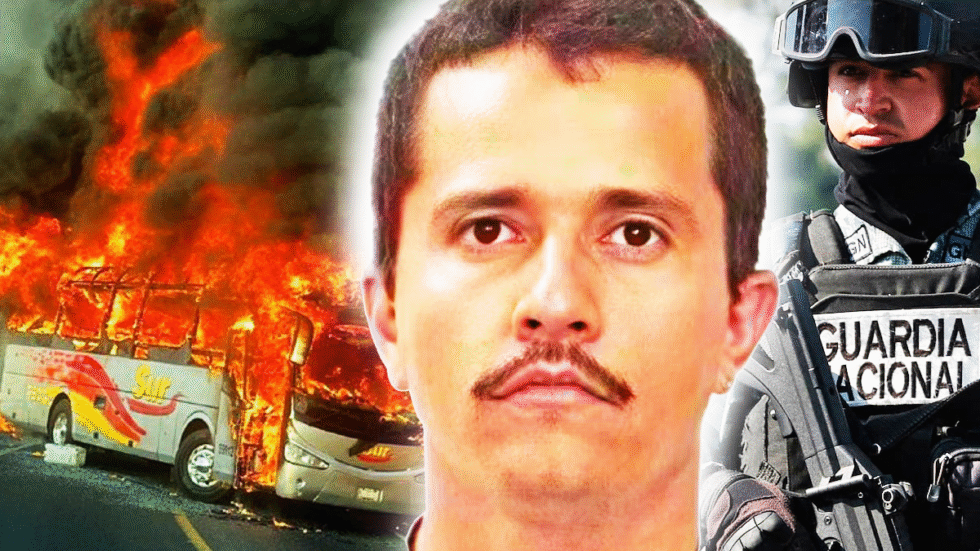
Cover photo illustration: Nemesio Rubén Oseguerra Cervantes, U.S. Department of State with picture of bus set on fire in Jalisco on February 22, 2026 and a Mexican National Guard member on guard duty on the right.
Visited 16 times, 16 visit(s) today