
By Erika Gonzalez
Photography By Erika Gonzalez
Reporting Texas
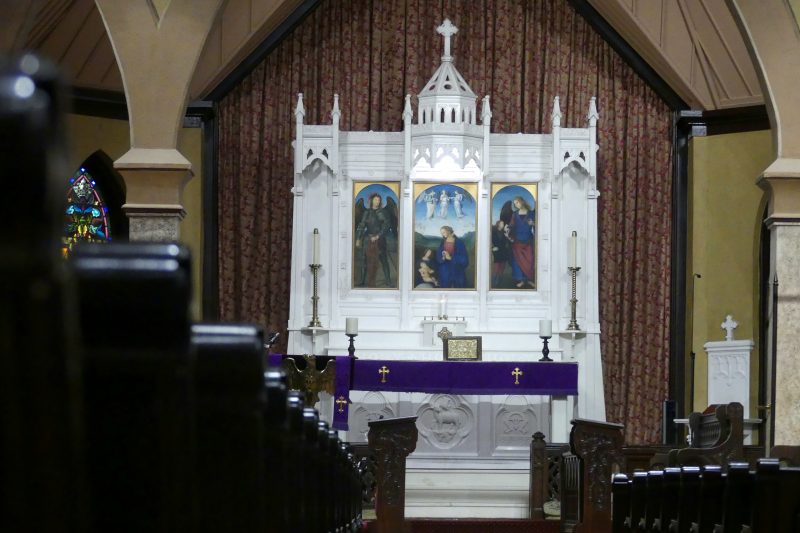
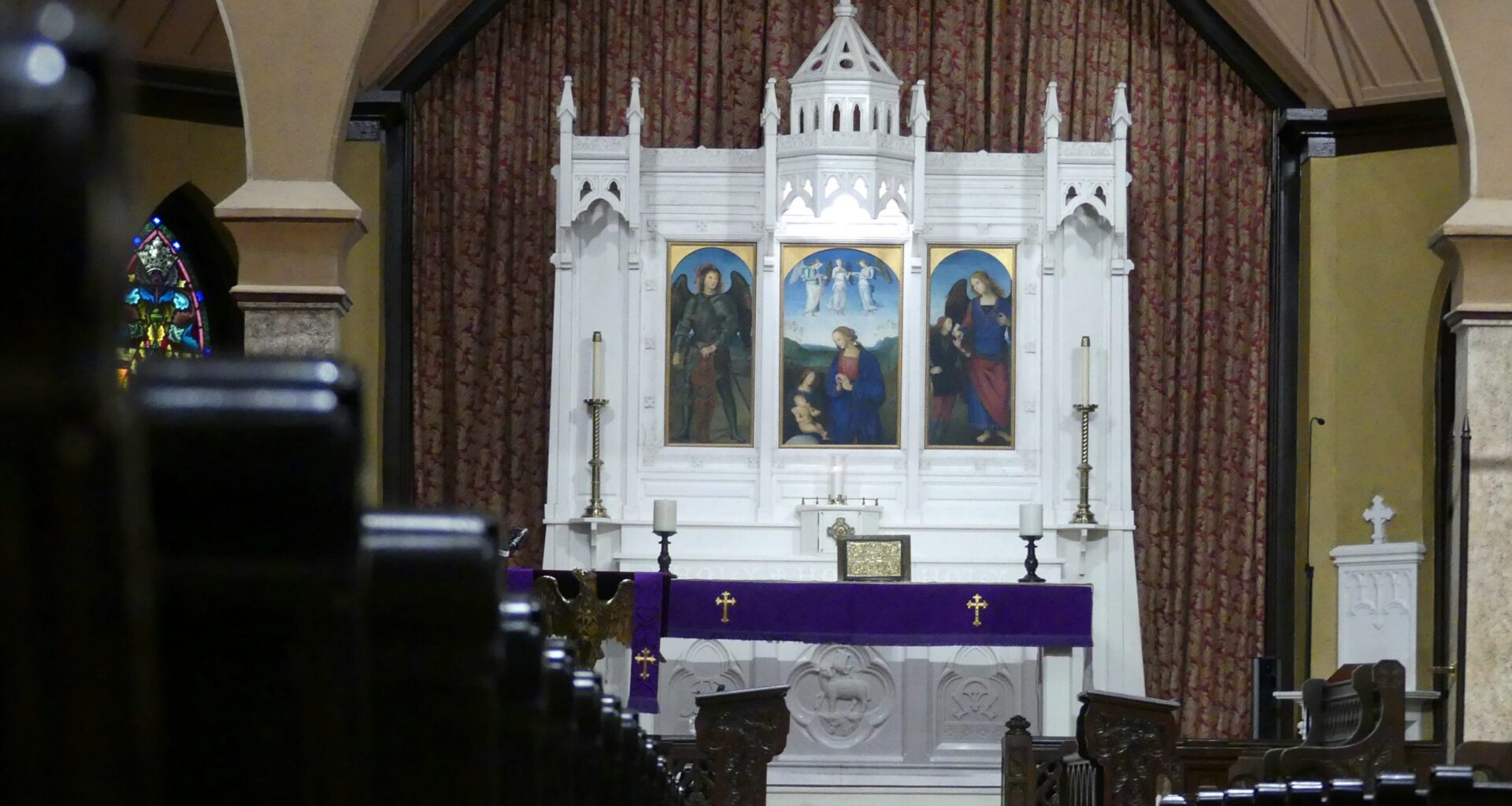
“People ask me if agents can come in, if we are protected, if it is safe to come.” St. David’s Episcopal Church in Austin. Erika Gonzales, Reporting Texas
Dianne Garcia, pastor of the Christian Roca de Refugio Church in El Paso, has always described her church as an open space for everyone, regardless of immigration status, income or language.
But in January 2025, the federal government removed the policy that had, since 2011, limited immigration enforcement operations in so-called “sensitive locations,” including churches, schools and hospitals.
Under the previous guidelines, agents needed supervisor approval and could act only under exceptional circumstances. With the policy gone and their immigration enforcement becoming more aggressive, federal Immigration and Customs Enforcement agents can conduct operations in churches and other previously safe spaces without restrictions.
Since then, Garcia said, something has changed in her congregation.
“People ask me if agents can come in, if we are protected, if it is safe to come,” she said.
Her concerns are shared by many. In immigrant congregations across Texas and other states, faith leaders report declining attendance and rising anxiety since the elimination of the “sensitive locations” policy.
In Houston, pastor Hernán Castaños of Ríos de Aceite Church said attendance has fallen 25% to 40% since recent ICE raids began.
Nationally, Religion News Service reported that at least a dozen people were detained in or near churches since the Department of Homeland Security eliminated the “sensitive locations” policy in January 2025.
Garcia said congregants are increasingly asking about safety measures and guidance for attending services.
“Some families stopped coming. Others prefer to connect virtually. And many arrive anxious,” Garcia said. “The church should be the last place where someone feels fear.”
Impact on Christian Communities
In Texas, about 67% of adults identify as Christian, according to the Pew Research Center. Nearly 40% of the population is Hispanic, and around 17% of residents were born outside the United States, according to U.S. Census data.
Data compiled by the Deportation Data Project, a group that collects immigration arrest information from federal records requests, show that between Jan. 20 and June 27, 2025, ICE carried out more than 109,000 immigration arrests nationwide, with Texas accounting for roughly 23% of the total.
Although Garcia has not witnessed operations inside her church, she said she has heard about ICE raids and activity near houses of worship in her community.
“Even though no one has entered our church, there have been operations nearby. That’s why I don’t share the church’s location much. People hold back. They don’t want to expose themselves,” she said.
“Before, the congregation was a safe space.”
A Mexican Christian woman in Dallas, who requested anonymity due to her irregular immigration status, said her sense of safety at church shifted after her daughter was arrested by ICE outside their home in Dallas on Dec. 31 for lacking immigration documents.
After being transferred to El Paso to face an immigration court, her daughter became ill and needed medication. The family hired an attorney, which involved significant legal expenses.
“Before, the congregation was a safe space,” the mother said. “Now I prefer to keep my participation minimal and make legal consultations remotely to protect my children.”
Similarly, Luzma, who lives in Austin, and her sister Teresa Rodríguez, who lives in Fort Worth, have adjusted their routines. Both are permanent residents. Although they continue attending religious services, they do so with extreme caution.
“You can’t even go to the supermarket calmly anymore. There’s fear everywhere,” Teresa said.
Amy Cummings, an immigration lawyer from Dallas and an Episcopalian, confirmed this phenomenon among her clients.
“Many are afraid to leave, not just to go to church, but also to work or legal appointments. Some prefer virtual meetings to reduce risk,” Cummings said.
She recalled the story of a man who lost faith after detention and abuse in immigration custody.
“He told me, ‘If there is a God, He has a lot to explain to me.’ That story moved me deeply,” Cummings said.
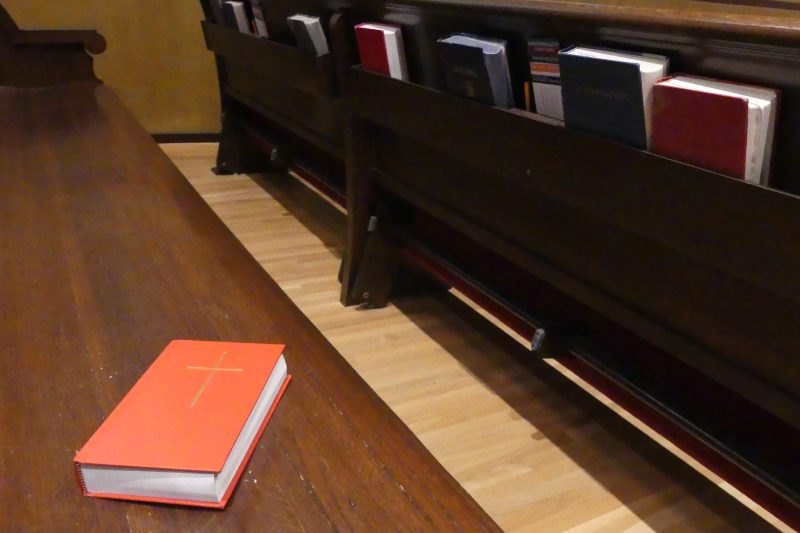
A Bible rests upon a pew at St. David’s. Erika Gonzales, Reporting Texas
Churches’ Response to ICE Presence
The Diocese of Austin, representing 700,000 Catholics across 127 parishes, said in a statement that no incidents have been reported in which ICE attempted to enter church properties or religious events.
On some occasions, agents have been in parish parking lots, but only to meet among themselves and not to intervene in services. The diocese recognizes that some families need to be cautious when attending certain events.
“We offer our prayers for the families affected during this situation,” the statement said.
Rachael Griffin-Allison, senior pastor of Oak Lawn United Methodist Church in Dallas, emphasized that her church views these issues through a moral and theological lens.
“Silence in the face of injustice is not an option for the church,” she said. “Immigration enforcement should never override human rights. For us, this is not a partisan matter, it is a theological and moral one.”
Support for Migrant Families
Amid immigration enforcement operations, pastors and Christian organizations have strengthened their community work. Garcia, the El Paso pastor, directs programs at the Christian Roca de Refugio Church that provide temporary shelter, food assistance, medical support and legal aid.
Cummings said many families turn to congregations not only to practice their faith but also for legal guidance and emotional support.
“We are trying to make sure people can still access help without exposing themselves to detention,” Cummings said.
Organizations such as Estrella Del Paso, a Christian legal aid ministry providing free services to immigrants in Texas and New Mexico, said they have adapted “Know Your Rights” workshops to virtual formats to ensure attendees’ safety.
“Our goal is to empower immigrant families with accurate legal information so they can make informed decisions and feel less fearful about seeking help,” Imelda Maynard said, legal director at Estrella del Paso.
Austin Sanctuary, a network supporting migrant families, offers practical assistance and maintains a dedicated hotline for those trying to locate detained relatives.
“If they want to come, we provide transportation and make sure the location is safe and monitored. We even have people outside watching so they can enter and leave safely,” Carmen Zuvieta said, an ambassador for Austin Sanctuary.
These efforts complement other community programs that prioritize the well being of families facing uncertainty and fear.
“My priority is always my community. I try to accompany, comfort, give hope and support as much as possible,” Garcia said.
For many families, faith remains a lifeline.
“What has kept me strong,” the Mexican mother in Dallas said, “is trusting in God and that we will soon be able to return to church without fear,”