
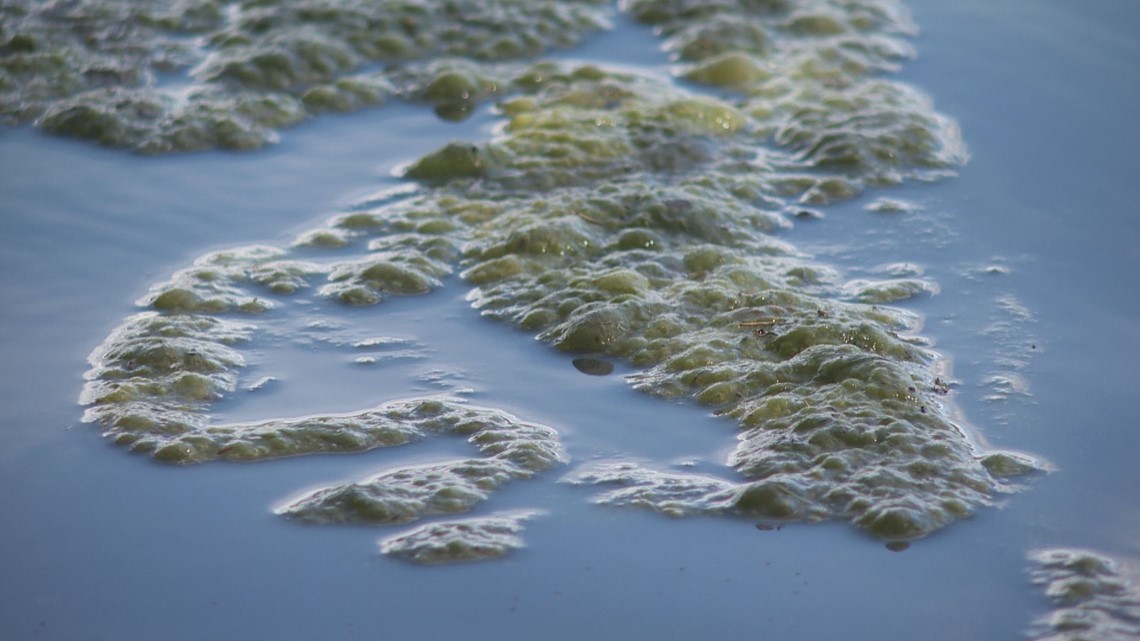
For years, the algae – which can cause illness and even death for dogs – has popped up in local waterways.
AUSTIN, Texas — The city of Austin has issued a warning to be on the lookout for blue-green algae in local waterways.
Austin Watershed Protection employees have observed the harmful cyanobacteria in Austin’s lakes and creeks this winter and say they expect to see more as spring approaches and conditions for their growth become more favorable.
Mats of blue-green algae look like dark blobs floating on the surface and can be mixed in with other types of algae. All visitors to local waterways are advised to be cautious and avoid contact with the algae.
How to minimize the risk of exposure
Before you or your dog get into the water, assess the area by looking for algae along the shoreline and watching for stagnant, warm or murky water.
Don’t enter the water if you see scum, surface film or visible algae, and don’t get in the water if it has rained in the past three days.
If any of those conditions are present, you should stay out of the water.
If you don’t notice those conditions and proceed to get into the water, remember to avoid contact with algae and don’t drink the water directly. When you and your dog get out, rinse your skin and their fur thoroughly. Don’t allow your dog to lick their fur before rinsing.
What to do if you or your dog are exposed
The blue-green algae is toxic and can be deadly for dogs. It can also impact people. If you or your pet experience sudden, unexplained illness after swimming, contact your medical provider or veterinarian immediately.
Residents are also encouraged to report suspected human or animal illnesses related to algae using the city’s online reporting form.
The history of blue-green algae in Austin
Since 2019, the cyanobacteria has been detected each year in Lady Bird Lake, particularly during the summertime.
The algae has popped up several times at Red Bud Isle, as well as other parts of Lady Bird Lake, and has also been reported in Lake Austin.
The toxic algae has killed several dogs that have been exposed to impacted waterways.
For several years, the city has dumped clay into various bodies of water as a way to cut off the algae’s food source. The first clay application for the final year of the city’s five-year pilot program began last June, with the second and third applications planned for July and August.
The clay was sprayed at Red Bud Isle, the north shore boat ramp west of Interstate 35, and the north shore between I-35 and the Festival Beach boat ramp.